
My wife found me in the kitchen one morning and asked a simple question: what was I going to do with the abalone sitting in our fridge? I’d bought it on sale at the mart a week earlier, got busy, and nearly forgot about it. “I’ll make seaweed soup today,” I told her. That was the whole decision.
📌 Quick Summary
Miyeokguk (seaweed soup) is the dish Korean families serve to new mothers, and the one every Korean eats again on their own birthday, every year after that — a lifelong custom, not just a recipe. This guide explains that tradition first, then walks through my own abalone version: how to prep the abalone, the soaking-water trick that deepens the broth, and where to actually buy the ingredients in Korea.
Why Koreans Eat Seaweed Soup at Birth and Every Birthday
Long before it became a private family recipe, miyeokguk (미역국 — seaweed soup) was something else entirely: the dish a new mother is fed after giving birth, and the same dish every Korean eats again on their own birthday, every single year, for the rest of their life. It’s less a recipe than a national anniversary. Read up on the history of miyeokguk and you’ll find the custom traced back generations, but you don’t need the history to feel it — you just need to have sat at a Korean table on someone’s birthday and watched them get handed a bowl of it before anything else. That’s the tradition behind the easy abalone seaweed soup recipe below.
There isn’t one miyeokguk — there are several different types of Korean birthday soup, depending on the household. Beef miyeokguk is the everyday version, made weekly in most homes. Clam miyeokguk shows up along the coast. My wife and I made the plain version constantly during her pregnancy and again while she was recovering after our daughter was born — it was simply what was in the pot most nights that year, and I’ve written separately about having a baby in Korea as a multicultural family if you want that fuller story. Abalone miyeokguk is the special-occasion cousin — pricier, less common at home, and the one I’d never actually cooked myself until that morning. What follows is my easy abalone seaweed soup recipe: the version anyone abroad can put together the same day, built around whatever’s already in your fridge.
Learning a Tradition That Wasn’t Originally Mine to Keep
I’ve cooked plenty of Korean food, but abalone always felt like a different category — something you order at a restaurant, not something you touch yourself. When I searched for guidance on prepping it, I found plenty of Korean-language blogs and videos, but almost nothing written for someone outside Korea who’d found abalone at a local market with no idea where to start. That gap is part of why this is written in English at all. It’s the same instinct that pulled me into kimjang the winter my extended family made kimchi together — a tradition I only understood by actually doing it, not by reading about it from the outside.
The same instinct carried into her first birthday, which we celebrated at home with a free borrowed dol table and a tteok set from the shop down the road rather than a rented hall.
New to Life in Korea?
Cooking your way into a Korean tradition is one thing. Untangling paperwork, a lease, or a confusing government form is another. If something about expat life here has you stuck, Jin can help.
Once I actually started cooking, the intimidation mostly disappeared. The shell came off easier than expected. The whole hands-on prep took maybe twenty minutes. None of it needed a restaurant-trained hand — just someone willing to try once.
How to Prepare Abalone for Cooking
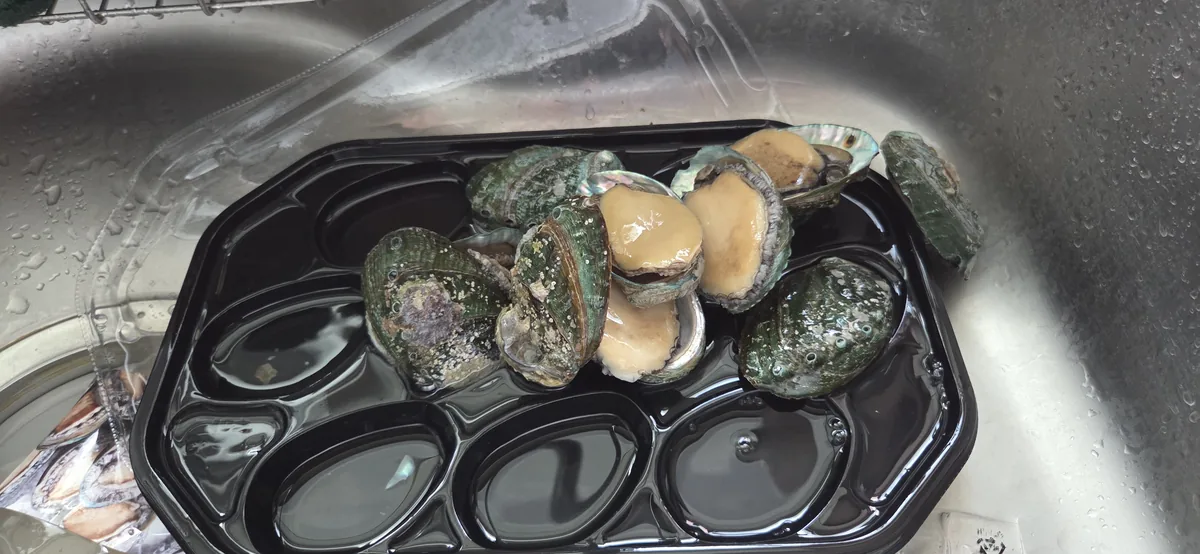
Fresh whole abalone (전복 — jeonbok) still in the shell looks far more intimidating than it actually is. The shell is stuck to the meat, not sealed shut, so you don’t need force — you need leverage. Slide a spoon between the shell and the meat and pry along the edge. The meat pops free in one piece, organs still attached.
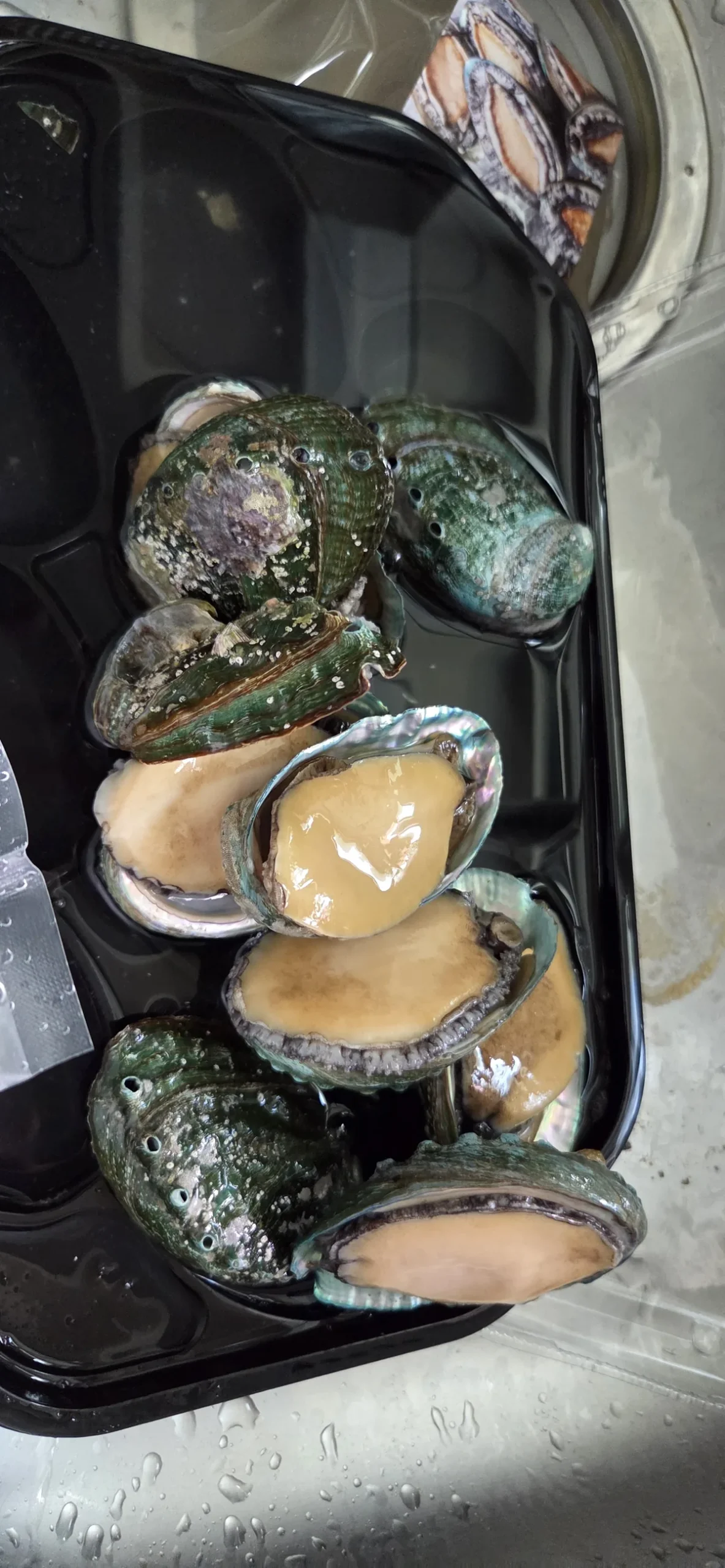
What you do next is a personal choice more than a technical one. Some restaurant versions cook the organs right in the broth. I remembered eating it that way once at a restaurant and decided I didn’t want to replicate it at home, so I cut the organs away by hand and kept the soup cleaner. There’s no wrong answer here. It’s your kitchen.
One more small trim: abalone has a hard mouth piece at the edge of the foot. Run your fingers along the rim until you feel it, then cut it away — it’s the one part that’s genuinely too tough to eat. Slice the rest into bite-sized pieces and the prep is done.
The Seaweed Soaking-Water Trick
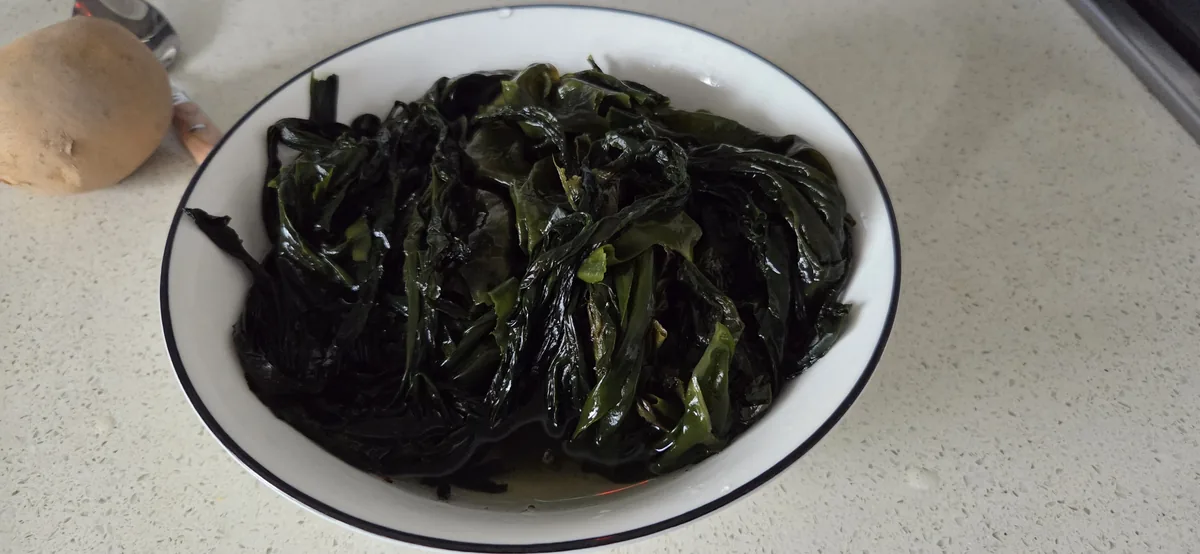
Dried seaweed (미역 — miyeok) needs to soak in water for at least 30 minutes before it goes near a pot. That part isn’t optional.
💡 Pro Tip
Don’t pour out the water you soaked the seaweed in — add it back into the broth later. The difference isn’t dramatic. It won’t reinvent the dish. But it does push the flavor a little further toward the ocean, and everyone at my table has noticed it even when they couldn’t say exactly why.
While the seaweed soaks, use kitchen scissors to cut it into smaller pieces. Whole sheets of rehydrated seaweed are unmanageable in a bowl, and there’s no reason to fight that with a knife.
Where to Buy Fresh Abalone and Seaweed in Korea
If you live in Korea, sourcing both ingredients is more straightforward than it looks from abroad. Dried seaweed for miyeokguk is sold in every large mart, usually in the same aisle as other dried sea vegetables and instant soup bases — look for a bag simply labeled 미역 (miyeok). It’s cheap, keeps for months unopened, and a small bag goes much further than it looks like it will once it rehydrates.
Fresh abalone is a different search. The large chain marts stock it, but I’ve found the freshness inconsistent — pre-packaged trays don’t always move as fast as an actual seafood counter. A traditional market (재래시장 — jaerae sijang) or a dedicated seafood stall will usually have live abalone in a tank, worth the extra trip if one is nearby. Mine came from a mart discount bin, which is exactly how this whole recipe started. Sometimes the freshest option is just whatever’s on sale that week.
Fresh versus dried abalone (건전복) is its own decision. Dried abalone shows up in gift boxes and is common for more elaborate, restaurant-style preparations — it needs rehydrating for a day or more and behaves differently once cooked. For a simple home version like this one, fresh (or the pre-cleaned abalone sold at a fish counter) is the more practical choice. You skip the rehydration step entirely, and the texture stays closer to what you’d expect from soup.
If a market trip isn’t realistic, Korean grocery delivery apps stock dried seaweed and, seasonally, fresh or frozen abalone for next-day delivery. And if abalone genuinely isn’t available where you are, the instant packaged version below is a legitimate shortcut, not a lesser one.
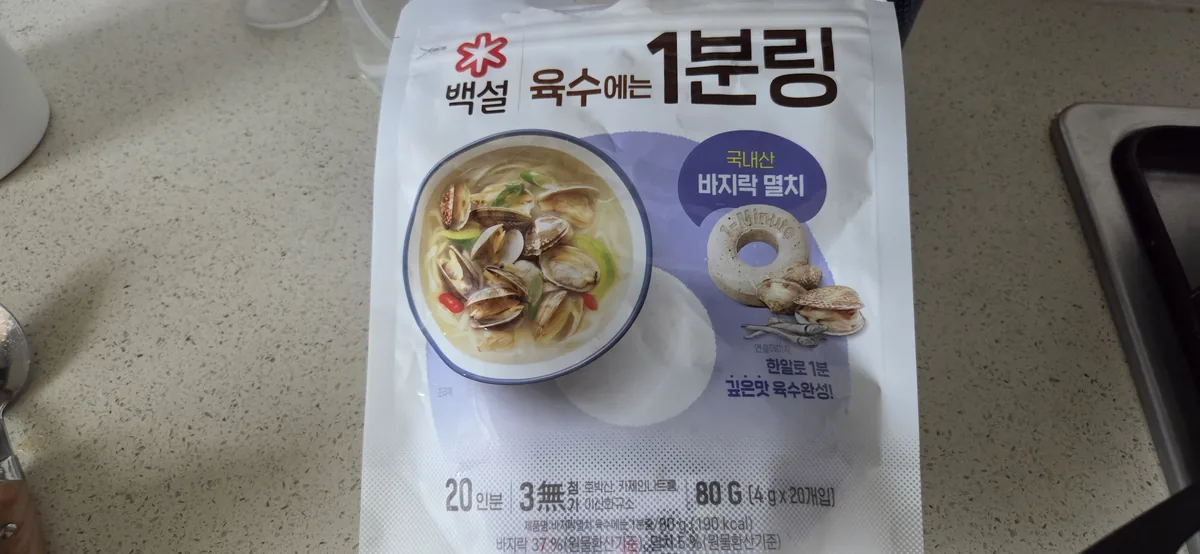
That packet is a real product sold at Korean marts — a pre-made abalone-clam broth base, ready in about a minute, labeled entirely in Korean but simple enough to recognize once you know what you’re looking for. It won’t replace the version below, but it’s a fair introduction if fresh abalone isn’t realistic for you yet. Even Koreans reach for a shortcut sometimes.
Ingredient-hunting like this is part of expat life here generally. I go through the same routine sourcing beef for my daughter’s baby food at our local butcher, and the honest answer is always the same: ask, check a few shops, and don’t assume the first mart you try has what you need.
Putting It All Together: Cooking the Soup
Slice garlic thin while the seaweed finishes soaking. Heat a generous amount of sesame oil in a pot, then add the abalone and the drained, cut seaweed together, and sear it — not boil it — until the kitchen actually smells toasted and nutty. That step is doing more work than it looks. Skip it and the soup tastes flatter.
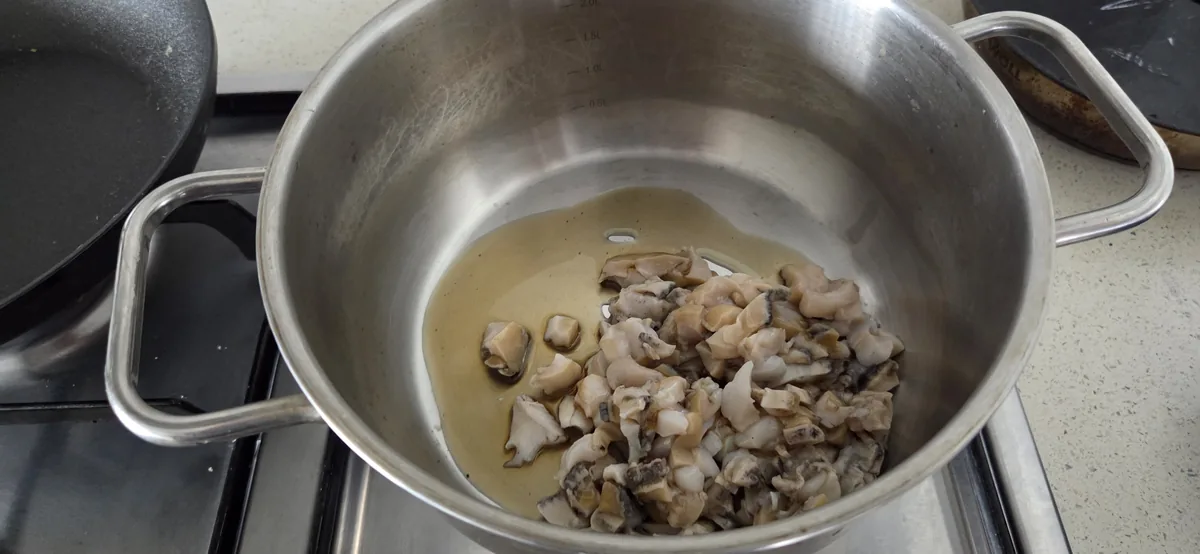
Once the base smells right, pour in water — including the reserved soaking water from earlier — and bring it to a simmer. Add the garlic, a seasoning packet (I use a Korean brand called 1분국, though home-style beef broth granules work too), and mushrooms if you have them lying around, which is entirely optional and mostly just what I had left in the fridge that day.
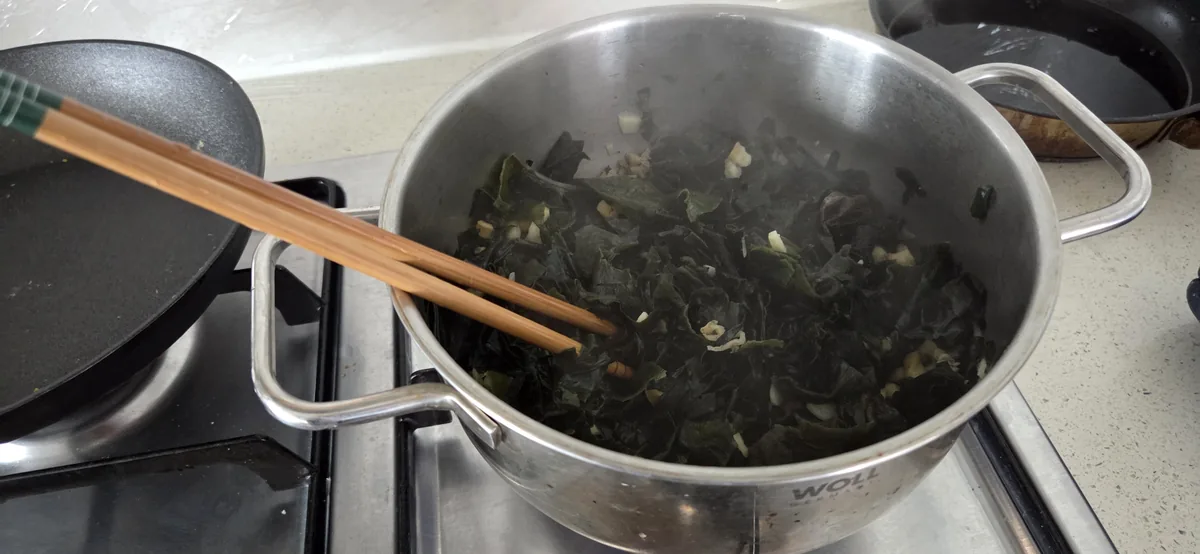
Season the broth with soy sauce to taste — no need for more sesame oil at the end, since it already went in during the sear. Then let it simmer. Longer is better here. I’ve never once had this soup taste worse for sitting on low heat an extra twenty minutes.
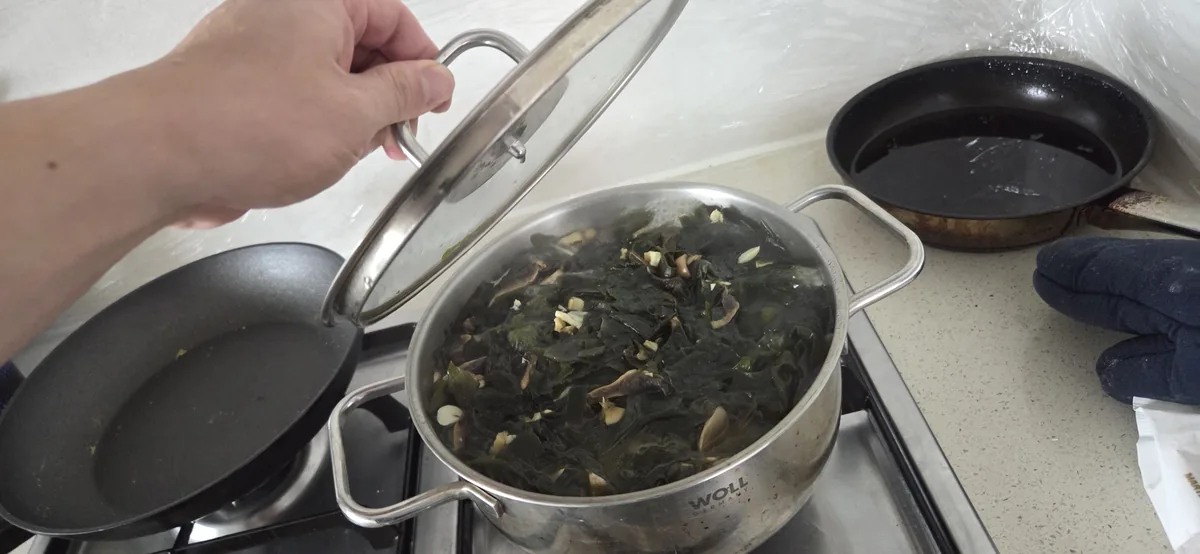
That’s the entire recipe — the kind of thing you can put together on a weeknight with no advance planning, built around whatever’s already in your fridge. Mine happened to start with a week-old regret and a direct question from my wife. Yours can start however it wants.
Frequently Asked Questions
What is miyeokguk and why do Koreans eat it on birthdays?
Miyeokguk (seaweed soup) is the dish traditionally served to new mothers after childbirth in Korea. From there it became a lifelong custom — Koreans eat a bowl of it again on every birthday afterward, as a way of marking the day.
Is abalone hard to prepare for miyeokguk?
Less than it looks. Removing the shell just takes a spoon and some leverage, and trimming the organs and hard mouth piece takes a few minutes once you know where to cut. This easy abalone seaweed soup recipe is built around exactly that — a beginner-friendly version of a dish that looks fancier than it is.
Should I use fresh or dried abalone?
Fresh (or pre-cleaned) abalone is the simpler choice for a home version like this one — no rehydration needed, and the texture is closer to what you’d expect in soup. Dried abalone works too, but it needs a day or more to rehydrate and suits more elaborate preparations.
Where can I buy abalone and seaweed for miyeokguk in Korea?
Dried seaweed is sold in nearly every mart, usually near the instant soups. Abalone is less consistent — a traditional market or seafood counter is often fresher than a mart’s pre-packaged trays, and Korean grocery delivery apps carry both if a market visit isn’t practical.