Navigating Religion in Korea for Expats
Understanding religion in Korea for expats doesn’t mean you have to be deeply religious. It is simply about observing how spirituality weaves into everyday Korean life. When you first arrive, navigating the culture can be overwhelming. If you are struggling with the initial transition, I highly recommend checking out Soft Landing Korea for personal arrival support in Seoul and Gyeonggi.
In Korea, many families follow a unique blend of Buddhism mixed with traditional Korean superstitions. Yet, you will also notice a massive Christian influence across the country.
A Unique Coexistence of Faiths
One of the most remarkable things about Korea is the peaceful coexistence of multiple religions.
- Lack of Conflict: Unlike many parts of the world, there is astonishingly little religious conflict in Korea.
- Shared Celebrations: It is not uncommon to see Buddhist temples hold Christmas mass, or Catholic priests delivering congratulatory speeches on Buddha’s Birthday.
- Pop Culture Reflection: Even in popular Korean movies like Exhuma (파묘), you see shamans, feng shui experts, and Christian undertakers collaborating naturally.
The Comfort of the Red Neon Cross
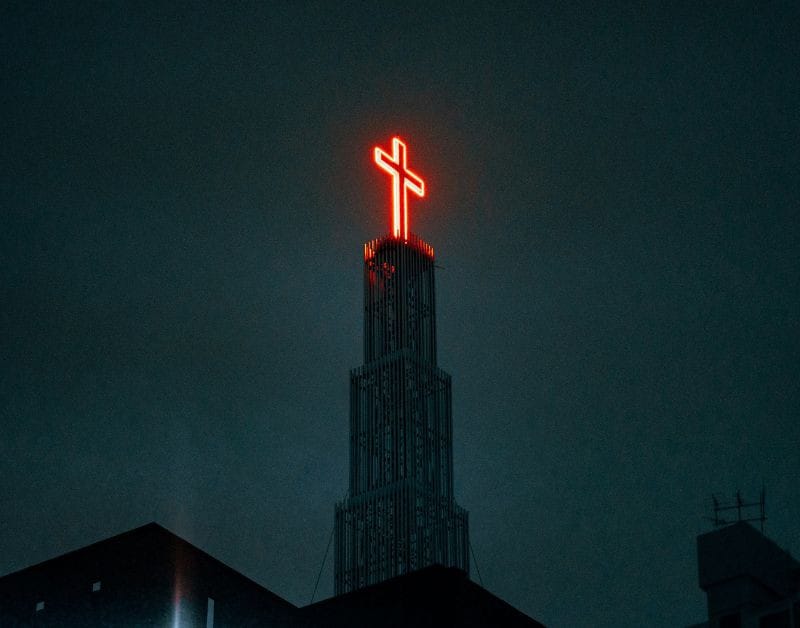
If you look out of your Korean apartment window at night, you will likely see a sea of glowing red crosses.
A Guiding Light in the City
In the popular Korean drama Moving, a gangster character uses a glowing red cross to find his way when he is lost. Even though I am an atheist, I find a strange sense of comfort and relief in seeing those neon signs.
The Intensity of Korean Faith
When religions come to Korea, they tend to become highly concentrated and intense.
- Dawn Prayers: Korean Christians are uniquely known worldwide for their intense “dawn prayers” (새벽기도), waking up at 4 AM to pray.
- Shingi (신기): Scholars suggest Koreans have a deep-rooted spiritual energy or “Shingi” that makes them highly receptive to profound religious experiences.
- Street Proselytizing: You might encounter aggressive proselytizing on the streets, with strangers approaching you about your “good-hearted face”. My advice is to politely decline and keep walking.
Finding Community Through the Church
Despite the occasional street preacher, I deeply respect the concept of the church community.
My Experience in Australia
When I lived in Australia, my English wasn’t great. The Korean missionary church community became my lifeline.
- They provided free English classes.
- They offered essential information about living in a new country.
- They provided the warmth of my mother country.
Christmas in Korea
As a child, I loved the wintertime church events, bible camps, and hearing hymns while sitting on a cold wooden bench. Many expats feel that Christmas in Korea is just a “couple’s holiday,” but there are still many communities that focus on sharing love and the true meaning of the season.
Buddhism: Hiking, Peace, and Nature
If churches dominate the city skylines, Buddhism dominates the mountains.
The Beauty of Mountain Temples
Most Buddhist temples in Korea are located in the mountains. Visiting a temple usually means you get to:
- Hike: It’s a great way to get exercise.
- Enjoy Nature: You can breathe fresh air and enjoy incredible views.
- Find Peace: The calm chanting and environment bring peace to your mind.
Because most of these beautiful temples are located deep in the mountains, they aren’t always easily accessible by public transportation. I recommend bookmarking our hub on driving in South Korea to help you navigate the tolls and mountain roads safely on your way to these peaceful retreats.
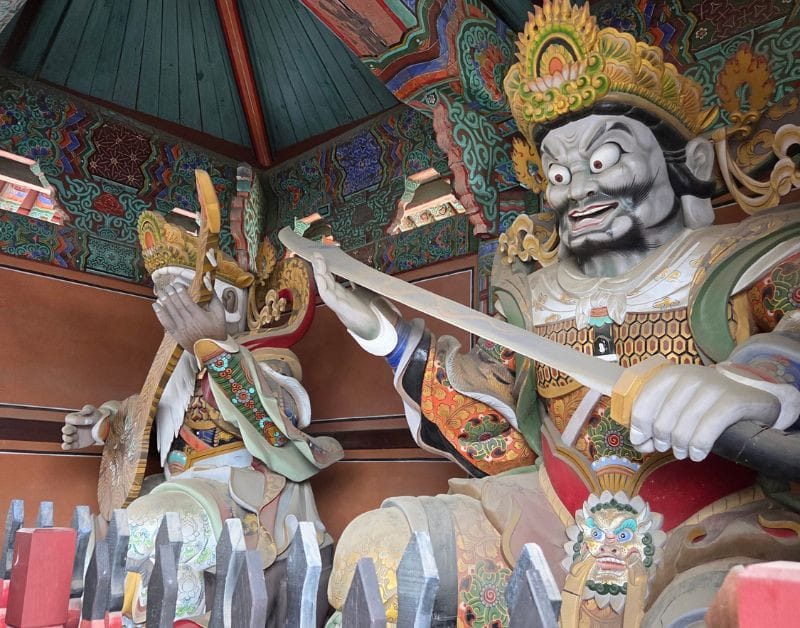
Celebrating Buddha’s Birthday at Yongjusa Temple
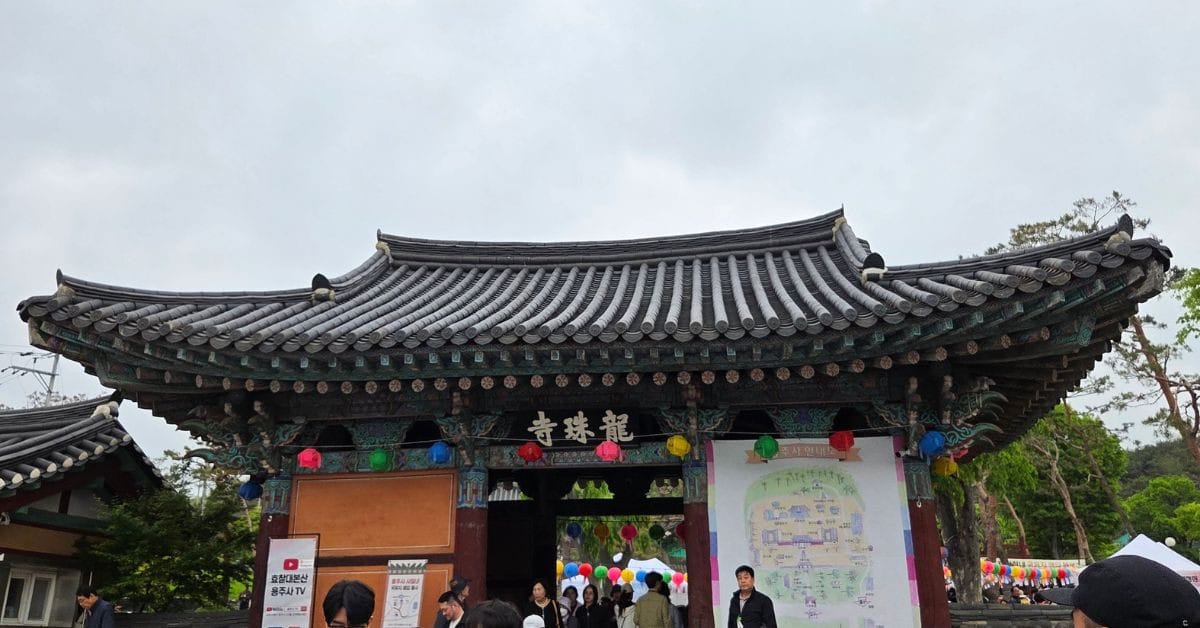
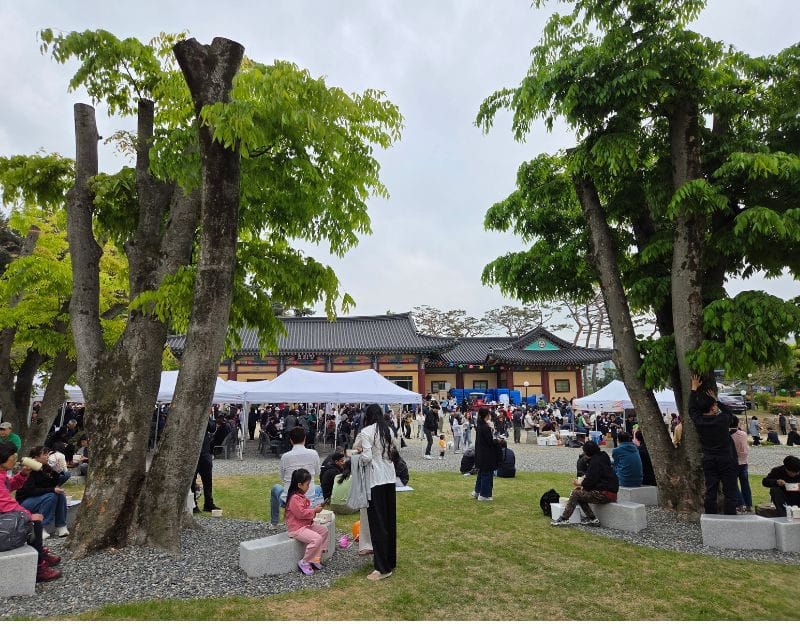
Buddha’s Birthday (celebrated according to the lunar calendar) is a massive public holiday in Korea. Last year, I took my wife to Yongjusa Temple in Hwaseong, one of the largest temples in the area.
If you are visiting Yongjusa and want to maintain the traditional atmosphere after your tour, there is a stunning spot nearby that I highly recommend. You can visit Hyegyunggung Bakery, which is a massive Hanok-style cafe that perfectly complements a day spent exploring Korean spiritual heritage.
Exploring Yongjusa
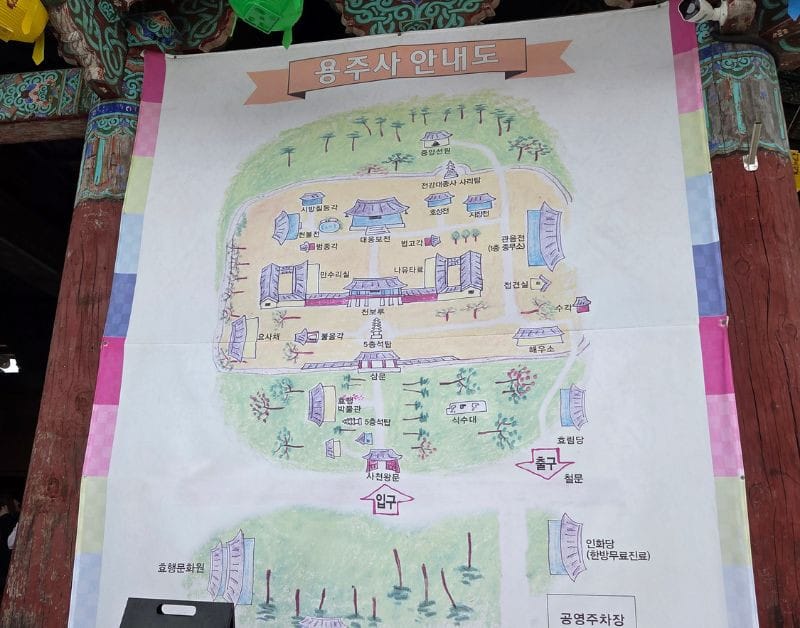
The atmosphere is electric. We started by looking at the beautifully illustrated temple map to plan our route.
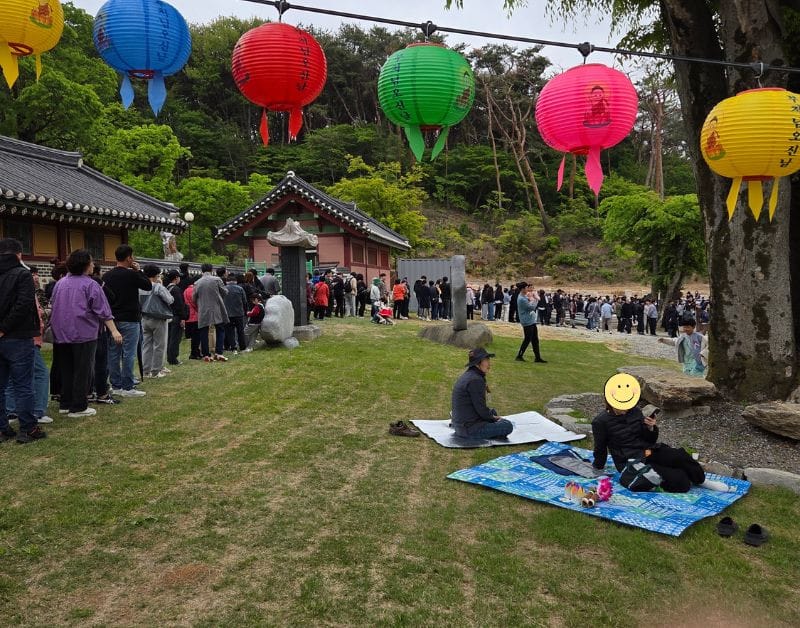
The temple grounds were decorated with thousands of colorful paper lanterns. It’s a visually stunning experience and highly cost-effective since entry is usually free.
The Ultimate Reward: Free Temple Bibimbap
The absolute best part of visiting a temple on Buddha’s Birthday is the free bibimbap.
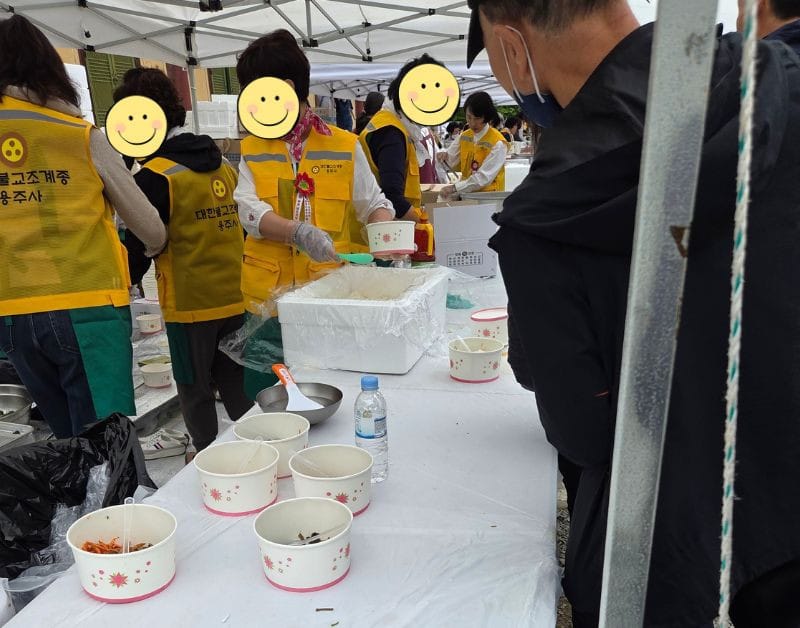
- The Taste: I don’t know why, but this free meal is always incredibly delicious. Maybe some sacred energy gets into the food, much like traditional Korean Jesa (ancestral rite) food.
- The Experience: We waited in a long line with hundreds of other people just to get our bowls. After eating, I always make sure to donate some money to the temple out of gratitude.
Sharing food like bibimbap or jesa offerings is a cornerstone of Korean cultural identity. To understand how these deep-rooted traditions have changed over time, you should also read about Korean Lunar New Year Seollal and what the celebrations were like during the 1990s.
For more insights into Korean culture and history, read about [Internal link suggestion: what the Korean Lunar New Year was like in the 1990s -> korean-lunar-new-year-seollal-1990s-nostalgia].
Frequently Asked Questions (FAQ)
1. Is South Korea a religious country? Statistically, about 50% of the population identifies as having no religion as of 2021. However, the cultural landscape is deeply influenced by Protestantism (20%), Buddhism (17%), and Catholicism (11%).
2. Why do Koreans seem so intense about their religion? When foreign religions enter Korea, they often become highly concentrated. Scholars attribute this to a cultural trait called “Shingi” (spiritual energy) and a deeply ingrained drive for achievement, which translates into intense practices like dawn prayers and 100-day meditation retreats.
3. What is Buddha’s Birthday like in Korea? It is a beautiful public holiday. Temples across the country string up thousands of colorful lotus lanterns. Many temples offer free vegetarian bibimbap to visitors, and there are often large lantern parades in major cities.
4. Can foreigners visit Buddhist temples?
Yes! Temples are open to everyone regardless of faith. Just remember to be respectful and take off your shoes before entering prayer halls. You can even book a “Temple Stay.” Check out the Korea Tourism Organization – Temple Stays for official info.
종교 시설 외에도 한국인들의 진정한 공동체 의식을 엿볼 수 있는 가장 완벽한 행사는 바로 온 가족이 모여 하루 종일 땀 흘리는 김장 날입니다.
5. Is there religious conflict in Korea? Surprisingly, no. Despite having diverse faiths, Korea is unique globally for its peaceful religious coexistence. Historically, different religious leaders have banded together during national crises, viewing themselves as “Korean” first.
Learn survival Korean
Speak enough Korean to handle daily life
1:1 online Korean lessons focused on practical, real-life situations — not textbook grammar. Book a session with a native Korean speaker who understands expat life.
Book a Korean lesson →