📌 Quick Summary:
The MinSik Law (민식이법) applies a strict duty of care to every driver in a Korean school zone — not just a speed limit. Life in prison is the maximum for fatalities only. If you drive under 30km/h, scan actively, and keep your foot over the brake, you are doing what the law actually requires. A supplemental 운전자보험 (Driver’s Insurance) policy is strongly recommended for expats.
The first time I drove through our neighbourhood in Hwaseong, I passed through five separate school zones in fifteen minutes. I was apartment-hunting, unfamiliar with the area, and already recalibrating to Korean roads after years driving in Japan and Australia. If you want a complete overview of what it means to be driving legally in Korea as an expat, that context matters — because a school zone drive in Korea is unlike anything you’ll encounter in most other countries, and the MinSik law penalties are real enough that fear has become its own problem.
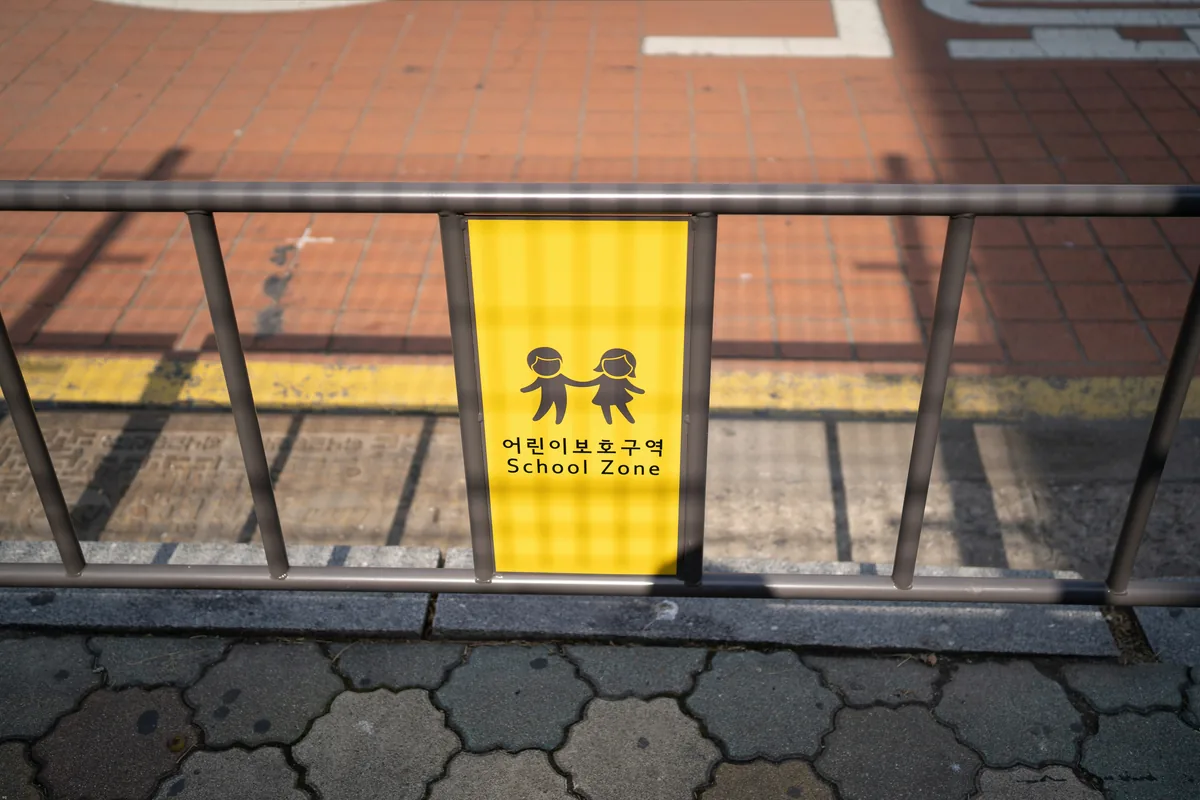
I eventually learned that lesson the hard way. A 120,000 KRW fine arrived by post after I ran a red light in a school zone near our apartment. Not from speeding. Not from recklessness. The bright yellow fencing, the distinctive signage, the sheer visual intensity of a Korean 어린이 보호구역 (Eorini bohoguyeok) — Child Protection Zone — genuinely distracted me. I looked at the environment and missed the traffic light entirely.
That fine was painful. It was also a better teacher than any legal explainer I’ve read since.
- → What Is the MinSik Law and Why Does It Exist?
- → MinSik Law Penalties: What Actually Happens
- → The Myths That Are Making Expat Drivers Paranoid
- → How to Actually Drive Through a School Zone in Korea
- → Avoid School Zones T-Map: Does the Routing Option Actually Help?
- → Korea Traffic Fines and the Insurance Policy Most Expats Don’t Know About
- → Frequently Asked Questions
What Is the MinSik Law and Why Does It Exist?
In September 2019, a nine-year-old boy named Kim Min-sik was struck and killed by a vehicle in a school zone in Asan. His parents had sent him out that morning the same way they did every morning. He didn’t come home.
That image — a child leaving for school and never returning — is what grounded my support for this law when I first understood it. The 민식이법 (Minsik-i beop) — MinSik Law — went into effect on March 25, 2020. It amended two existing pieces of legislation: the Road Traffic Act, mandating the installation of speed cameras and traffic signals in all school zones, and the Act on the Aggravated Punishment of Specific Crimes, dramatically increasing penalties for drivers who cause accidents in those zones.
A designated school zone covers a radius of 300 meters around a school entrance. You’ll recognise them by the bold red or yellow 어린이 보호구역 markings painted directly on the asphalt, and by the bright yellow fencing and signage that lines the perimeter. The standard speed limit inside is 30km/h — and according to Korea Road Traffic Authority (KoROAD) data, May alone accounts for roughly 11% of all child traffic accidents annually, which is part of why enforcement is so dense.
MinSik Law Penalties: What Actually Happens
This is where most expat discussions go sideways. The penalties are severe — but they are not what the rumour mill says they are.
Under the Act on the Aggravated Punishment of Specific Crimes (Article 5-13), the breakdown is as follows:
- Injury in a school zone: Fines of 5 million to 30 million KRW, and/or prison sentences of 1 to 15 years.
- Death in a school zone: Fines are abolished. Prison sentences range from 3 years to life.
Before the MinSik Law, the maximum penalty for any school zone accident — injury or death — was 5 years in prison or a fine of up to 20 million KRW. The law raised those floors and ceilings significantly, particularly for fatalities.
But here is the critical nuance that gets lost: courts still assess the percentage of fault. If a driver was travelling under 30km/h, actively scanning their surroundings, and had their foot over the brake — and an accident still occurred — the court will consider that. Acquittals are rare but not impossible. The harshest sentences are reserved for drivers who were genuinely negligent: distracted, speeding, or not paying attention.
💡 Pro Tip:
The most common cause of school zone accidents is not speeding or running red lights — it is “negligence of safe driving duties.” Looking at a smartphone. Failing to scan left and right. Driving 20km/h while staring straight ahead. Speed alone does not define your legal exposure.
The Myths That Are Making Expat Drivers Paranoid
Lawyer Jung Kyung-il, speaking on Korean radio, addressed the most extreme versions of these rumours directly. His words are worth understanding clearly.
Myth 1: “If I even graze a child in a school zone, I get life in prison.”
Reality: Life in prison is the maximum sentence and applies only to cases resulting in death. An accident must actually result in an injury for the aggravated penalties to apply at all. A scratch on a bumper is not a MinSik Law criminal case.
Myth 2: “Driving exactly at 30km/h protects me completely.”
Reality: The law requires a full duty of care — not just a compliant speedometer reading. A driver doing 20km/h while checking their phone is fully liable. The law demands that you drive as if a child might step into the road at any second, scanning left and right, not just forward.
Myth 3: “If a child on a bicycle runs into my parked car, I’m liable.”
Reality: Your vehicle must be actively in operation for the MinSik Law to apply. If your car is completely stopped or legally parked and a child collides with it, you are not liable under this specific aggravated law.
Compare this to how school zones work elsewhere. In Japan, スクールゾーン (school zones) often physically close streets to vehicles during school commuting hours. In Australia, the 40km/h limit applies only during specific time windows with flashing lights as a trigger. Korea’s approach — a blanket 30km/h, 24 hours a day, 365 days a year, enforced by a dense camera network — is more demanding. But it is also more consistent. You always know the rule. There is no ambiguity about whether the limit is currently active.
How to Actually Drive Through a School Zone in Korea
I drive through school zones every day. Our apartment complex sits directly beside an elementary school. There is genuinely no routing option that avoids it without adding significant time and complexity — complexity that can itself cause accidents when GPS pushes you through narrow, congested backstreets.
Here is what my actual driving looks like inside a school zone:
- Stay in the second or third lane, not the first. Drivers who want to go faster — or who are less patient — can use lane one. Nobody can complain about you doing the legal speed in a slower lane. This removes the pressure from behind.
- Foot over the brake, not the accelerator. This is not metaphorical. Your foot physically moves from the accelerator and hovers. If a child steps out, you press — full brake, not a tap.
- Scan left and right actively, not just forward. Children in school zones act unpredictably. They step out from between parked cars. They run to catch up with friends. Your eyes need to move.
- Do not use your phone. This should not need saying, but it is the primary cause of school zone negligence cases.
- Watch for visual overload. The yellow fencing, bold markings, and camera signage are deliberately intense. If you’re new to Korean roads — especially returning from abroad — that visual environment can pull your attention away from traffic signals. I learned this expensively.

Saving ten seconds is never worth an accident or a fine. That is not a slogan. It is a genuine calculation I make every time I enter a school zone.
If you’re still getting comfortable with Korean roads overall, it’s worth reviewing the rules around driving legally in Korea as a foreigner before anything else — the license and IDP rules are the foundation everything else sits on.
Avoid School Zones T-Map: Does the Routing Option Actually Help?
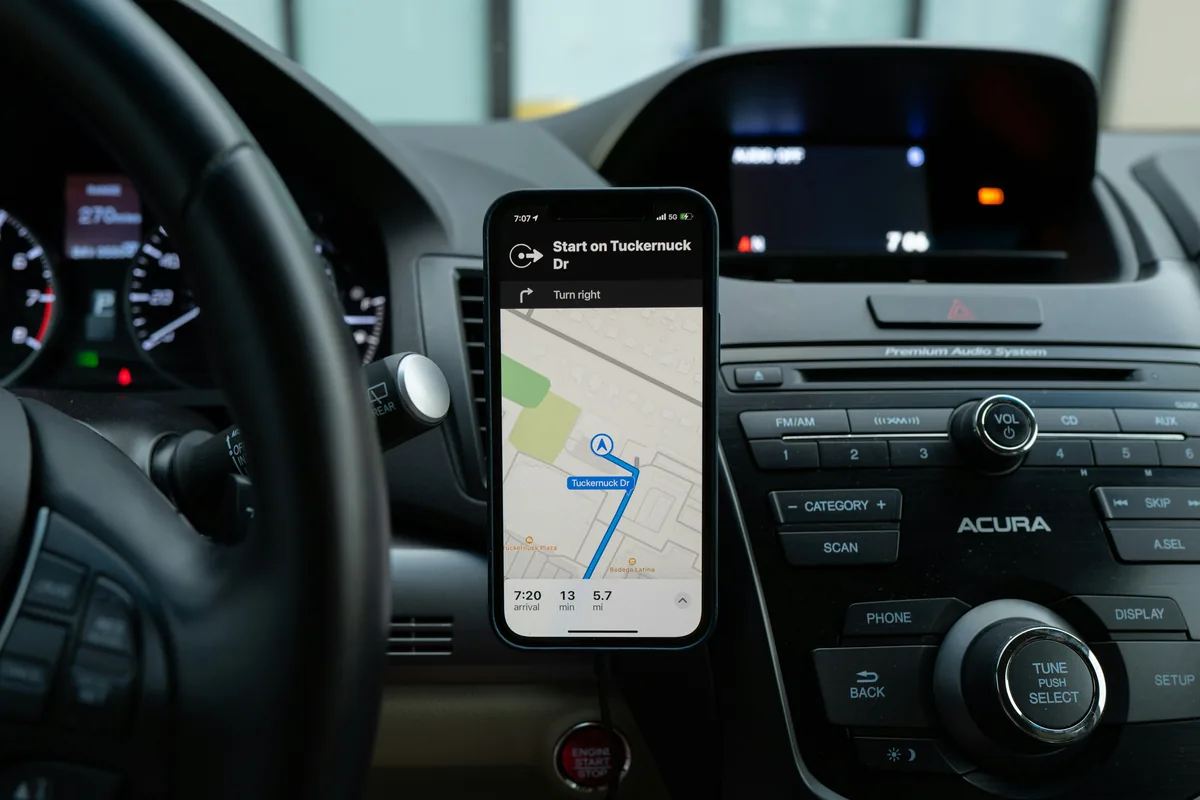
Korean navigation apps — T-Map, Kakao Navi, and Naver Map — all offer an 어린이 보호구역 우회 (Eorini bohoguyeok uhoe) — Avoid School Zones — routing toggle. In theory, this automatically routes you around every designated school zone.
In practice, I don’t use it. The detour in a dense residential area like Hwaseong roughly doubles travel time and pushes you through narrower, more congested roads. That trade-off can create more risk, not less.
That said, the option is genuinely useful in specific situations:
- You are brand new to Korean driving and want to eliminate the variable entirely while you build confidence.
- You are driving in an unfamiliar area where you don’t know the road layout well.
- You have a longer journey where rerouting doesn’t meaningfully add time.
💡 Pro Tip:
To enable this in T-Map, go to Settings → Route Options → toggle on “어린이 보호구역 우회.” In Kakao Navi, find it under Route Settings. In Naver Map, look under the navigation preferences before starting a route. Labels are in Korean — screenshot this if needed.
One thing all three apps do well regardless of routing: they alert you audibly and visually when you are entering a school zone. That alert alone — if you’re paying attention to it — is worth keeping your phone mounted and your volume on.

Korea Traffic Fines and the Insurance Policy Most Expats Don’t Know About
If you receive a korea traffic fine — whether for a speed camera violation or a red light in a school zone — the process is straightforward. A notice arrives by post with a QR code and a bank account number for payment. You can pay via mobile banking app in minutes, or via bank transfer. Going to a physical bank branch works too, but costs you time. The QR code is the fastest route.
My 120,000 KRW red light fine arrived within days. The process itself was painless. The lesson was not.
What most expats — including me, until I researched this post — don’t know about is 운전자보험 (Unjeonja boheom) — Driver’s Insurance. This is a supplemental insurance policy, entirely separate from your mandatory Korean car insurance. It specifically covers:
- Criminal fine coverage up to 30 million KRW (the maximum MinSik Law penalty for injury cases)
- Lawyer and legal defence fees
- Criminal settlement money (합의금) paid to injured parties
Standard mandatory car insurance does not cover these costs. The Korea JoongAng Daily reported that after the MinSik Law passed, insurers significantly expanded Driver’s Insurance products specifically to cover the new 30 million KRW fine ceiling. If you drive in Korea and you don’t have this policy, ask your insurer about it at your next renewal.
Struggling to communicate with your insurer or navigate Korean-only paperwork around your car or driving situation? JustAskJin can help you work through the Korean documentation and communication side so nothing gets lost in translation.
One final note on recency: while the 30km/h blanket limit has historically applied 24 hours a day, the Korean government began trialling variable late-night speed limits — up to 50km/h between 8 PM and 7 AM in select areas — from September 2023, as reported by the Korea Herald. Daytime enforcement remains unchanged and as strict as ever. Verify current zone-specific rules with local signage before assuming late-night flexibility applies in your area.
If you’re at the stage of getting your Korean driver’s license, this is exactly the kind of law you need to understand before you ever start the engine.
❓ Frequently Asked Questions
What are the MinSik Law penalties for causing an accident in a school zone?
If a driver causes injury in a school zone due to negligence, the MinSik law penalties include fines of 5 million to 30 million KRW and prison sentences of 1 to 15 years. For fatalities, fines are removed and sentences range from 3 years to life in prison. Courts assess the driver’s percentage of fault based on whether they fulfilled their full duty of care.
Does the MinSik Law mean automatic prison time if I hit a child in a school zone?
No. Life in prison is the maximum sentence and applies only to cases involving death, not injury. Courts consider the driver’s actual behaviour — speed, scanning, braking response — and if the driver demonstrably fulfilled every duty of care requirement, the harshest penalties may not apply. The law is severe, but it is not automatic.
What is the speed limit and radius of a Korean school zone?
A Korean 어린이 보호구역 (Eorini bohoguyeok) covers a 300-meter radius around a school entrance. The standard speed limit is 30km/h, enforced 24 hours a day by unmanned cameras. Some areas are trialling 50km/h between 8 PM and 7 AM from September 2023 — but daytime enforcement remains strictly at 30km/h.
Am I liable under the MinSik Law if a child crashes into my completely stopped vehicle?
No. The MinSik Law requires your vehicle to be actively in operation for aggravated liability to apply. If your car is legally parked or fully stopped at a red light and a child collides with it, you are not liable under this specific law. Follow the rules, stop correctly, and trust the system.
How do I use Korean navigation apps to avoid school zones while driving in Korea?
T-Map, Kakao Navi, and Naver Map all have a school zone avoidance toggle — look for 어린이 보호구역 우회 in route or navigation settings. In T-Map it’s under Settings → Route Options. It’s most useful for new drivers or unfamiliar routes. In dense residential areas, the detour can be longer and more complex than simply driving through carefully.
Confused by Korean Traffic Documents, Fines, or Insurance?
Korean-only fine notices, insurance renewal forms, and legal paperwork are stressful enough without a language barrier. JustAskJin can help you understand exactly what you’re dealing with and what to do next.
Get Help With Korean Paperwork