When you first move to South Korea, the challenge of driving in South Korea is the last thing on your mind — the public transit system in central Seoul seems like an absolute miracle. Between the hyper-efficient subway lines and the punctual buses, you might think that owning a car is entirely unnecessary. But if you, like my wife and I, choose to live out in the rapidly expanding suburbs like Hwaseong, or perhaps down in Pyeongtaek, the reality shifts drastically. You quickly realize that having your own set of wheels is the ultimate key to freedom.
My wife was amazed by the sheer scale of the Korean infrastructure. But she also felt trapped whenever we wanted to explore the hidden cafes nestled in the valleys or take a spontaneous road trip down to the southern coasts. Looking out over the landscape from a high vantage point, you can truly appreciate the vastness of the urban sprawl. Staring down at the high-angle view of the dense city nestled tightly between rolling green mountains under a slightly hazy sky, you realize just how much of this beautiful country is waiting to be explored beyond the reach of a train station.
Having previously lived and worked in Japan and Australia, I was used to a different driving culture. Japan is meticulous, slow-paced, and highly rule-bound. Korea, on the other hand, operates with a vibrant, fast-paced energy. Navigating the Korean driving system—from passing the somewhat intimidating exams to figuring out the automated toll gates—can feel overwhelming at first.
That is exactly why I created this master hub page. Think of this post as your main directory. Below, I have broken down the Korean driving experience into core categories. I will be continuously updating this page with links to our detailed, step-by-step “child” posts so you can bookmark this page and find exactly what you need to hit the road with confidence.
1. Getting a Korean Driver’s License from Scratch
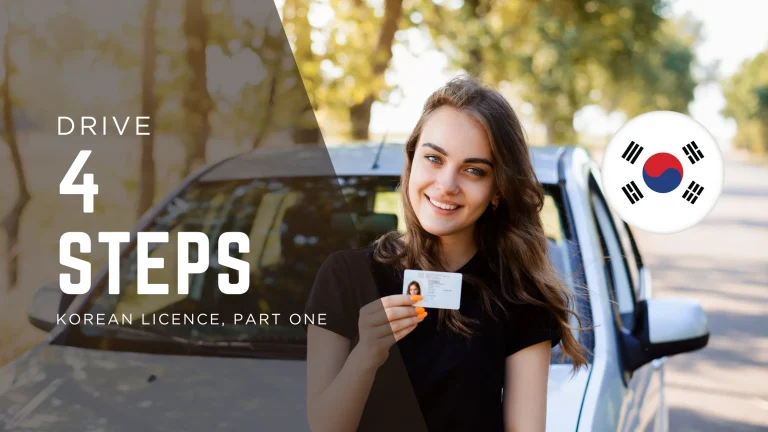
If you are planning to live in Korea long-term and cannot simply exchange your home country’s license (due to lack of reciprocity agreements), you will need to take the official Korean driving test. My wife recently went through this entire process from start to finish at the Anyang Driving School, an experience that tested both our patience and our Korean vocabulary.
The process involves a safety education class, a medical check, a written test, a closed-course driving test, and finally, an on-road driving test. To help you pass, we are breaking the process down into comprehensive guides.
Step 1: The Written Test & Application
Learn how to register, what it costs, and how to pass the written exam (available in English!) using free apps referencing the official Safe Driving website by KoRoad.
👉 Read the full guide: Getting a Driver’s License in Korea: My Wife’s Experience (Part 1)
Step 2: The Driving Test & Road Practice
Discover the dreaded “T-parking” formula, the 6-hour road practice requirements, and what to expect on test day.
👉 Read the full guide: Getting a Driver’s License in Korea: My Wife’s Experience (Part 2)
If you’re driving in Korean residential areas, understanding the strict rules around school zone driving and the MinSik Law penalties is essential reading before you get behind the wheel near any elementary school.
2. Conquering the Toll Gates (The Hi-Pass System)
Once you have your license and a car, you will quickly notice that South Korea is covered in beautifully maintained, highly efficient, but heavily tolled expressways. Driving out of the city at night is a mesmerizing experience. I vividly remember driving back to Hwaseong late one evening; the cool night air rushed through the windows as we merged onto the expressway. Looking ahead, I could see the long exposure of car tail lights creating brilliant red streaks down the busy multi-lane highway, illuminating the darkness with a frantic, glowing energy.
While the hub covers year-round driving essentials, the winter months demand specialized knowledge—from understanding slush road physics to navigating Korea’s unique accident fault system and the critical role of dashcam evidence, all detailed in our winter safety guide for expats.
Before hitting the road, it’s worth knowing how to keep your car in shape — our guide to basic car maintenance in Korea covers the 100-won tire trick and essential Korean phrases for your local mechanic.
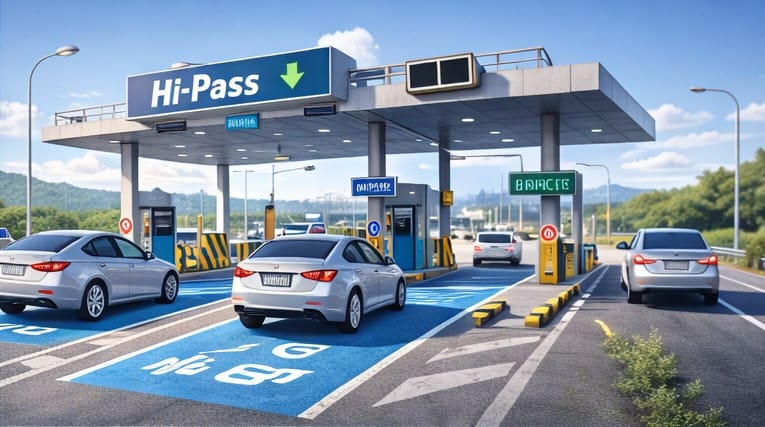
While you can absolutely stop at the toll booths and pay cash, getting an electronic Hi-Pass card is an absolute necessity for stress-free driving. We explain exactly where to buy a card, how to register it online as a foreigner, and how to set up automatic bank recharges.
👉 Read the full guide: The Ultimate Expat Guide to Using a Hi-Pass Card in South Korea
3. International Driving Permits (IDP) & Exchanging Licenses
If you are in Korea for a short stay, or if your home country has a reciprocal agreement with South Korea, you might be able to legally drive using an IDP or by doing a direct, hassle-free license exchange. The paperwork can be slightly confusing for newcomers, so we are putting together a definitive checklist of what you need to bring to the local DMV.
👉 Read the full guide: Can I Drive in Korea? IDP Rules, License Exchange & Car Rentals
4. Car Insurance and Buying a Used Car
Purchasing a vehicle here as a foreigner is an adventure. New cars often have long waitlists, making the used car market massive. Navigating apps like Encar or K-Car, and setting up mandatory Korean car insurance without a local driving history requires a bit of insider knowledge. We will break down how to avoid lemons and get the best insurance rates as an expat.
👉 Read the full guide: How I Bought a Used Car in Korea Without Getting Scammed
5. Essential Driving Tips for Foreigners
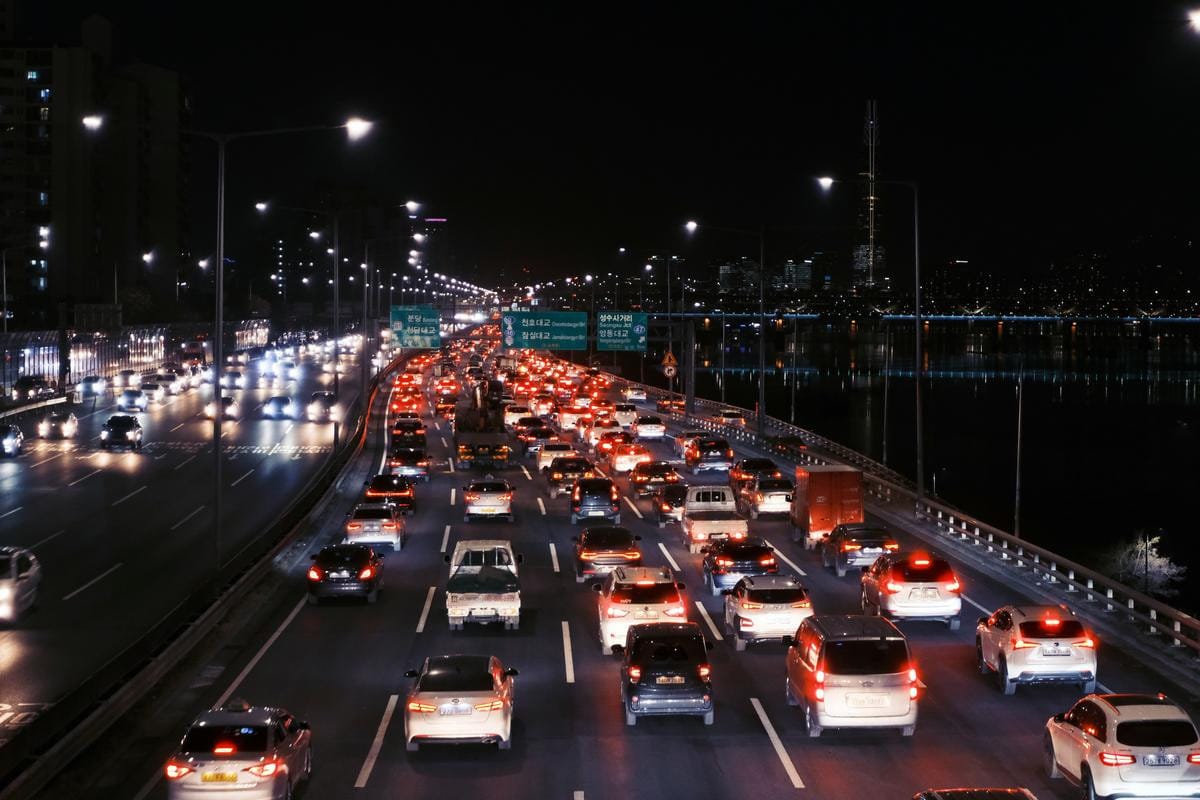
Driving in Korea has its own unique rhythm. Coming from Japan, where drivers are overly cautious, I had to adjust to the aggressive efficiency (“bbali-bbali” culture) of Korean drivers. There are days when the sheer volume of vehicles on the road is mind-boggling. I recall a Saturday afternoon trying to cross the Han River. The noise of engines idling and the faint smell of exhaust filled the air as we sat completely boxed in. Staring through the windshield, all I could see were numerous silver and white cars packed closely together in heavy traffic on the grey asphalt road.
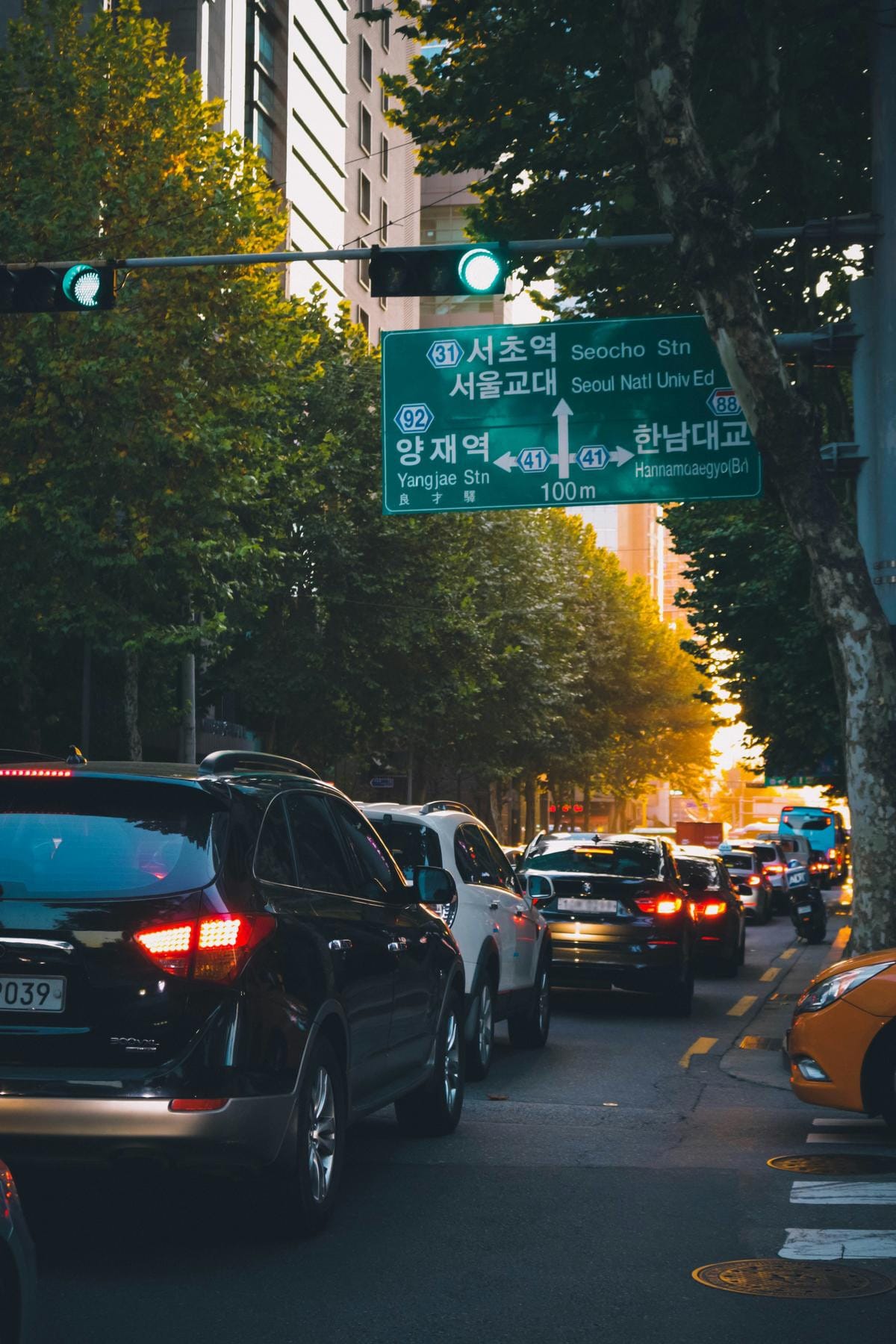
From understanding the massive network of automated speed cameras to knowing why you absolutely must ditch Google Maps for Naver Map, we will cover all the survival strategies you need.
👉 Read the full guide: What Is Driving in Korea Really Like? An Honest Guide
6. Mastering Korean Parking: The Final Boss
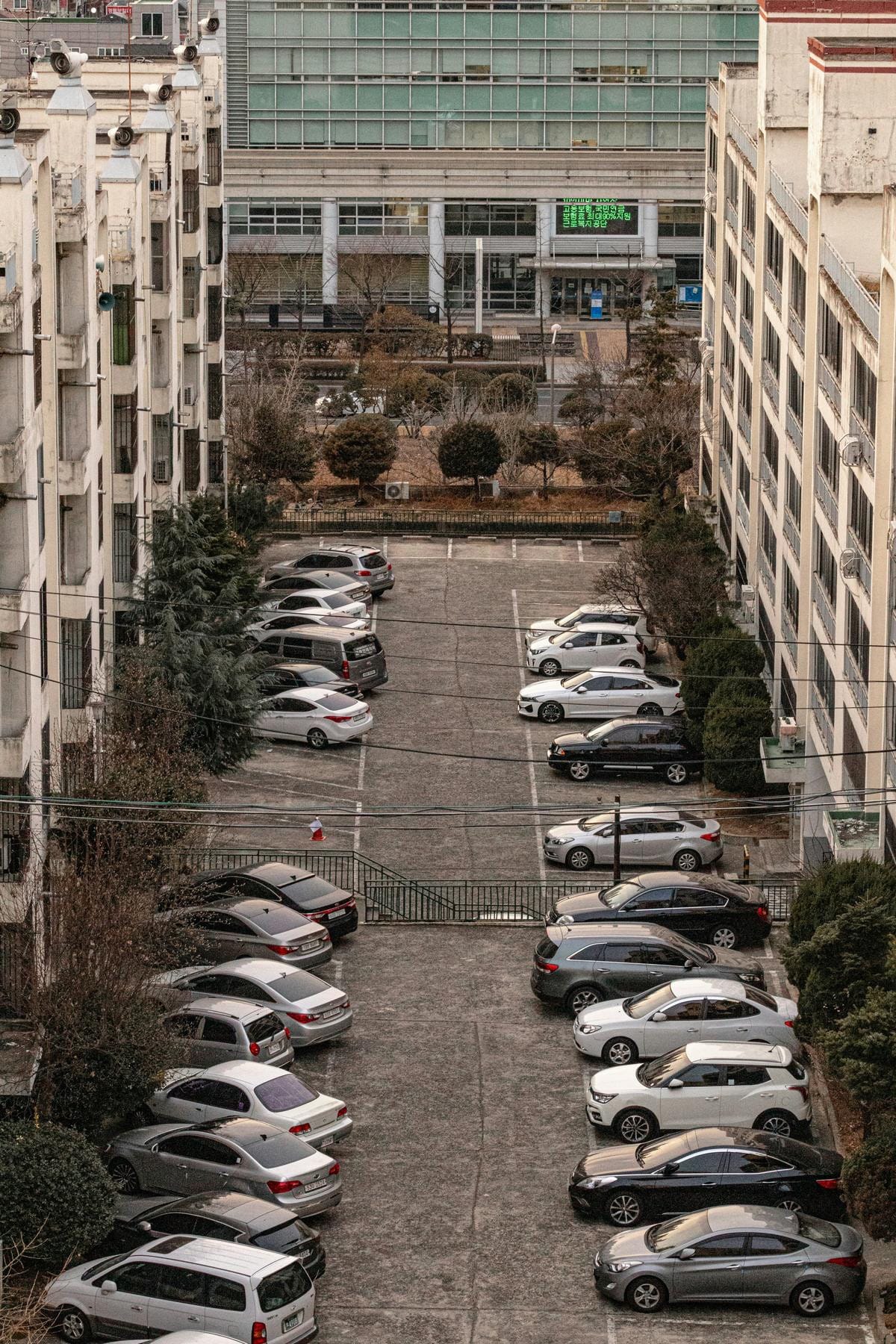
If driving in Korea is the test, parking is the final boss. Space is an absolute premium in this densely populated country. When we first moved into our apartment complex in Hwaseong, I was stunned by the parking situation late at night. Walking through the complex after a late dinner, the hum of the city fading away, I looked over the designated parking area. I saw dozens of cars parked in incredibly tight, organized rows within the paved outdoor parking lot near the buildings. This is where you learn the unwritten laws of “double parking.”
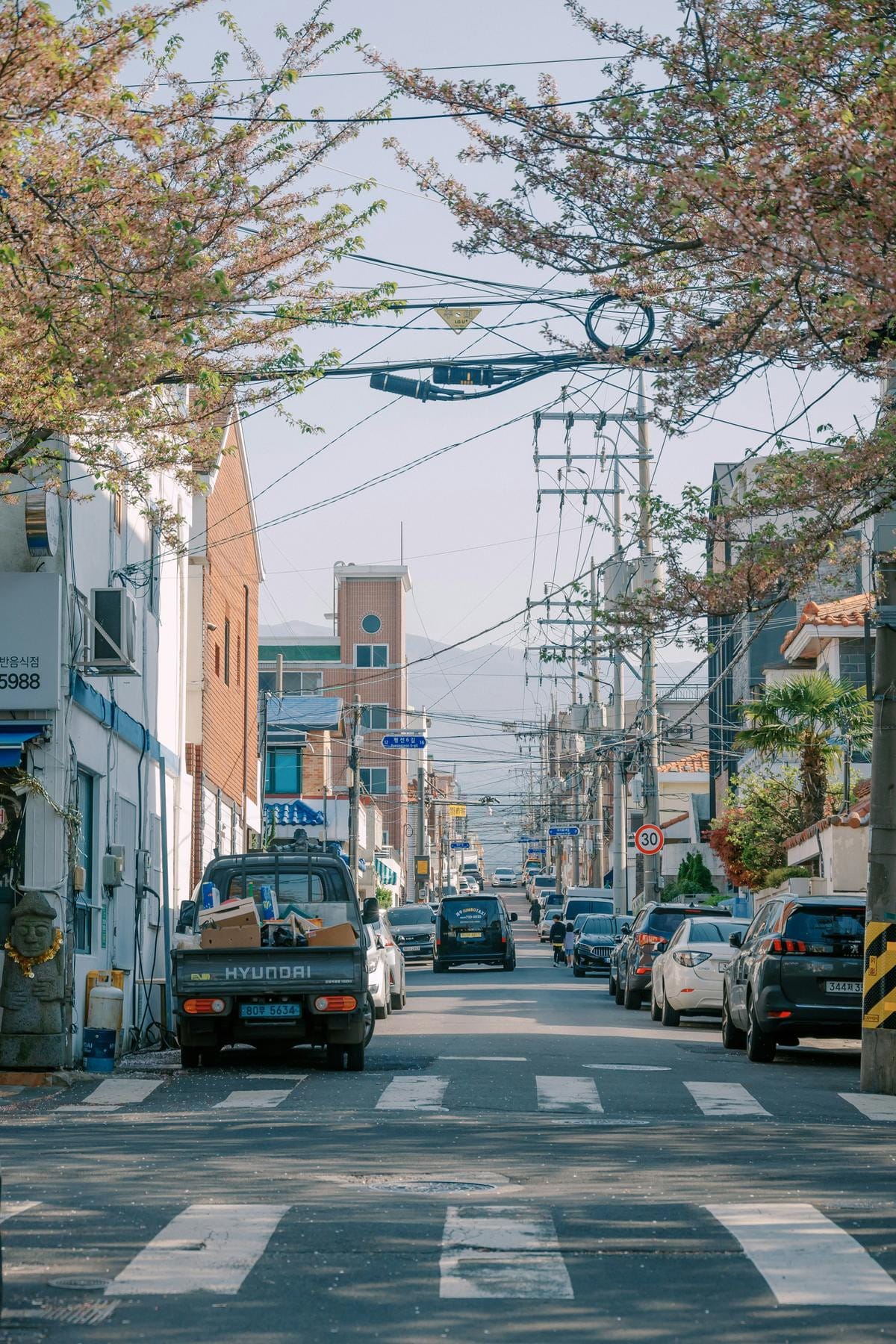
Street parking is another beast entirely. I vividly remember carefully inching my way down an alleyway in a historic district. Looking to my right, I noticed a single white sedan perfectly parked on the narrow paved street, tucked flawlessly next to a tall stone wall to allow a singular lane of traffic to slowly pass by. We will teach you how to navigate these tight spaces and the vital etiquette of leaving your phone number on your dashboard.
👉 Read the full guide: How I Survived Korean Parking Culture: An Expat’s Honest Guide
7. Getting an International Driving Permit (IDP) in Korea
Once you hold a valid Korean driver’s license, you can easily issue an IDP within South Korea to legally drive during trips back home or vacations abroad. We guide you through the quick application process at local police stations or driver’s license examination centers.
👉 Read the full guide: How to Get an International Driving Permit in Korea: Quick Guide
8. Navigating Life with an Electric Vehicle (EV) in Korea
South Korea is rapidly expanding its EV infrastructure, offering unique subsidies and apartment-integrated charging solutions that make switching to electric an attractive option for expats. We discuss charging etiquette, finding stations on Naver Map, and the practical pros and cons of EV ownership here.
👉 Read the full guide: (Full detailed guide coming soon!)
9. Expat Parent’s Guide to Baby Car Seats in Korea
Ensuring your child’s safety on Korean roads means understanding local car seat laws, finding the right gear at stores like Baby Plus, and mastering ISOFIX installation in Korean vehicle models. We break down the regulations and help you choose the best option for your growing family.
👉 Read the full guide: Select The Car Seat Rabbit Hole: A Korean Expat Parent’s Guide
Conclusion: The Freedom of the Open Road
Learning to drive in South Korea was undoubtedly a steep learning curve for my wife, and adapting to the unwritten rules of the road was a challenge even for me. There were moments of frustration—missing an exit because the GPS spoke too fast, or sweating through a terrifyingly tight parallel park while an impatient taxi waited behind us.
But when I look back, the effort was entirely worth it. Getting behind the wheel transformed our life in Hwaseong. We are no longer bound by bus schedules or subway maps. We can drive to a remote Hanok cafe on a Sunday morning, grab groceries in bulk without breaking our backs, and truly experience the depth of Korean culture on our own terms. Driving here made us feel less like passing tourists and more like true residents.
If you are an expat feeling trapped in your neighborhood, bookmark this hub page. Explore the guides we have linked above, and check back as we continue to add more “son” posts covering every aspect of driving in Korea. The open roads of South Korea are waiting for you, and the adventure is just a turn of the key away. Drive safe, and see you on the expressway!
Arriving in Korea soon?
Don’t navigate your first day alone
I meet you at Incheon or Gimpo airport and guide you through everything — SIM card, T-money, transport, and getting to your accommodation. Personal support from $180.
Book arrival support →