📌 Quick Summary:
Majang Lake suspension bridge in Paju is one of Gyeonggi’s best spontaneous day trips — free to walk, genuinely impressive, and accessible for families. The real challenge is timing your arrival, knowing which parking lot to aim for, and not relying on public transport without checking the Bus 313 schedule first.
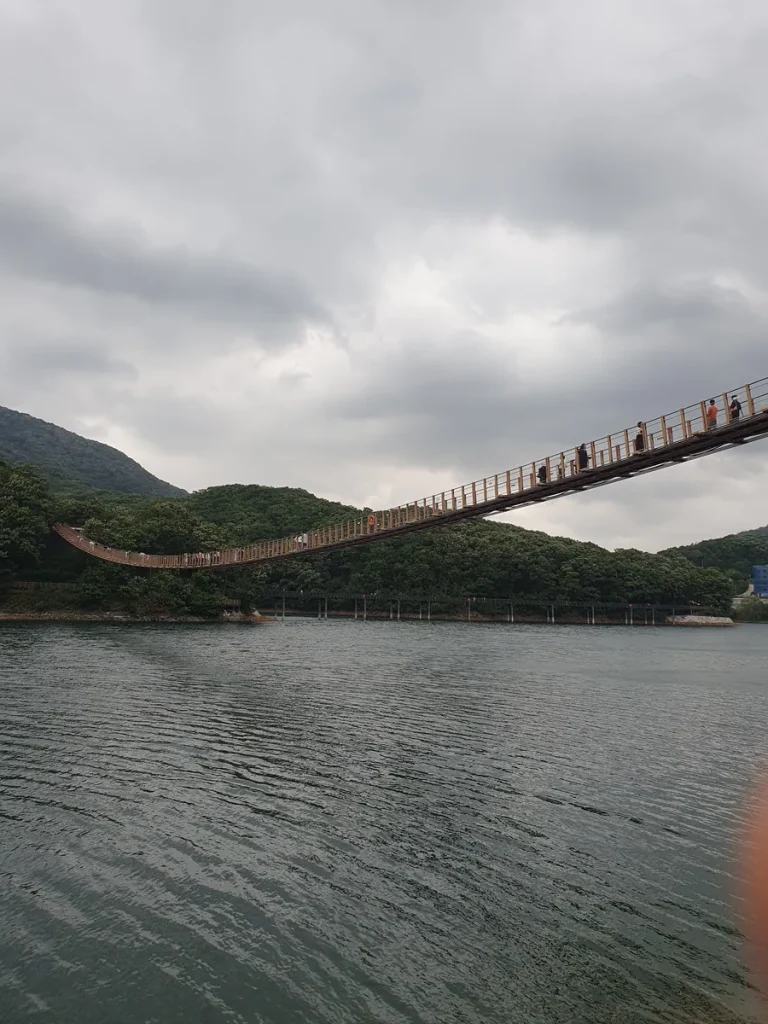
We had about two hours to kill between lunch in 의정부 and meeting my older sister. My wife was with me. I pulled up the map, saw 마장호수 출렁다리 (Majang Lake suspension bridge) on my radar, and we just went. No booking, no plan — that’s honestly the best way to visit this place. What I didn’t expect was how big the bridge actually is. Standing at the entrance, looking across 220 meters of suspension cable stretched over flat, clean water, I said nothing for a moment. It’s one of those things that earns its reputation. According to visitor data compiled by TellTrip, over 1.41 million people come here annually — and after seeing it, that number makes complete sense.
Getting There: Car vs. Majang Lake Bus 313
I live in south Gyeonggi. Paju is north Gyeonggi. I drive. For most expats coming from Seoul or Gyeonggi, a car is the straightforward call — it puts you right at the parking lots and gives you flexibility on timing.
That said, public transport is possible. The relevant route is Bus 313 (or 313-1) from Neunggok Station (능곡역) on the Gyeongui-Jungang Line. The problem is frequency. This bus runs roughly 5 times a day on weekends. Miss one, and you are waiting close to an hour at the stop with nothing around you.
Before you go the bus route, check the live timetable on Gyeonggi Bus Info (gbis.go.kr) — not just Naver Maps, which can show the route without flagging the wait times clearly. Also note: the final stop drops you about 1.2km from the park entrance. That’s a 20-minute walk each way on top of everything else.
💡 Pro Tip:
If you’re coming from Seoul by car, use T-map and let it reroute you dynamically. Saturday and Sunday afternoon traffic toward Paju can back up badly on the main roads — T-map’s alternative routing saved significant time on my visit.
Majang Lake Parking: Which Lot to Aim For
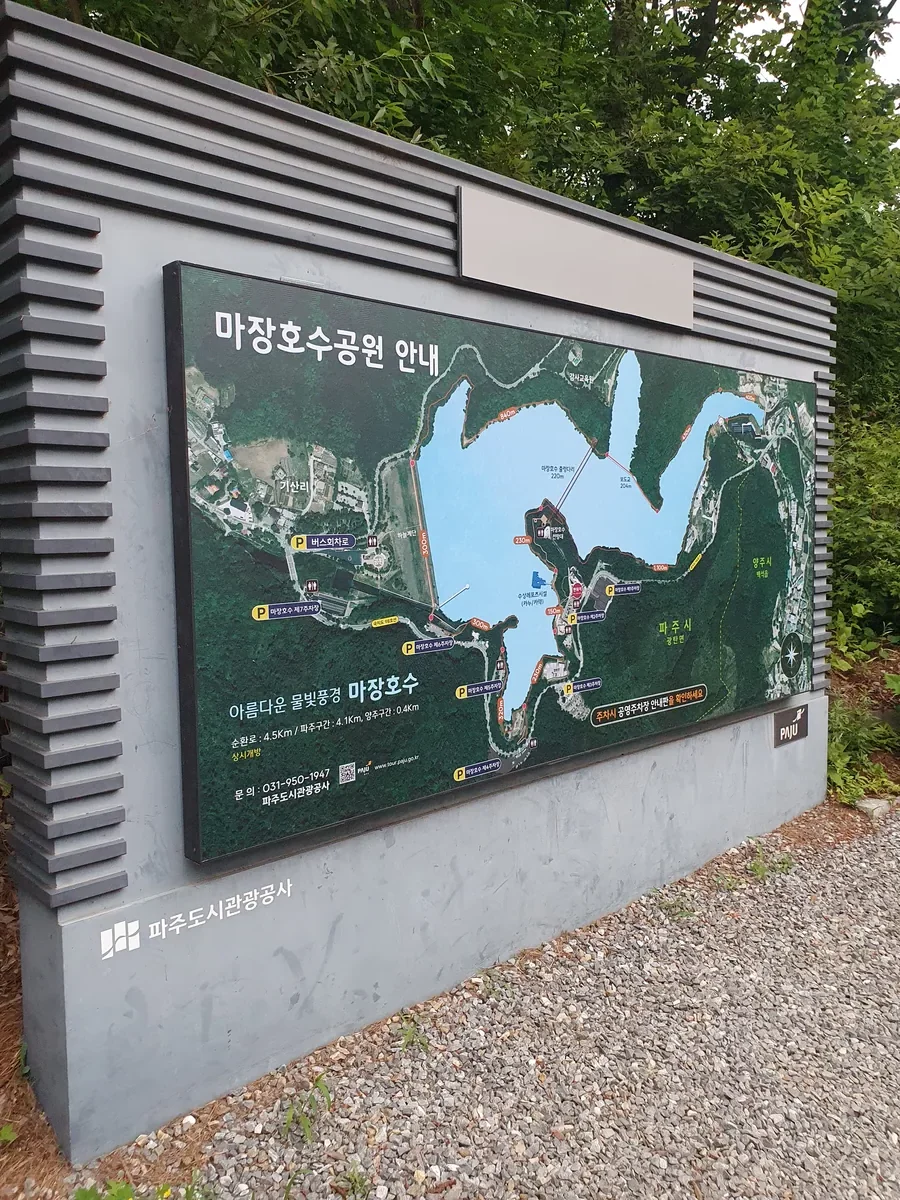
There are 8 parking lots at Majang Lake. That sounds like plenty until you realise the good ones — Lots 1 and 2, closest to the bridge entrance — fill up fast on weekend afternoons. I arrived on a Sunday afternoon and got into Lot 2 without major difficulty, but I got lucky with timing.
The flat rate is 2,000 KRW for small cars across the public lots — remarkably cheap by Korean standards. The real cost is walking distance. Lots 5 and 6, further from the entrance, mean a significant hike before you even start your day.
Watch for the 만차 (man-cha) signs — red boards meaning “parking lot full.” If you pull in and see one, you have a 10-minute free 회차 (hoe-cha) grace period to turn around and leave without being charged. Use it and move to the next lot rather than waiting it out.
- Lot 1 & 2 — Closest to bridge. Target these. Arrive before noon on weekends.
- Lot 3 — About a 10-minute walk to the bridge. Reasonable backup.
- Lots 5 & 6 — Last resort. Long walk, especially with kids or elderly.
The Bridge: What to Expect
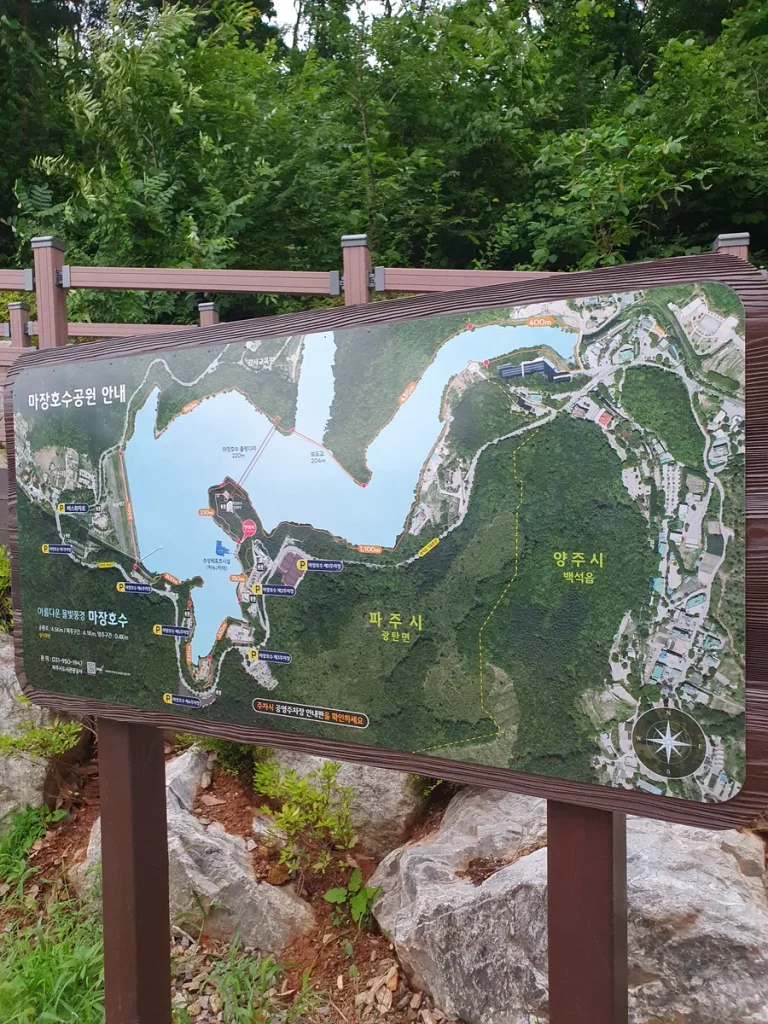
Once you reach the bridge, the signage around the park is clear enough — maps are posted throughout and the path is intuitive. You walk around the lake. You don’t need Korean to navigate.
Looking for stroller-accessible day trips in the broader Gyeonggi area? Aquaplanet Gwanggyo, located near Gwanggyo Lake Park, offers an excellent complement to outdoor lake activities, especially on rainy or extreme weather days.
For those seeking longer immersions in Korea’s national park system, Naejangsan Eco-Exploration Center accommodation provides a structured alternative to day-trip planning, with pre-booked programs and on-site dining for families.
For other popular lake attractions near Seoul for families, Uiwang Rail Park combines a scenic lake circuit with unique railbike and barefoot path experiences at lower parking costs than busier alternatives.
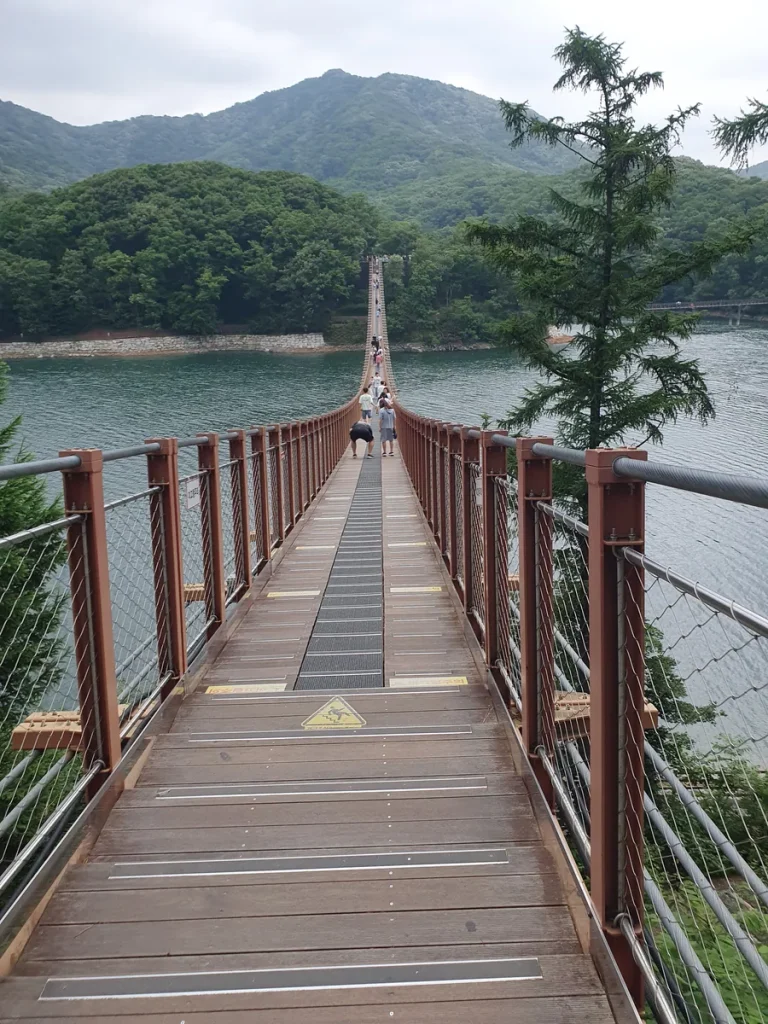
The bridge itself is 220 meters long, confirmed by Paju City Government. It was the longest pedestrian suspension bridge in Korea when it opened in 2018, though newer bridges have since surpassed it — the Nonsan Tapjeongho bridge is now over 600 meters. What makes Majang different isn’t length. It’s the setting: flat lake on both sides, mountain behind, clean air, quiet.
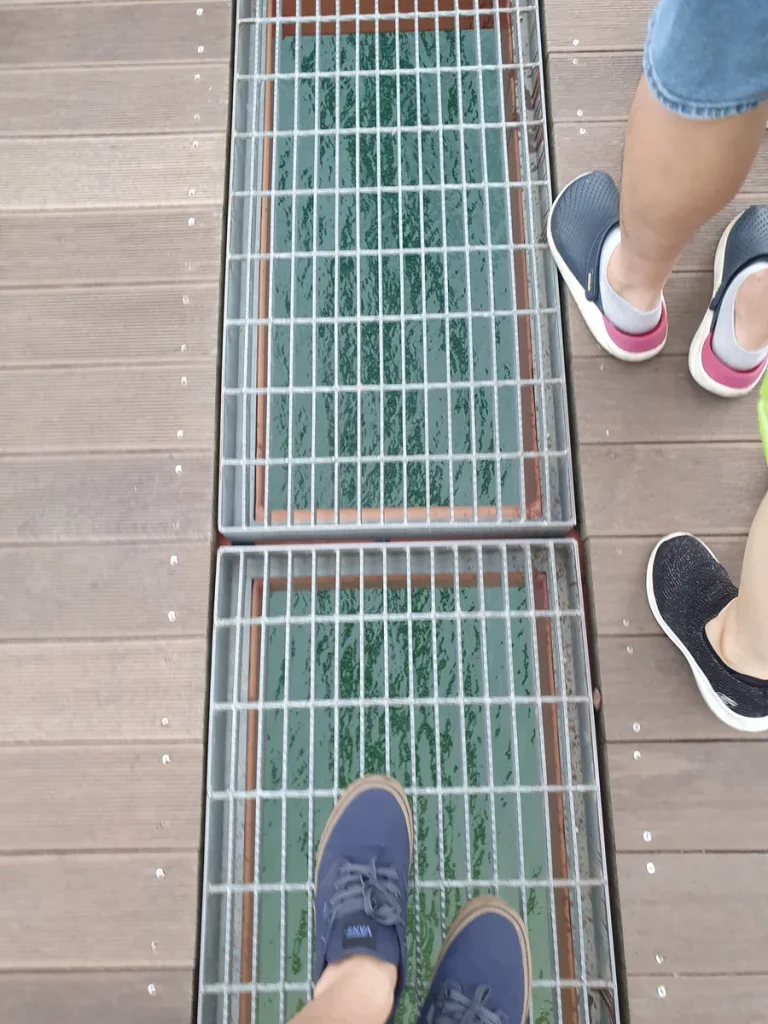
My wife walked the full length, including the section most people hesitate at — an 18-meter stretch of bulletproof glass and metal mesh grating right over the deepest part. You can see the water directly below your feet through the mesh. She wasn’t bothered. She grew up riding roller coasters. For context, I’ve also crossed a suspension bridge in Okutama, Japan — that one shook considerably more than this. Majang is sturdy.
💡 Pro Tip:
The bridge closes strictly at 6:00 PM in summer (March–October) and 5:00 PM in winter (November–February). This is not a soft guideline — the gate goes down. If you’re coming from Seoul, factor in the drive, parking, and the walk just to reach the entrance. Getting there by 3:00–4:00 PM gives you comfortable time without rushing.
⚠️ Note: The winter closure time of 17:00 was updated in late 2025. Verify current hours with the Paju City official tourism page before your visit, especially if going between November and February.
Activities: Walking Path, Majang Lake Kayaking & the Observatory
The bridge is the headline act, but there’s more here if you have time. The 3.3km lakeside walking path is flat, well-maintained, and genuinely peaceful. It’s not a hard trail — kids and elderly visitors handle it fine. The wooden decks are solid and secure throughout.
If you want elevation and a proper view, the observatory is worth the walk. It’s a real hill climb — longer than it looks on the map — but the wooden decks are set up well and the combined mountain-and-lake view from the top is the payoff. Budget extra time for this if you want to do it properly.
For families or couples wanting something more active, 수상레저 (susang-lejeo) — water leisure activities are available near the lake. Kayaking and canoeing rent for 15,000 KRW per 30 minutes, according to Korea Open Tourism. Visitors report 30 minutes feels longer than expected — in a good way. It’s a solid memory-maker for families, especially with the bridge visible from the water.

💡 Pro Tip:
Thinking about bringing a stroller? The main lakeside wooden deck paths are stroller-friendly. The observatory trail is not — it’s a hill walk. Split the group if needed and let whoever wants the view climb while others do a second loop of the flat path.
Red Bridge Cafe Paju
Right next to the lake sits Red Bridge Cafe — a large bakery-café built into the mountain with panoramic views of the bridge and water. I didn’t go inside on this visit, but the exterior alone tells you what you’re getting: big windows, good atmosphere, the kind of place that works well as a pre-walk coffee stop or a sit-down wind-down after crossing the bridge.
It’s a useful anchor point for your visit — worth factoring into your timing, especially if you’re visiting with someone who needs a break from walking.

📍 Red Bridge Cafe
Address: 329 Gisan-ro, Gwangtan-myeon, Paju-si, Gyeonggi-do
Hours, Costs & Practical Info
- Bridge Hours: Summer (Mar–Oct) 09:00–18:00 / Winter (Nov–Feb) 09:00–17:00
- Admission: Free
- Parking: 2,000 KRW flat rate (small car)
- Kayaking / Canoeing: 15,000 KRW for 30 minutes
- Phone: +82-031-950-1901
📍 Majang Lake Suspension Bridge (마장호수 출렁다리)
Address: 313 Gisan-ro, Gwangtan-myeon, Paju-si, Gyeonggi-do
❓ Frequently Asked Questions
How do I get to Majang Lake by public transport using Bus 313?
Take the Gyeongui-Jungang Line to Neunggok Station (능곡역), then board Bus 313 or 313-1 toward the lake. The bus runs only about 5 times a day on weekends, so check the live timetable on gbis.go.kr before you go. The final stop leaves you roughly 1.2km from the park entrance — factor in that extra walk each way.
What time does the Majang Lake suspension bridge close?
The bridge closes at 18:00 (6:00 PM) from March to October, and at 17:00 (5:00 PM) from November to February. These times are strictly enforced. If you’re coming from Seoul, aim to arrive by 3:00–4:00 PM at the latest to avoid rushing, especially in winter.
Is the Majang Lake suspension bridge scary or too shaky for kids?
The bridge is notably more stable than other 출렁다리 (chulleong-dari) suspension bridges in the region — the sway is much less than you might expect from the name. The high safety fences make it manageable for most people. The 18-meter glass and mesh floor section in the middle is the only part that might give pause to those with a fear of heights, but it can be crossed quickly.
How much does Majang lake kayaking cost and how does it work?
Kayaking and canoeing are available near the lake for 15,000 KRW per 30 minutes. Look for 수상레저 (susang-lejeo) signs near the waterfront. No advance booking is typically required — you can show up and rent on the day, though availability may be limited on busy weekend afternoons.
Which parking lot should I use at Majang Lake?
Target Lots 1 or 2 — they are closest to the bridge entrance and charge a flat 2,000 KRW for small cars. On weekend afternoons you may see the 만차 (man-cha) “full” sign. If so, Lot 3 is a reasonable backup at about a 10-minute walk to the bridge. Lots 5 and 6 are a last resort — the walk from there is significant.
Navigating Korea as a foreigner is already hard enough
Whether it’s figuring out transport, translating signs, or just knowing which parking lot won’t ruin your day — living here as an expat comes with friction nobody warns you about. If you need a hand navigating daily life in Korea, JustAskJin is here to help.
Ask Jin a Question