- → The Day Everything Changed
- → What a Korean NICU Actually Looks Like
- → NICU Korea Expat: The Communication Reality
- → The Bill That Surprised Us
- → Korean NHIS Premature Baby Coverage Explained
- → 태아보험 Korea: The Insurance That Changed Everything
- → Government Support You Need to Know About
- → Surviving Two Months: The Emotional Reality
- → Taking Her Home
- → FAQ
When our daughter arrived at 32 weeks and 2 days — what Koreans call an 8삯둥이, an eighth-month baby — I had no bag packed, no plan, and no idea what a 신생아중환자실 (sinseng-a junghwanja-sil), a NICU, was going to cost a foreign family in Korea. What I did have was a Korean national health card, a 태아보험 policy a coworker had pushed me to buy, and a wife in an ambulance ahead of me on the expressway. If you are dealing with a premature baby NICU Korea foreigner situation right now, I wrote this for you. For the full picture of how we got to that point, start with our guide on having a baby in Korea as a multicultural family.
The Day Everything Changed
It was a Saturday late morning in Suwon. A routine checkup with our regular gynaecologist. She looked at the monitor, then looked again, and started making phone calls. Not to us — to hospitals. She was checking which ones could run emergency tests and handle surgery that same day, on a weekend.
There was no discussion about options. The ambulance took my wife north to 서울성모병원 in 서초구, Seoul. I drove behind them in our car, alone in weekend traffic. She arrived 30 minutes before I did. By the time I parked, she was already in the system.
She had a C-section that afternoon. A few hours later, a nurse led me into the NICU for the first time.

What a Korean NICU Actually Looks Like
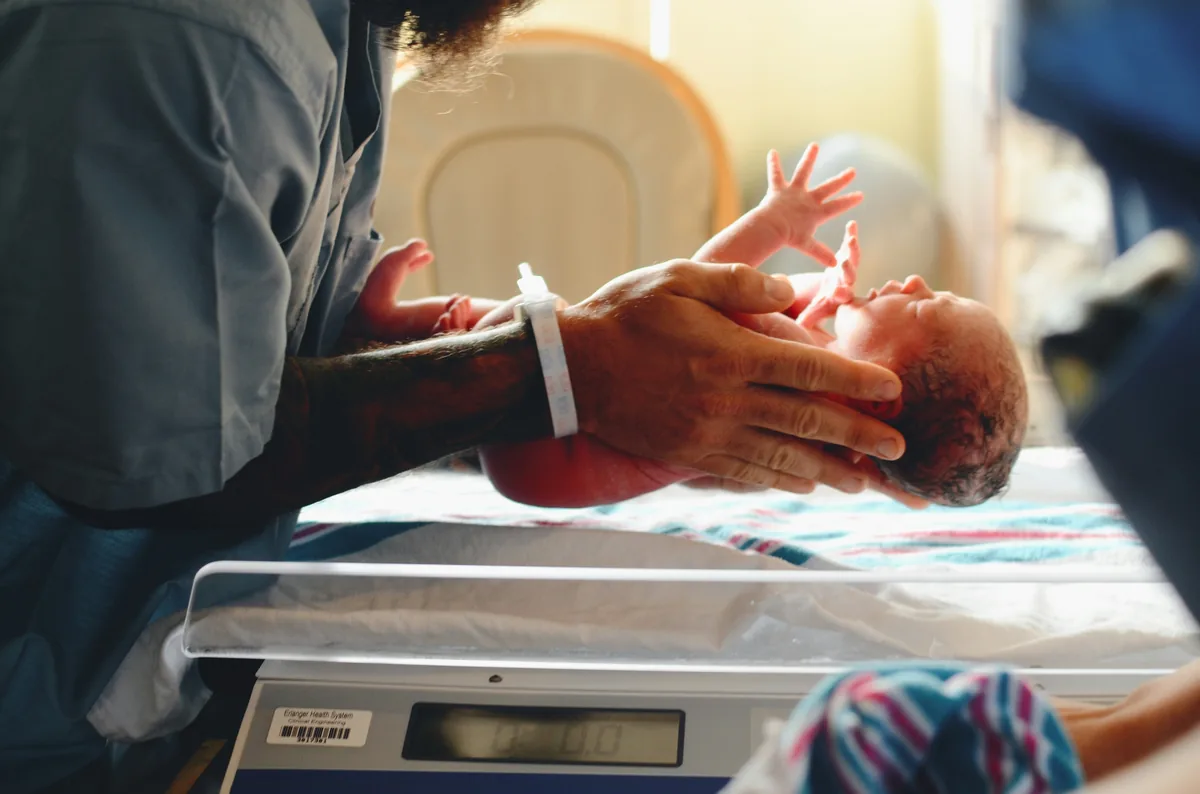
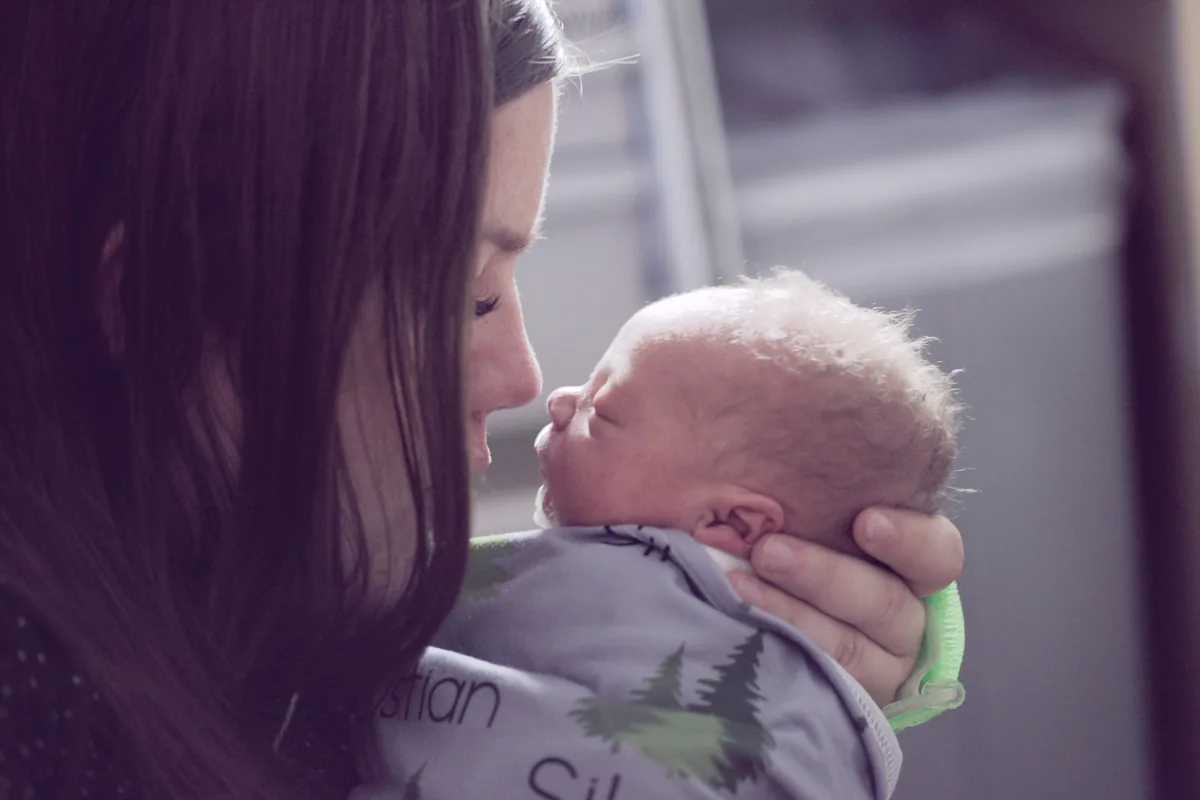
Quiet. That was the first thing. Just the low, steady beeping of monitors and sensors. Our daughter was inside a sealed incubator: 1,024 grams. Hoses, sensor patches, needles, adhesive tabs — all over something the size of my forearm.
I looked at her face through the incubator wall. I could see my own face in hers. Right then, everything else — the paperwork, the commute, the language barrier, the bills — none of it existed. She was real, and she was mine.
Our daughter was born at 32 weeks, weighing 1,024g. She spent almost two months in the NICU at 서울성모병원. Total out-of-pocket: approximately ₩1,300,000 for a C-section plus two months of intensive neonatal care. Government subsidies halved that. Private 태아보험 paid out more than ten times what we spent total. Korea’s system, for NHIS-enrolled foreign residents, is far more supportive than most expat families expect.
The affectionate Korean term for a premature baby is 이른둥이 (irun-dungi) — literally “early one.” You will hear this word constantly from doctors and nurses. It is softer than the clinical terminology and tells you something real about the culture of care in Korean neonatal units.
NICU Korea Expat: The Communication Reality
The fear most foreign parents carry into a Korean hospital is that no one will be able to explain what is happening to their child. The reality at a major university hospital is more reassuring than you might expect.
The neonatologists at 서울성모병원 genuinely tried to communicate in English. Some were quite capable. The nurses made real effort too — pointing, demonstrating, finding workarounds when vocabulary ran out. We were never left guessing about something critical.
That said — if you are the non-Korean-speaking partner, you will feel the gap. Medical terminology is hard enough in your own language. Have your Korean-speaking partner present for doctor rounds whenever possible. Ask for things to be written down. Do not be embarrassed to ask for repetition.

The Bill That Surprised Us
Let me give you the actual numbers, because this is the part no article ever writes about honestly.
My wife’s C-section and three days of hospital recovery: approximately ₩500,000 out of pocket. Our daughter’s NICU stay of almost two months: approximately ₩800,000. Combined total: roughly ₩1,300,000 — around USD 950 at current exchange rates — for a surgical birth and two months of intensive neonatal care at a The Catholic University of Korea.
I expected those numbers to have significantly more zeros. The relief when I saw the actual invoices was something close to physical.
According to data published through the Korean Neonatal Network, South Korea’s preterm birth rate climbed from 5.9% in 2011 to 8.0% by 2019. This is not a rare situation. The Korean healthcare system has been built to handle it at scale — and that includes handling it for enrolled foreign residents.
Korean NHIS Premature Baby Coverage Explained
Korea’s National Health Insurance Service (NHIS) applies significantly heavier subsidies to severe medical conditions. Premature infant NICU care falls firmly in that category. Once you are enrolled in NHIS as a foreign resident, you are covered under the same structure as Korean nationals — the system operates on enrollment status, not citizenship.
For high-risk neonatal conditions, the co-payment rate drops sharply compared to standard care. The hospital billing department handles the calculation automatically. You pay your reduced share at discharge; NHIS settles the rest directly with the hospital.
- Foreign residents enrolled in NHIS receive the same neonatal subsidies as Korean nationals
- Severe or high-risk conditions attract automatically reduced co-payment rates
- The 국민행복카드 (Gungmin Haengbok Kadeu — National Happiness Card) provides a voucher of approximately ₩1,000,000 for NHIS-enrolled pregnant women toward prenatal and maternity costs
- As of 2024–2025, the government expanded the “First Meet Voucher” to ₩2,000,000 ~ ₩3,000,000 for qualifying families — verify current figures directly with NHIS before applying
For a full walkthrough of how to register for these benefits before your baby arrives, our guide on Korean pregnancy benefits and the National Happiness Card covers the application process step by step.
A widespread fear among foreign families is that NICU care will be financially catastrophic because they are not Korean citizens. For NHIS-enrolled residents, this fear is not grounded in how the system actually works. Confirm your NHIS enrollment status well before your due date — do not leave it to the week before.

태아보험 Korea: The Insurance That Changed Everything
Before any of this happened, a coworker who had already been through the baby process in Korea pulled me aside and said one thing clearly: get a 태아보험 (prenatal insurance) policy. Get the highest coverage level you can afford, even if the monthly premium feels painful. Do not cut corners on this one.
I signed up through a consultant sitting in the lobby of our regular clinic. I did not think I would ever actually need it. I was completely wrong.
When the bills were settled — after NHIS had already reduced them heavily — our 태아보험 paid out more than ten times what we spent out of pocket across the C-section and the entire NICU stay combined. We came out of two months of intensive neonatal care in a net positive financial position. That is not a number I expected to be writing.
- Must be purchased during pregnancy — not available after birth
- Coverage levels vary significantly — higher monthly premiums produce far better payouts for premature birth, NICU stays, and congenital conditions
- Insurance consultants are often available inside major OB clinics and maternity hospitals — ask at your regular doctor’s office
- Even a routine-feeling pregnancy can change very fast. Buy early, buy well.
Struggling to understand what your Korean insurance policy actually covers, or how to file a claim in Korean? JustAskJin can help you work through the paperwork before you find yourself reading insurance documents in a hospital corridor at midnight.
Government Support You Need to Know About
Beyond NHIS and 태아보험, there are additional programs that apply specifically when a premature birth is involved. My wife holds an F6 visa (marriage migrant) and had been employed at the same company for over a year — which meant she qualified for extended 출산휴가 (maternity leave).
As of 2024–2025, maternity leave for premature births requiring NICU care was extended to 100 days, longer than the standard leave period. This is a relatively recent policy change — confirm the current rules with your employer’s HR department before assuming anything. My wife is still on parental leave as I write this.
- 출산휴가 (maternity leave): 100 days for NICU-qualifying premature births as of 2024–2025
- 미숙아 의료비 지원: Government medical cost support for premature and low-birthweight infants — ask your NICU nursing station by this exact name
- 국민행복카드: Voucher for NHIS-enrolled mothers — apply at your local 주민센터 or online through the e-health portal
- First Meet Voucher: Expanded to ₩2~3,000,000 from 2024 — verify current eligibility at the NHIS English portal
Foreign residents on valid visas who are NHIS-enrolled can access most of these programs. Visa type and employment history affect eligibility for some. Check your specific situation early — not in the middle of an emergency.
Surviving Two Months: The Emotional Reality
The money part, as it turned out, was not the hardest part.
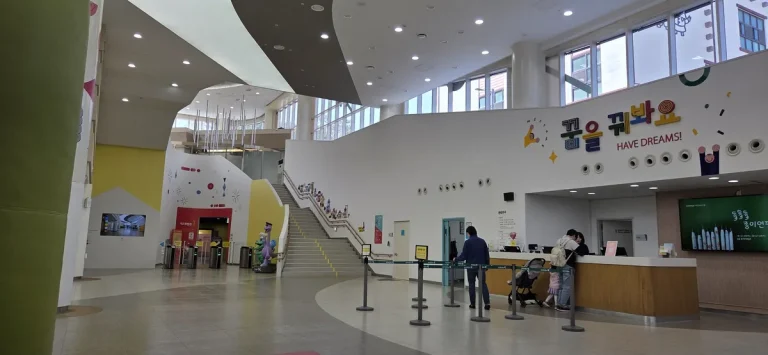
Every day: Hwaseong to 서초구 and back. We built a structure around the visits because structure was the only thing keeping us functional. Go to the hospital. Spend the visit time with her. Then deliberately find something to do rather than return directly to an empty apartment — walk the city, visit a museum, sit in a cafe, go to the gym. I was on parental leave and finding a way to stay sane during paternity leave became a genuine project in itself.
The hardest thing to watch was not the commute, and not the paperwork. It was my wife not being able to hold her own daughter.
Under 2kg, the incubator lid stays closed. You can reach through the side ports and touch her. You cannot pick her up. You cannot do the thing every instinct is telling you to do. For us, that lasted weeks — until she crossed the weight threshold and the lid came off for the first time.
There are no words for that moment.

Taking Her Home
She was discharged close to her original due date — the body tends to find its own schedule. The NICU nurses had trained us on feeding, monitoring, and what signs to watch for. We left with a folder of follow-up appointments and a baby who still felt impossibly small.
She is nine months old now. She drinks 250ml at a time and screams with the confidence of someone who has decided their opinion matters. I sometimes stop and look at her and think: she used to be the size of my forearm.
One practical note for the road ahead: once you are home and thinking about transport, our guide on choosing a baby car seat in Korea as an expat is worth reading before you buy anything. The certification standards here are different from what most foreign parents expect.

If you are reading this at 2am because something has gone wrong — or because you are afraid it might — here is the one thing I would say directly: do not worry about the system. Korea’s healthcare system for premature infants is genuinely good, genuinely subsidized, and genuinely accessible to enrolled foreign residents. What will actually get you through is each other. Trust your partner. Work together. You are lucky to have them next to you.

📍 서울성모병원 (The Catholic Univ. of Korea Seoul St. Mary’s Hospital)
Address: 서울특별시 서초구 반포대로 222 (반포동)
❓ Frequently Asked Questions
Can foreigners access Korean NICU care under NHIS?
Yes. Foreign residents enrolled in Korea’s National Health Insurance Service receive the same neonatal coverage as Korean nationals. NHIS applies significantly reduced co-payment rates to severe conditions including premature infant NICU care. Enrollment status determines your coverage — not citizenship or visa type alone.
How much does a NICU stay actually cost in Korea for an expat family?
In our case, a C-section plus almost two months of NICU care totaled approximately ₩1,300,000 out of pocket — around USD 950. Government subsidies cut the gross bills roughly in half. Private 태아보험 then paid out more than ten times our total out-of-pocket spend. The numbers will vary depending on your specific situation and coverage, but Korea’s NHIS system substantially reduces what foreign families actually pay.
Do Korean NICU hospitals have English-speaking staff?
Major university hospitals in Seoul — including 서울성모병원, 서울대학교어린이병원, and 삼성서울병원 — have neonatologists and nurses who make genuine effort to communicate in English. Some specialists are quite proficient. Dedicated International Healthcare Centers at top hospitals can provide additional support. Smaller regional hospitals may have limited English capacity.
What government support is available for premature babies in Korea?
The main program is 미숙아 의료비 지원, a government medical cost subsidy specifically for premature and low-birthweight infants. Beyond that, NHIS-enrolled mothers can access the 국민행복카드 voucher and the expanded First Meet Voucher (₩3,000,000 as of 2024). Maternity leave for NICU-qualifying premature births was extended to 100 days as of 2024–2025. Ask your NICU nursing station about these programs by name.
When should I buy 태아보험 during pregnancy in Korea?
As early as possible — ideally before the first trimester screening at 10–14 weeks. If abnormalities are detected during prenatal testing, insurers may restrict or refuse coverage. The absolute deadline for most key prenatal coverage riders with Korean non-life insurers is 22 weeks and 6 days. Buy early, buy the highest coverage level you can realistically afford, and do not assume you will not need it.
Drowning in Korean Hospital Paperwork?
Navigating 미숙아 의료비 지원 applications, NHIS claims, and 태아보험 filings in Korean is genuinely hard — especially when you are already exhausted and scared. JustAskJin can help you prep and submit the right documents so nothing slips through the cracks.