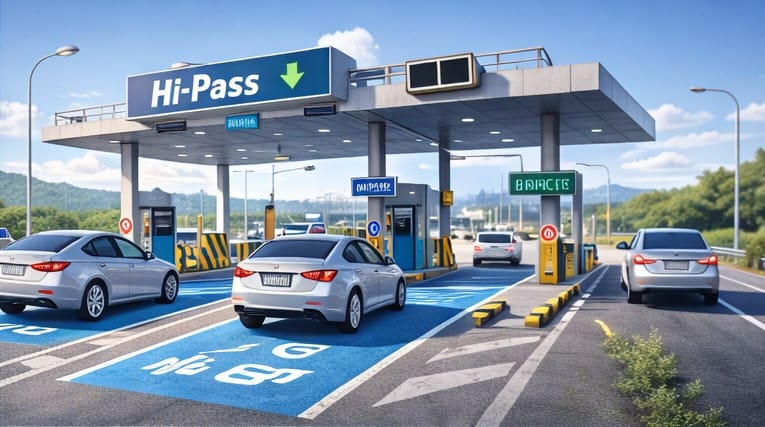
Having lived and worked in both Australia and Japan for many years, returning to South Korea and getting back behind the wheel was a massive culture shock. In countries like Australia, if you flick on your turn signal, the car behind you almost magically slows down to let you in. In Japan, if someone yields, a polite sequence of three to four hazard light flashes communicates a warm “thank you.” But here in Hwaseong, South Korea, where I now live with my wife and our newborn baby, the roads have a completely different rhythm.
I often tell my foreign friends that if you want to understand the true driving in Korea experience, you have to look past the stereotypes. Yes, the traffic in major cities like Seoul can be overwhelming, and the driving culture can sometimes feel aggressive. However, once you understand the unwritten rules, the road signs, and the local etiquette, it becomes incredibly manageable. If you are just starting your journey, I highly recommend bookmarking our master directory, Driving in South Korea: The Complete Expat Hub (Licenses, Tolls, and Tips), which covers everything from getting a license to navigating toll gates.
💡 Core Summary of this post
- Embrace the Blackbox: Dashcams (blackboxes) are essential in Korea for insurance claims and determining fault in complex accident disputes.
- Watch for Cameras and Bumps: Speed enforcement cameras and aggressive speed bumps are everywhere. Always use a local navigation app like TMAP or Naver Map.
- Understand “Unprotected Left Turns”: Look out for the blue “비보호” (unprotected) signs, which allow left turns on a solid green light when oncoming traffic is clear.
- Pedestrian Rules are Changing: Recent laws strictly enforce full stops at pedestrian crossings. Always yield, especially in heavily monitored school zones.
1. The Jekyll and Hyde of Korean Drivers
One of the most fascinating aspects of Korean culture is the stark contrast between how people behave in person versus how they act behind the steering wheel. The Koreans I know are some of the most polite, generous, and considerate people in the world. Yet, something shifts when the engine starts. The famous “Ppalli-Ppalli” (hurry, hurry) culture takes over.
You might notice a lack of cooperation when you try to change lanes, or hear drivers aggressively honking their horns—something that is considered quite rude in places like France or Japan. I recall a time in Australia when I failed to spot a pedestrian at a shopping center crosswalk; they literally slapped the trunk of my car and yelled at me, which was entirely justified. In Korea, however, pedestrians are still getting used to cars actually stopping for them, although the culture is slowly improving.
Despite the fast-paced feeling, statistics show that the roads are surprisingly safe. The traffic fatality rate has been dropping every year, bringing it on par with countries like France. If you are an expat wondering if you are legally allowed to hit the road here, check out our guide on Can I Drive in Korea? IDP Rules, License Exchange & Car Rentals to sort out your paperwork.
2. Deciphering Unique Traffic Rules: The Unprotected Left Turn
One of the biggest hurdles for newcomers learning about driving in South Korea is the “unprotected left turn” (비보호). I remember my first few weeks driving my wife around Gyeonggi-do. We were waiting at a red light, and I was completely confused about when I was legally allowed to turn.
Staring up at the street intersection, the bright traffic light illuminated a solid green bulb, casting a glow over the blue, unprotected left turn traffic sign hanging just below it. I could hear the hum of oncoming traffic, waiting for a break in the cars to make my move.
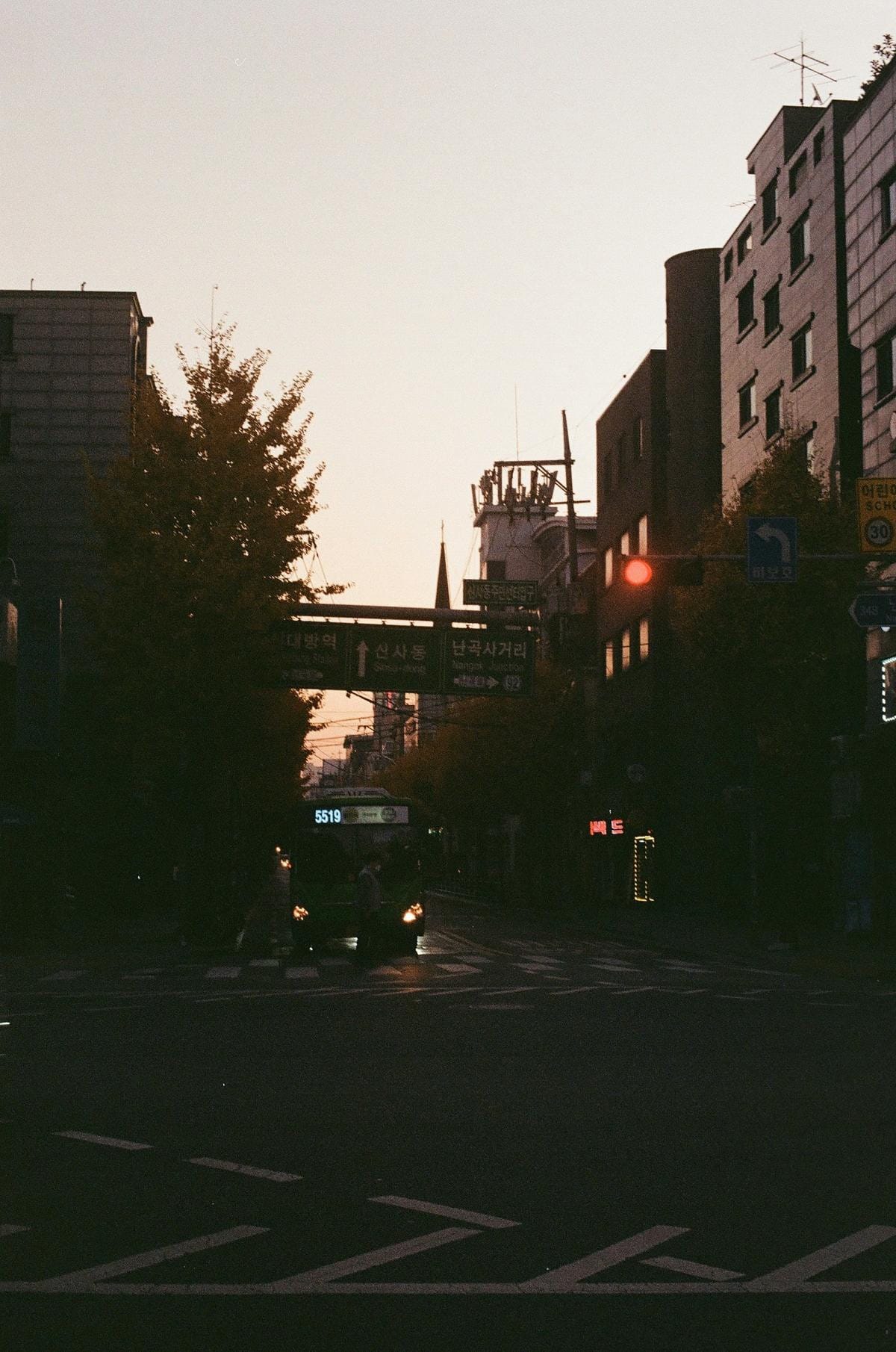
Here is the rule broken down simply: When you see that blue sign with the left-pointing arrow and the word “비보호” (Unprotected), you are allowed to turn left only when the main traffic light is solid green, and only when there is no oncoming traffic. You cannot turn left on a red light. If you cause an accident while making an unprotected left turn, you will be held largely responsible, so exercise extreme caution.
3. Navigating the Sea of Speed Cameras
If you love driving fast, Korea will test your patience. The country has an astonishing number of speed cameras. When my relatives from South Africa visited, we took a road trip from Gyeonggi-do all the way down to Suncheon. They were absolutely mesmerized by the navigation system constantly chiming.
Driving down the paved highway, my eyes darted to the grey speed enforcement camera mounted high on a metal pole beside the road, its lens peering down at the passing cars as the navigation app blared a sharp warning chime.
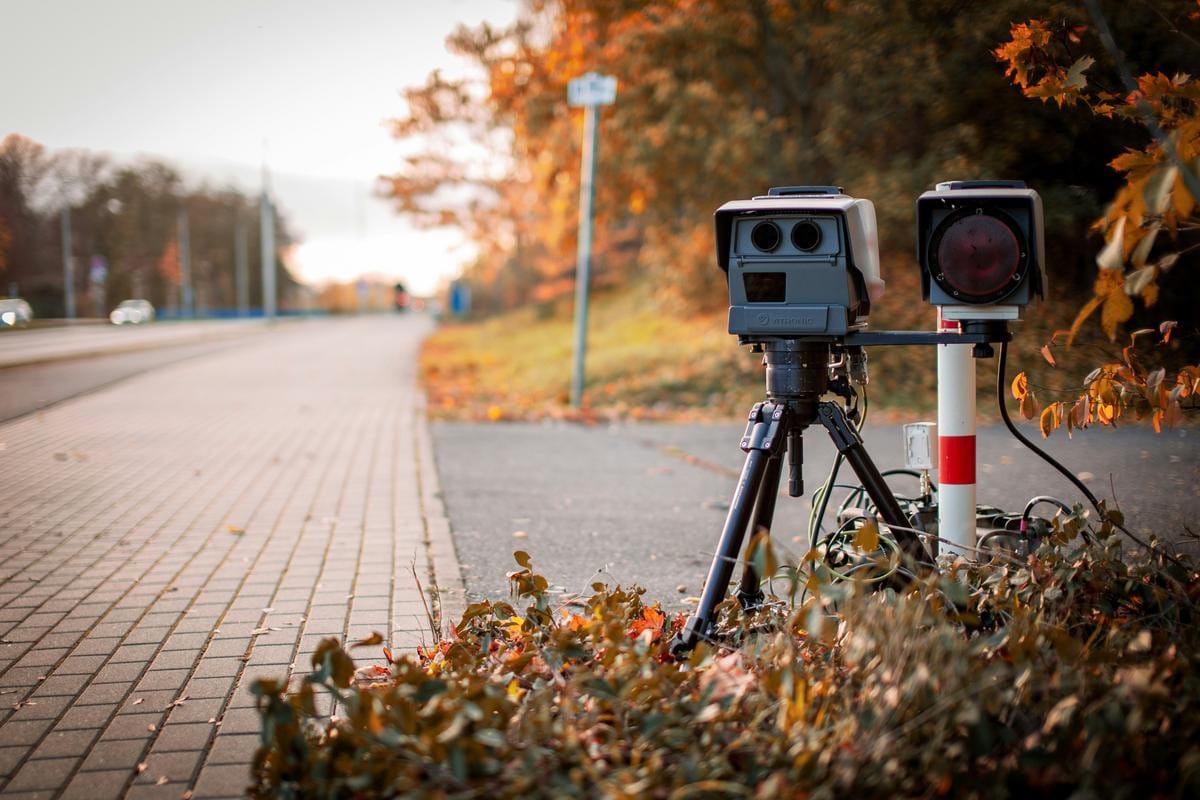
Korean navigation apps (like TMAP or Naver Map) are essential. They do not just tell you where to go; they act as your co-pilot, warning you about every single camera. They will tell you the speed limit, whether it is a fixed camera, or, most importantly, if you are entering a “Section Control” (구간단속) area. In a section control zone, cameras record your entry and exit times to calculate your average speed over several kilometers. You cannot just brake right before the camera; you must maintain the speed limit for the entire stretch. To make highway travel smoother, I highly recommend picking up a toll device, which you can read about in our How to Buy & Set Up a Korean Hi-Pass Card (Expat Guide).
4. The Reality of Speed Bumps
To further enforce the speed limits, especially in residential or rural areas, South Korea employs aggressive physical traffic calming measures. You will find speed bumps almost everywhere, and they are not to be underestimated.
Approaching a quiet residential area, the tires rumbled heavily over a yellow and black painted speed bump crossing the empty paved road surrounded by lush summer greenery, forcing me to tap the brakes.
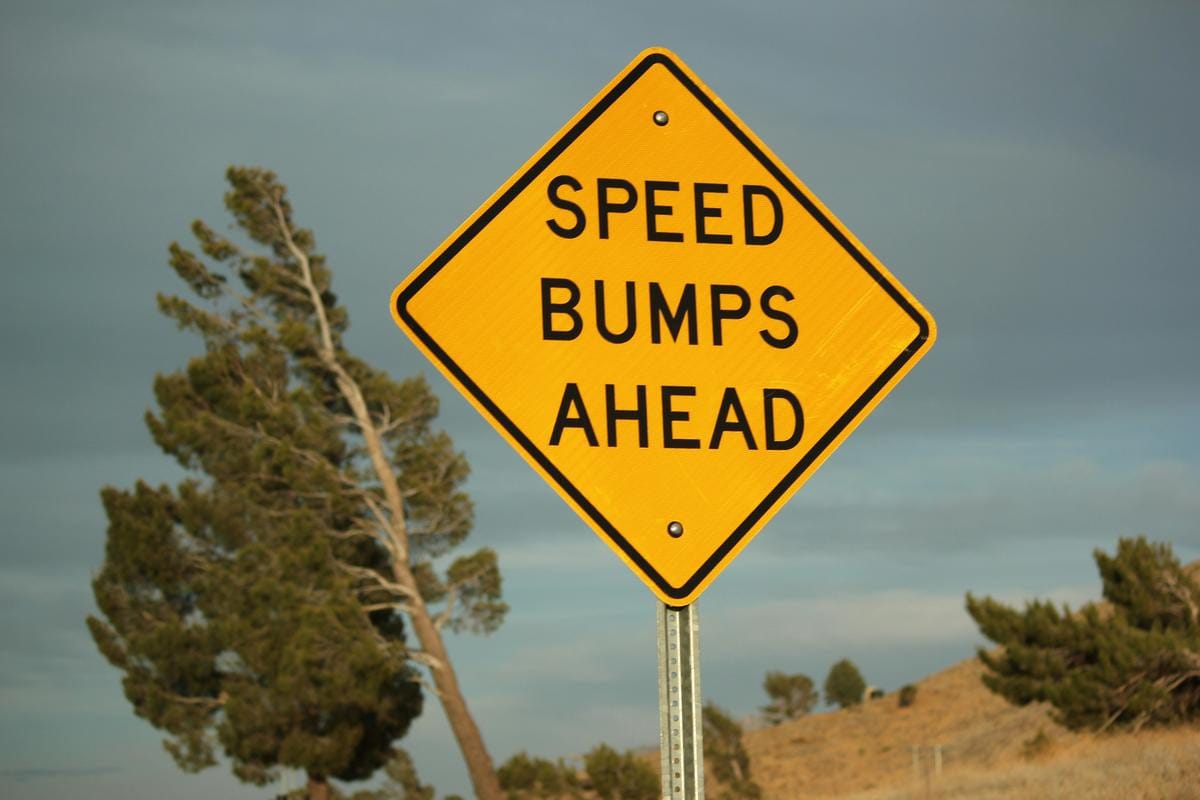
A quick tip for expats: always slow down more than you think you need to for these bumps. Unlike the gentle, rolling bumps you might find in North America or Australia, many Korean speed bumps are steep and can seriously jolt your car (and your sleeping baby in the back seat) if you hit them going faster than 20km/h.
If you are thinking about purchasing your own vehicle to navigate these roads, you must be careful about the secondary market. I shared my exact process for avoiding scams in my post, How I Bought a Used Car in Korea Without Getting Scammed.
5. School Zones: Zero Tolerance Areas
South Korea takes school zones (어린이보호구역) incredibly seriously. The laws have recently become much stricter to protect children, and fines or penalties for infractions in these zones are severely multiplied.
Pulling up to the crosswalk, I spotted a yellow school bus idling on the city street near a bright 30km/h speed limit road sign, with the bright red asphalt signaling that I had entered a highly restricted zone.
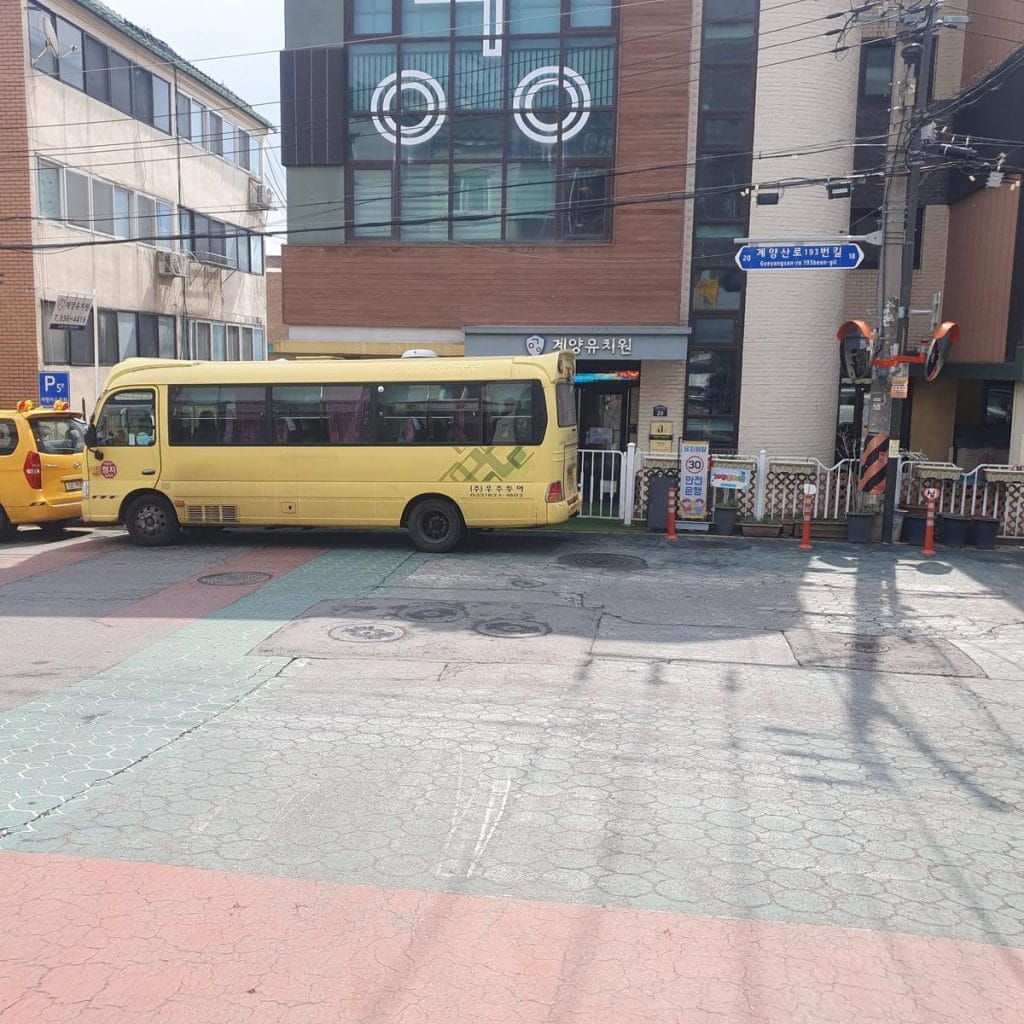
When you are in a school zone, the speed limit is strictly capped at 30km/h. There are cameras everywhere, and there is zero tolerance for speeding. Furthermore, you must come to a complete stop at any crosswalk within a school zone, even if there are no pedestrians in sight. This is a crucial habit to build, as police frequently monitor these areas.
6. Window Tinting and the Blackbox Culture
If you look at cars in France, window tinting is heavily regulated. The law requires at least 70% light transmission on the front and side windows. This means you can see the driver’s face, make eye contact at a roundabout, and wave a quick “thank you.”
In Korea, it is the exact opposite. Almost every car has extremely dark tinting on all windows, sometimes including the windshield. This affords great privacy and blocks the intense summer sun, but it completely eliminates the ability to make eye contact with other drivers. This is why you must rely on vehicle body language—like flashing hazard lights—to communicate.
Coupled with the dark tinting is the absolute necessity of a “Blackbox” (dashcam). You will rarely find a car in Korea without front and rear recording cameras. Why? Because if you get into an accident, the fault assignment (과실 비율) can be incredibly complex. For example, if someone suddenly cuts across three lanes and brake-checks you, the insurance companies might still assign you 20% of the blame for not maintaining a safe distance. Without video evidence, you are at the mercy of the other driver’s claims. For more details on official regulations and safety data, you can consult the KoROAD (Korea Road Traffic Authority).
7. Weathering the Elements: Driving in Winter
Coming from Australia, driving in the snow was a completely foreign concept to me. Korea experiences four distinct seasons, and the winters, particularly in regions like Gyeonggi-do and Gangwon-do, can be brutally cold with heavy snowfall.
The crisp, freezing air bit at my face as I walked past several cars parked alongside a snow-covered street next to a sidewalk lined with bare, shivering trees.
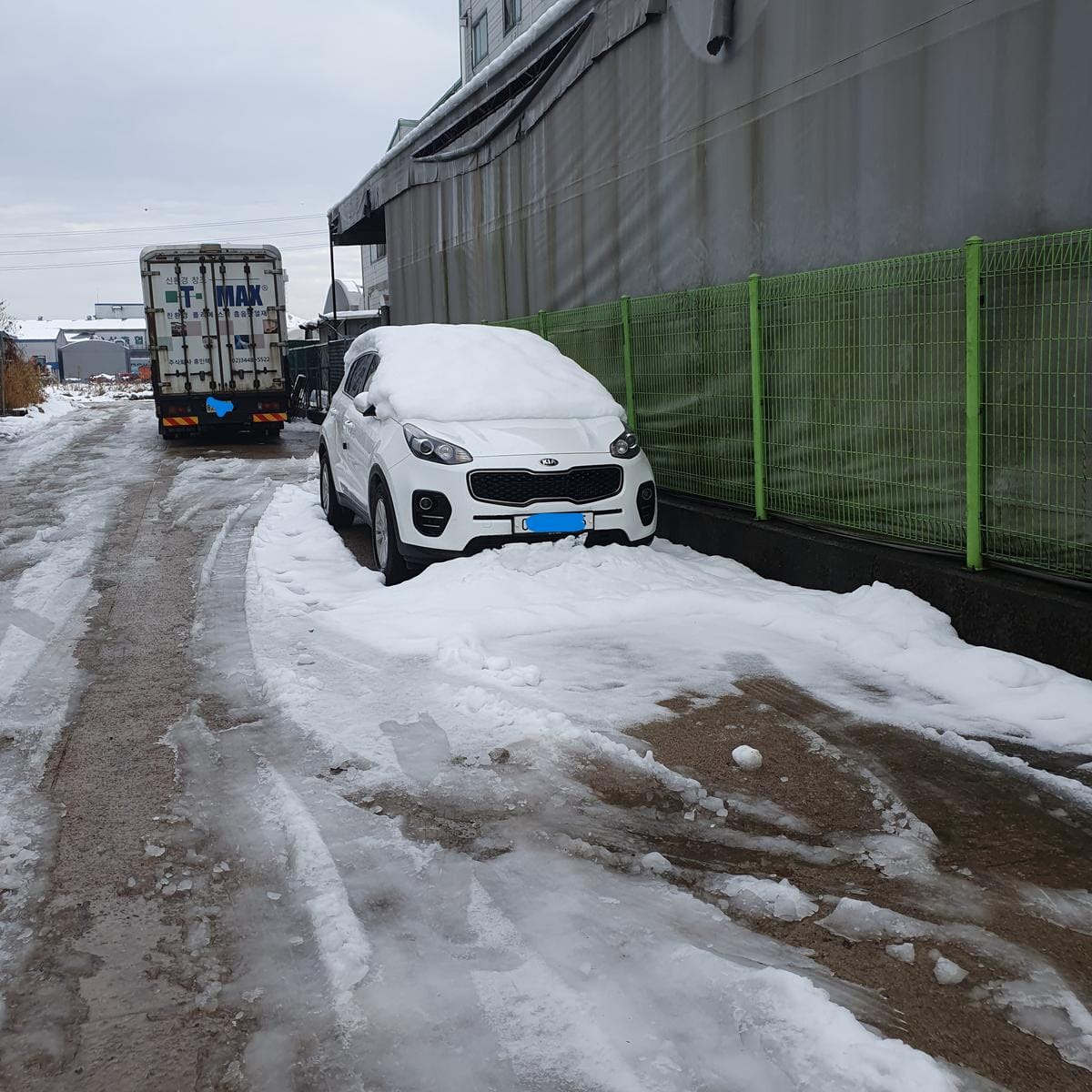
If you plan on driving year-round, you must be prepared for winter conditions. Black ice (블랙아이스) is a major hazard on bridges and shaded highways. Many locals swap to dedicated snow tires from December to March. Always drive slowly, increase your following distance dramatically, and never slam on the brakes on icy roads.
8. Senior Safety Zones and New Pedestrian Laws
Korea has a rapidly aging population, and road safety infrastructure is adapting to this demographic shift. Similar to school zones, you will now see “Silver Zones” or senior safety areas.
Feeling a slight change in the road texture, the car rolled over a Korean street featuring a painted safety area sign on dark red asphalt pavement, warning drivers to watch for elderly pedestrians.
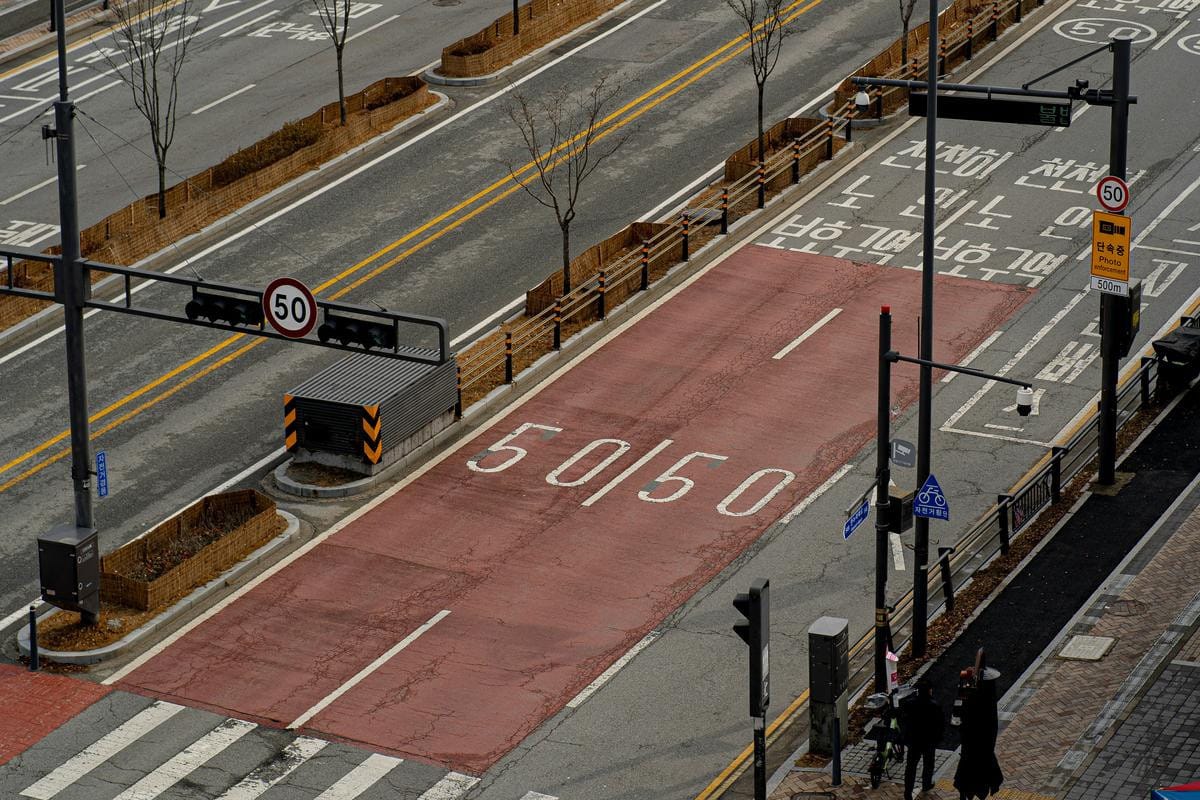
These zones function similarly to school zones, with reduced speed limits and an emphasis on yielding. Recently, Korea has also overhauled its right-turn laws. Previously, vehicles could turn right on a red light almost without stopping. Now, the law dictates that if a pedestrian has even a single foot on the crosswalk (or is waiting to cross), you must come to a complete, dead stop until they have fully crossed the street. Failing to do so can result in hefty fines.
Learning these nuances takes time. When my wife was preparing for her driving exams, we realized how much the test focuses on formulaic memorization rather than practical road manners. You can read her full story in Getting a Driver’s License in Korea My Wife’s Experience (Part 1).
Final Thoughts
Looking back at my first few months driving in Korea, I remember the sweaty palms, the frustration at cars squeezing into impossible gaps, and the confusion over complex intersections. But sitting here now, driving feels like second nature. The key is defensive driving—anticipating the “Yamche” (selfish) drivers, yielding when necessary, and always keeping your navigation app running.
Driving in a new country is always intimidating, but it also unlocks an incredible level of freedom to explore the beautiful mountains, coastal cafes, and hidden gems of South Korea with your family. I highly encourage you to take the plunge, get your license, and hit the road. Have you had any crazy driving experiences in Korea? Let me know!
Arriving in Korea soon?
Don’t navigate your first day alone
I meet you at Incheon or Gimpo airport and guide you through everything — SIM card, T-money, transport, and getting to your accommodation. Personal support from $180.
Book arrival support →