Living in Apartments in Korea: Why Are We So Obsessed?
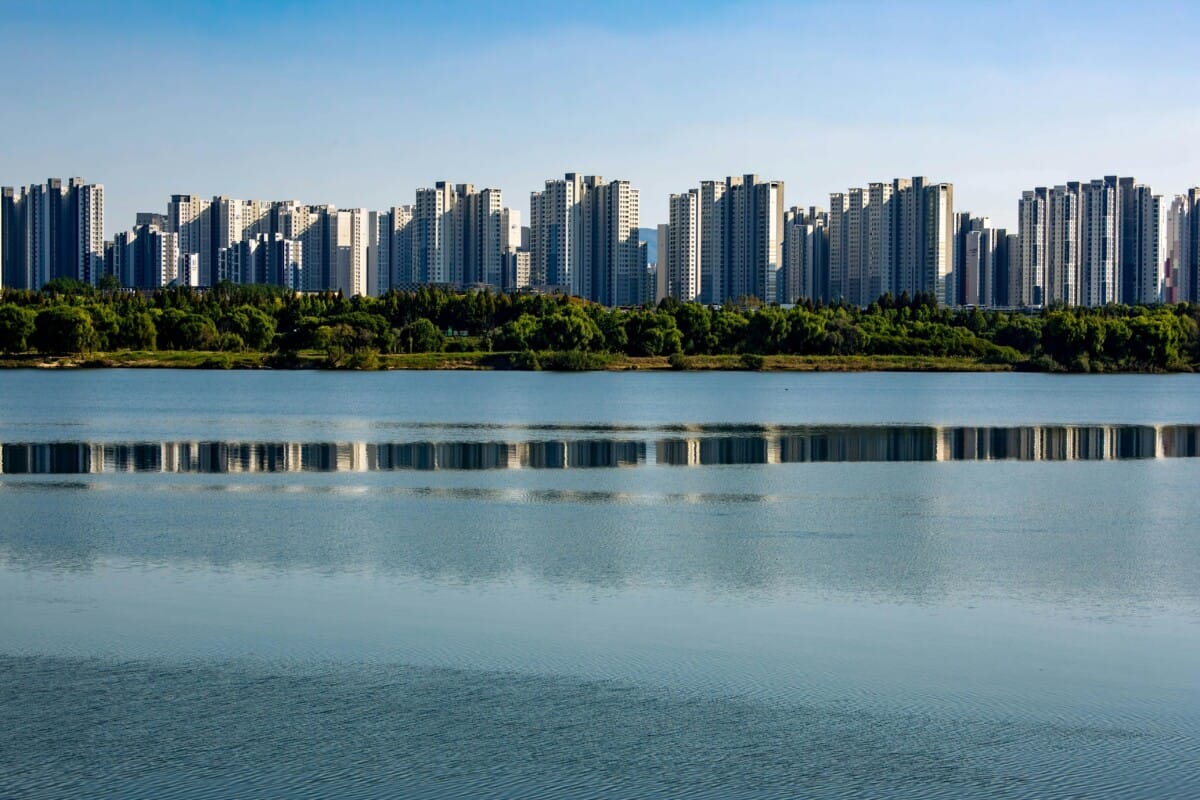
If you have ever visited Korea, or even just watched a K-Drama, one thing probably stood out to you immediately. It isn’t just the food or the fashion—it’s the skyline. Whether you are in the heart of Seoul or driving through a rural town, the view is dominated by one thing: identical, high-rise concrete towers. To an outsider, it might look repetitive, maybe even a little cold. But to us? It’s home.
When I moved back to Korea after living abroad, I found myself asking the same question many foreigners do: Why is living in apartments in Korea so popular? And more importantly, why are we so obsessed with them? My journey to finding a home here wasn’t just about real estate; it was a cultural crash course for my wife (who is from Africa) and a rediscovery for me. Today, I want to share the honest reality of living in apartments in Korea—the good, the bad, and the surprisingly efficient.
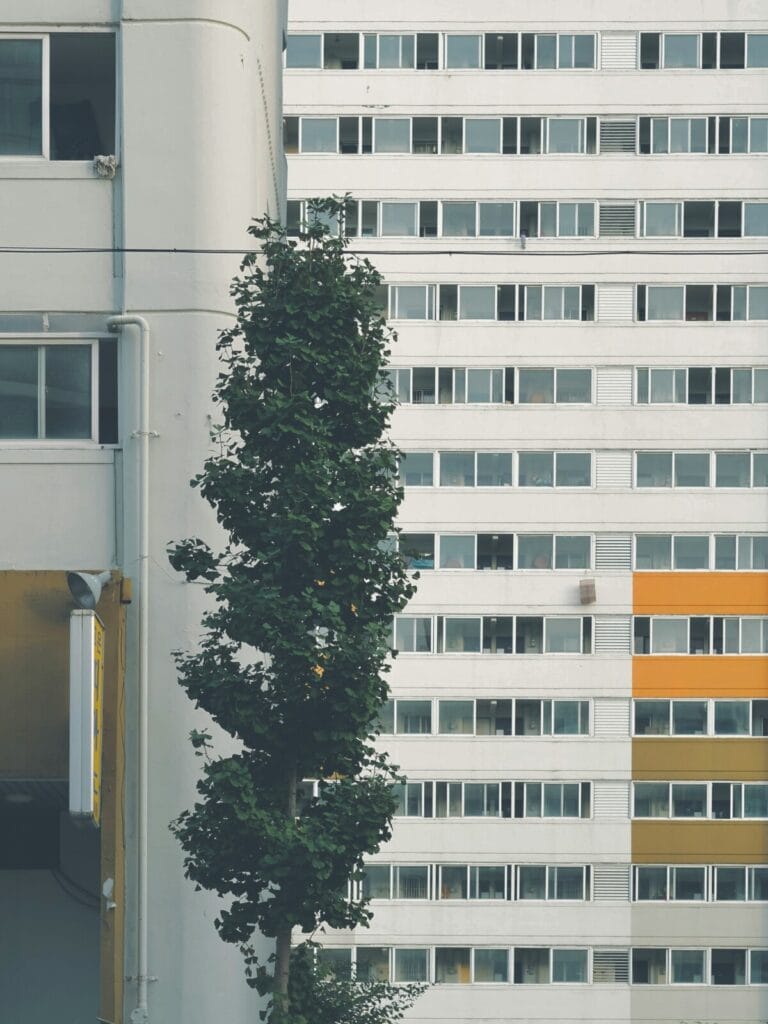

The Culture Shock of Returning Home
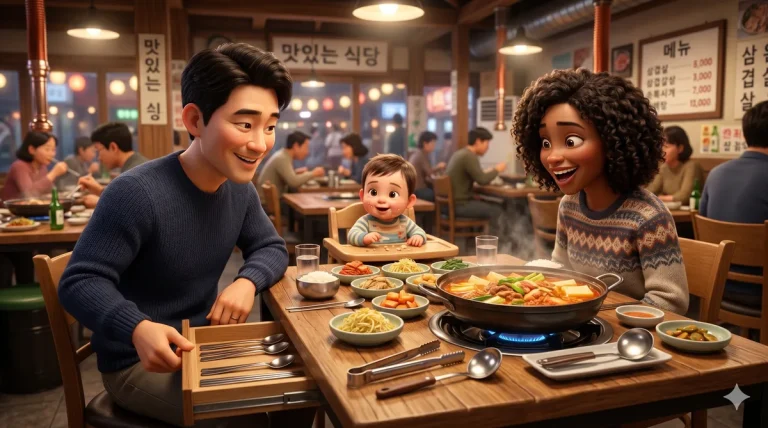
When I first moved back to Korea, my wife and I started in a small studio (officetel) near my work. It was temporary—a place to crash while I traveled for business trips and she worked as an English teacher. We were busy, rarely home, and the cramped space didn’t bother us much. When we needed quick furniture or everyday items to fill the space, we relied heavily on local second hand apps.
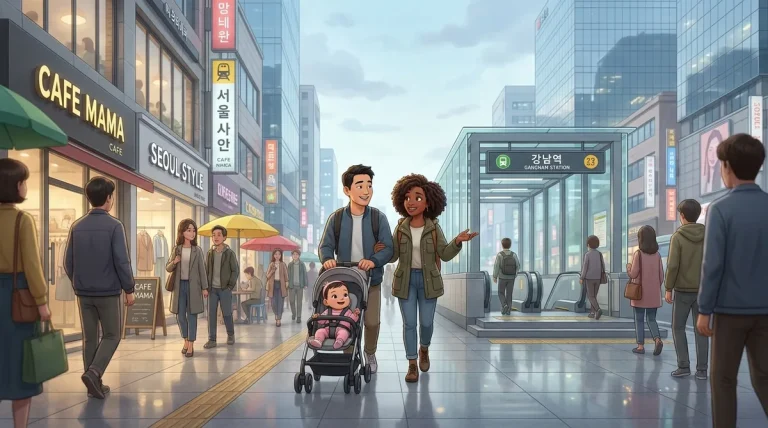
But as our one-year contract neared its end, reality hit. We were planning to have a baby. We needed a “real” home.
Naturally, I did what anyone does: I asked my family, friends, and co-workers for advice on living in apartments in Korea.The response was overwhelming. 99% of them gave me the exact same recommendation: “You must move to an apartment complex.”
“Good People Live in Apartments”
My wife was not convinced. Coming from Africa, accustomed to open spaces, the idea of living in apartments in Korea-concrete box stacked hundreds of meters in the air felt suffocating. The concept of having people living directly above your head and directly below your feet was alien to her. She wanted personal space, a backyard, maybe a garden.
I tried to explain the benefits, but one of my co-workers said to my wife something that stuck with me forever. His English wasn’t perfect, but he looked at her seriously and said:
“Good people in Korea live in the apartment. Bad people don’t live in the apartment.”
It sounds funny, maybe even a little prejudiced, but it perfectly captures the Korean mindset regarding living in apartments in Korea. In Korea, an apartment brand is a status symbol. It signals that you are part of the middle class, that you are safe, and that you have “made it.”
Historically, this wasn’t always the case. In the past, the “Citizen Apartments” built in the late 60s were small and poorly made. But starting in the 70s with high-rise complexes in places like Yeouido and Gangnam, apartments became the symbol of modern life and the middle class. My co-worker wasn’t just talking about “good” vs. “bad” people; he was talking about stability.
We eventually compromised. We found an apartment complex nestled right under a mountain. It had the convenience of a complex but was closer to nature, making the transition to living in apartments in Korea easier for my wife.
If the video does not load, you can watch it directly on YouTube here .
I learned a lot of this history from Knowledge Pirate YouTube Channel, which explains the origins of Korean apartments in detail.
Why Is Korea an “Apartment Republic”?
Before I get into the pros and cons of my daily life, we have to address the elephant in the room. Why is the entire country covered in these buildings?
It turns out, there is a logical reason for the madness. According to recent statistics, apartments account for 64.6% of all housing in South Korea. Here is why living in apartments in Korea became the standard.
1. Geography: We Have No Space
If you look at a topographical map of Korea, you will see that 70% of our land is mountainous. That leaves very little flat land for people to actually live on—only about 16.7% of the land is habitable.
When you have a growing population and almost no flat land, you can’t build out (like the suburbs in America or Australia); you have to build up. Living in apartments in Korea is the most efficient way to stack thousands of people into a tiny footprint.
2. The Efficiency Obsession
Koreans love efficiency (nicknamed “Ppalli-Ppalli” or “Hurry-Hurry” culture). Living in apartments in Korea is the ultimate efficient housing. Instead of digging pipes and running electricity for 100 separate houses, you dig one basement and run one set of pipes for 100 families. It solves heating, plumbing, and parking all at once.
3. Apartments as “Currency”
This is the biggest reason living in apartments in Korea is so popular. In other countries, a house is a home. In Korea, an apartment is a financial instrument. It is essentially a huge pile of cash that you live in.
Because apartment units are standardized (same layout, same size, same brand), they are easy to price and easy to sell. If I want to sell my apartment, I don’t need to wait months for the “right buyer” who likes my unique garden DIY. I just put it on the market, and because it’s a standard unit, it sells like a stock or a bond. For most Koreans, living in apartments in Korea is their entire life savings and retirement plan rolled into one.
The Advantages: Why We Stay
Despite my wife’s initial hesitation, we have come to realize that living in apartments in Korea offers conveniences that are hard to give up. Once you get used to this lifestyle, it is actually very difficult to live anywhere else.
1. Maintenance is Effortless
In a standalone house, if a pipe bursts or the roof leaks, you are on your own. You have to find a contractor, negotiate the price, and hope they show up.
One of the best parts of living in apartments in Korea is the maintenance. If something breaks, I just pick up the wall-pad phone and call the “Management Office.” Within three days, a technician in a uniform shows up to check it out. They handle the landscaping, the cleaning of the hallways, the elevator maintenance—everything. It is completely hassle-free. If we want to upgrade our interior experience without dealing with permanent installations, we even have the option to use modern rental services for our heavy electronics.
2. The Trash System (It’s a Big Deal)
This might sound boring, but the waste management system when living in apartments in Korea is world-class.
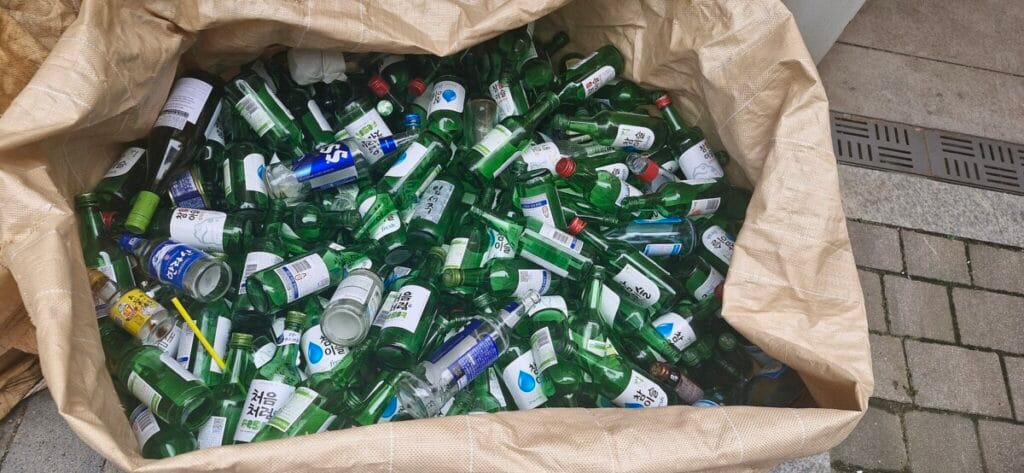
- Recycling: There is a designated recycling station that is cleaned and managed by staff every day.
- Food Waste: We don’t have smelly bins sitting in our kitchen. We take our food waste to a high-tech machine downstairs, scan a card, dump it in, and the machine weighs it and charges us a few cents. It keeps the house smelling fresh and the complex clean.
3. Safety and Security
Security is a major selling point for anyone considering living in apartments in Korea. The complexes are littered with CCTV cameras—in the elevators, the parking lots, the playgrounds, and every hallway entrance.
To even get to my front door, a stranger has to pass through the main gate, the building entrance (which requires a code or key card), and finally my digital door lock. For a family with a baby on the way, this “layered” security gives us huge peace of mind.
The Disadvantages: What I Miss
However, it’s not all perfect. There are days when I truly miss the lifestyle I had overseas. Living in apartments in Korea comes with sacrifices.
1. The “Foot Hammering” (Noise Stress)
This is the number one enemy of apartment residents in Korea: Inter-floor noise. We even have a specific word for it in Korean: Bal-mang-chi (발망치), which literally translates to “Foot Hammering.” It describes the heavy thudding sound of a neighbor walking on their heels in the unit above you.
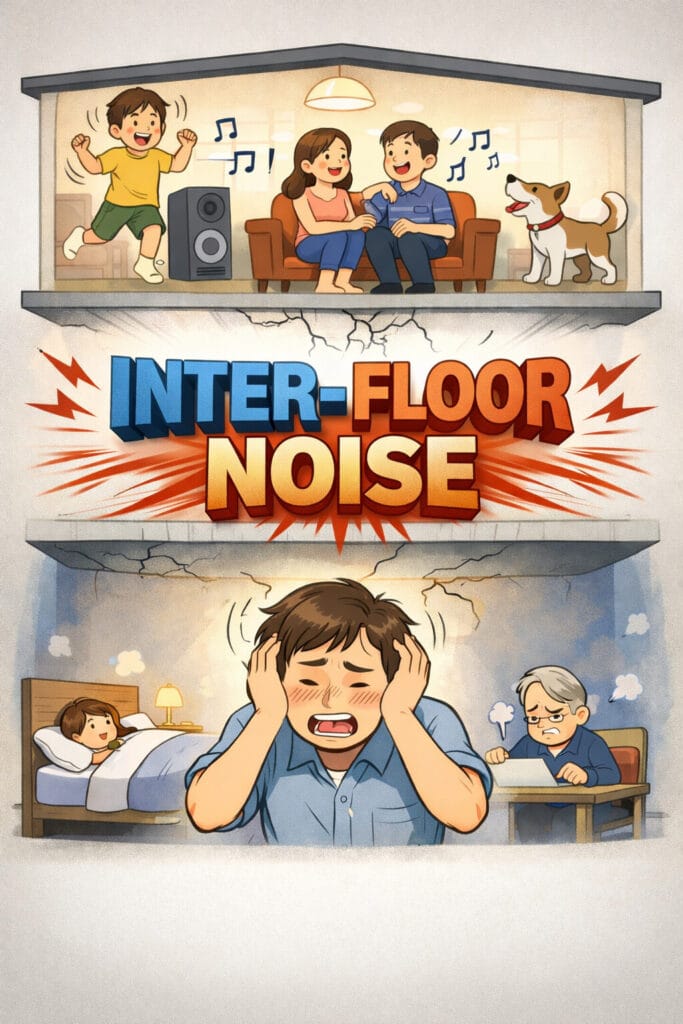
At the beginning, my wife was incredibly stressed by this. Every time the person upstairs walked around, she would tense up. It felt like an invasion of our privacy. Over time, she has become less sensitive to it, but I still hear it from time to time. It is a constant reminder that you are never truly “alone” in your home.
It has become such a serious social issue that you frequently see news reports about neighbors getting into violent fights—or worse—over noise disputes.
2. The Loss of Individuality
I miss the backyard. I miss firing up a charcoal BBQ on a Sunday afternoon. I miss having a garage where I can do DIY projects or fix things without worrying about dust or noise. I miss the idea of a small garden where I can grow my own tomatoes.
In an apartment, you sacrifice all of that for convenience. You live in a concrete box that looks exactly like your neighbor’s concrete box. You give up the freedom to modify your exterior or make noise in exchange for safety and easy trash disposal.
Conclusion: Is it Worth It?
So, living in apartments in Korea—is it a forever thing?
Currently, about 64.6% of all housing in Korea is apartments, and more than half the population lives in one. It has become the standard. The “K-Apartment” has evolved from a simple shelter to a high-tech, community-focused fortress.
For my family, right now, the answer is yes. The convenience of having a support system, the safety for our future child, and the financial stability of the property make it the logical choice.
Living a comfortable life in a modern high-rise makes me reflect on how much things have changed from my childhood memories of living in the conutryside. The convenience of living in Korean apartments today is completely different from the lifestyle many of us grew up with.
But does my wife still dream of a house with a garden? Absolutely. And to be honest, sometimes, when I hear the “foot hammer” thudding above my head, I dream of it too.
What do you think? Could you live in a high-rise complex, or is a backyard non-negotiable for you? Let me know!