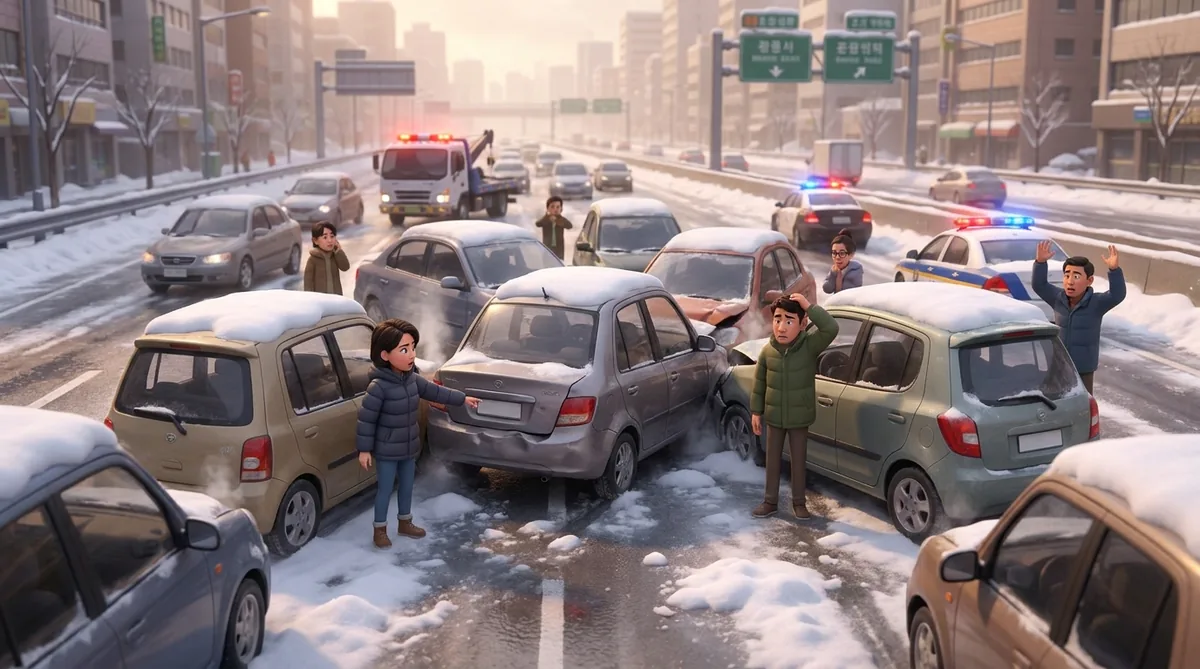
Winter in Gyeonggi-do has a way of making you reassess everything you think you know about driving. My anxiety about road safety hits its peak in January and February — not because I’m a nervous driver by nature, but because the statistics on Korean winter roads are genuinely alarming once you dig into them. With my wife in the passenger seat and our newborn daughter strapped into her car seat behind me, abstract danger becomes very concrete, very fast. This is my expat guide to winter driving in Korea: what the roads actually do, what the law actually says, and why your dashcam is worth more than you think.
📌 Quick Summary:
Korean winter roads hide a unique hazard most expats miss: slush. Half-frozen “slush” roads are deadlier than fully frozen or snow-covered ones — yet slush looks like ordinary wet pavement, so drivers don’t slow down. This guide covers the slush danger, how Korea’s fault-ratio system handles multi-car pile-ups, and why a dashcam is your most important piece of equipment from November through February.
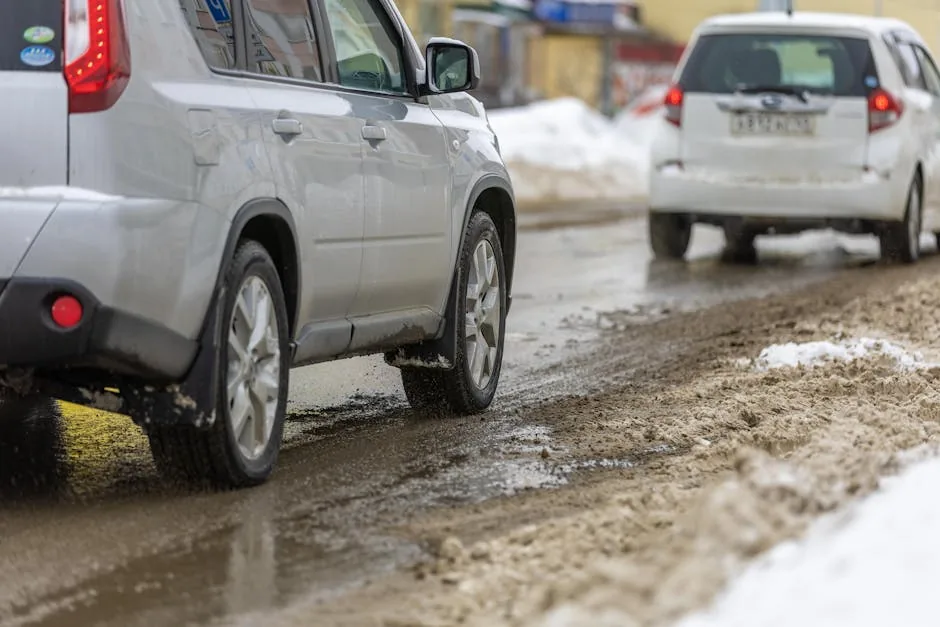
One thing I’ll say upfront: before I researched this topic, I didn’t fully appreciate the difference between a snow road and a slush road. I had the general sense that winter means danger — any Korean driver does — but slush as its own specific, statistically deadlier category? That was new to me. And if it was new to me, a Korean man who grew up here, it’s almost certainly unknown to expats arriving from warmer climates. My wife is South African. She came to Korea with zero winter driving experience, no instinct for what frozen pavement feels like, and no frame of reference for what a Korean highway looks like when conditions deteriorate at -3°C. The numbers I’m sharing in this post are what I’d want her to know before she ever drives solo in January.
Slush Roads: The Hidden Killer Most Expats Don’t See Coming
Here’s the counterintuitive reality of Korean winter roads: the days with heavy, visible snowfall are not the most dangerous days to drive. When there’s a blizzard, drivers slow down. Highways thin out. People take the metro. The collective caution that kicks in during a big snowstorm actually suppresses the accident fatality rate relative to normal conditions.
The deadliest surface is the one that doesn’t look deadly at all.
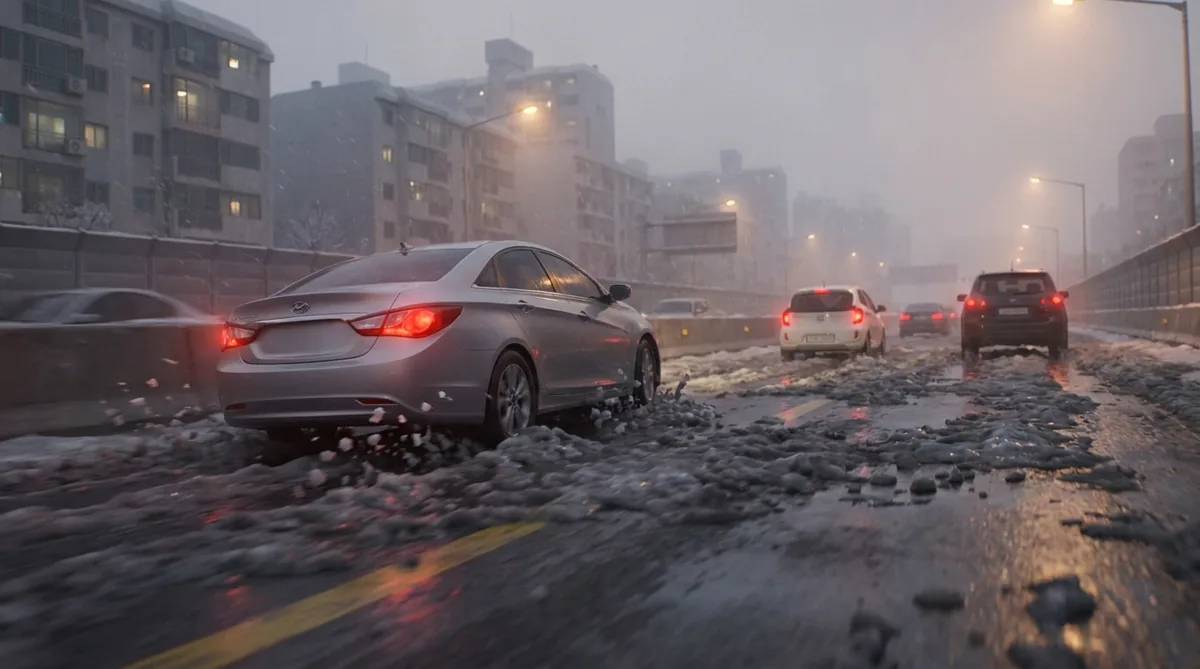
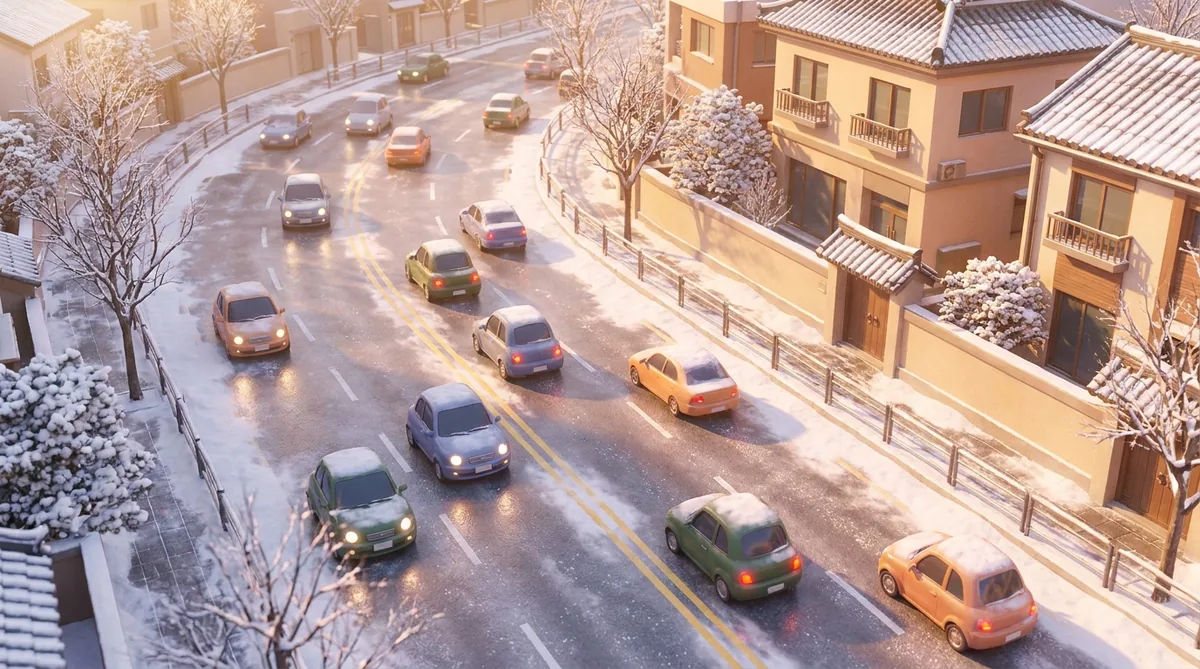
슬러시 도로 (seullosi doro) — slush road — forms when temperatures hover just below freezing, typically around -3°C to -4°C, and snow begins to melt on contact with the road surface, mixing with grit and traffic residue into a half-frozen slurry. From inside your car, it looks like an ordinary wet road after rain. There’s no visual cue telling you to slow down. That’s exactly what makes it so dangerous: drivers maintain their normal speed because nothing looks wrong.
Here’s the counterintuitive part: these half-frozen conditions are deadlier than a fully frozen or snow-covered road. Korean road-safety reporting has put the fatality rate on slush at roughly three times that of normal driving conditions. The danger is both physical and psychological: a low-friction surface stretches your braking distance — on fully frozen roads, the Korea Transportation Safety Authority (한국교통안전공단) has measured passenger-car stopping distances several times longer than on dry asphalt — while slush itself looks like ordinary wet pavement, so drivers never slow down. That combination is what makes it lethal. It matched something I’d felt myself: I once got stuck on a snow-covered road and felt my tyres start to slide as the friction of the spinning wheels melted the surface beneath me. I hadn’t expected it. The road changed under me without warning. No one was hurt, but I remember exactly how fast it happened and how little I could do about it.
💡 Pro Tip:
If the temperature is below zero and the road looks wet, treat it as slush. Reduce your speed by at least 50% and double your normal following distance. That’s not overcautious — that’s the math working in your favour.
For expats coming from countries without winter — South Africa, Australia, Southeast Asia, much of the Middle East — the conceptual gap here is significant. It’s not just that they don’t know how to handle slush; they don’t know slush exists as a distinct and measurable hazard. Knowing that a surface that looks like a harmless wet road is deadlier than the ice everyone fears is the kind of fact that doesn’t let you stay complacent. It’s unforgettable in a way that “be careful in winter” simply isn’t.
How the Korean Fault System Works in a Multi-Car Pile-Up
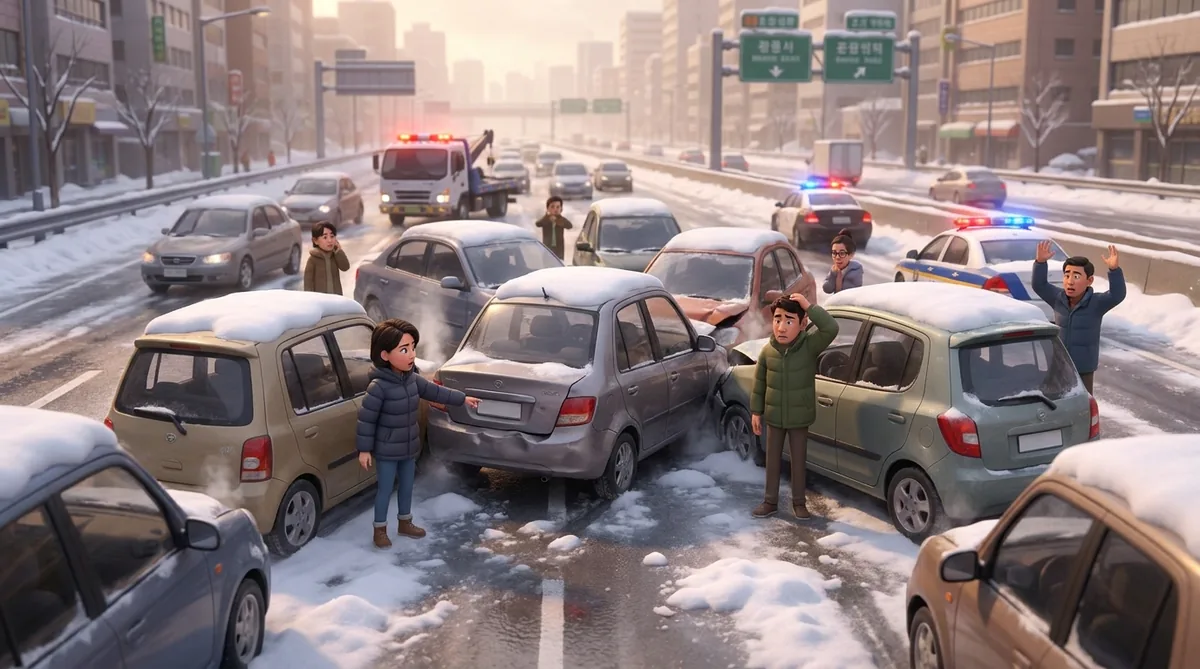
Korea has a history of large-scale winter road accidents. The most notorious is the 106-car pile-up on Yeongjong Grand Bridge in 2015 — Korea’s largest, caused by dense fog — which made international news. Most expats will never experience anything close to that scale, but chain-reaction collisions during winter are genuinely common on Korean highways. And if you’re caught in one, understanding how liability is divided matters enormously.
Involved in a Korean Road Accident?
Navigating Korea’s fault-ratio system and insurance claims in Korean is stressful enough — don’t do it alone. Jin can walk you through the forms, translate for your insurer, and make sure nothing gets lost in translation.
Korea operates on a 과실비율 (gwa-sil bi-yul) — fault ratio — system. Rather than assigning 100% blame to one party, insurers and courts apportion responsibility among everyone involved. For multi-car pile-ups, the general principles work like this:
- The vehicle that triggered the chain can carry liability beyond the car it hit. In some chain-collision cases, the car that set off the pile-up is assigned a share of responsibility even for vehicles it never directly contacted. There’s no fixed formula for this — Korean fault ratios are decided case by case under the insurers’ standards, weighing speed, following distance, and road conditions for each impact — so treat it as a possibility to be aware of, not a set percentage.
- The domino principle applies to everyone else. Your insurer compensates the car you hit; the car that hit you compensates you. Each link in the chain is assessed based on following distance, speed, and road conditions at the moment of impact.
- Don’t negotiate on the roadside. Standing on a sub-zero highway trying to argue percentages with other drivers is pointless and potentially dangerous. Move to safety, document the scene with your phone if you can, and hand everything to your insurance agent. They handle the subrogation process — the formal mechanism for recovering costs from the party at fault.
The fault ratio system can feel opaque and frustrating, especially if you’re not fluent in Korean. For broader context on Korean traffic laws and liability that goes beyond winter conditions, the understanding Korean traffic laws and liability guide covers the legal framework in more depth. And if you want the full picture of what it’s actually like to drive here as a foreigner, start with our comprehensive guide to driving as an expat in Korea.
Three Scenarios Most Expats Get Wrong
A few specific scenarios trip up foreign drivers again and again. Here’s my direct read on each one.
Scenario 1: You’re rear-ended and pushed into the car in front. Are you liable for the front car’s damage?
Generally, no — if you were stopped safely or travelling normally and the force of the rear impact pushed you into the vehicle ahead, the car that initially struck you bears the overwhelming majority of fault. You are not typically held responsible for the front car’s damage in that situation. That said, maintaining a safe following distance is always your obligation, and on winter roads I’d say keeping extra distance when conditions are poor is the one habit that gives you the most protection both physically and legally.
Scenario 2: You make an emergency stop to avoid a spinning car, no contact occurs, but you wake up the next day with severe neck pain. Can you claim insurance?
Yes. Korean insurance law recognises non-contact accidents. You can file a claim against the driver who created the hazard that forced your emergency stop, even though your car never touched theirs. The claim requires two things: dashcam footage that clearly shows the other vehicle’s behaviour and your emergency response, and a medical diagnosis that documents the injury. Without both, the claim goes nowhere. This is one of the situations where not having a dashcam functioning correctly is genuinely costly.
Scenario 3: Someone cuts in front of you without signalling on an icy road and you collide. Is it 100% their fault?
Not always. If the lane change happened directly in front of your bumper with no reaction time possible, a 100-to-0 fault split in your favour is achievable. But Korean insurers frequently argue that if a driver had sufficient distance to anticipate and avoid a hazard and failed to do so, a minority fault share — commonly 10% or 20% — attaches to them. The practical lesson: safe winter driving tips for Korea aren’t just about avoiding accidents. They’re about protecting your legal position if one happens.
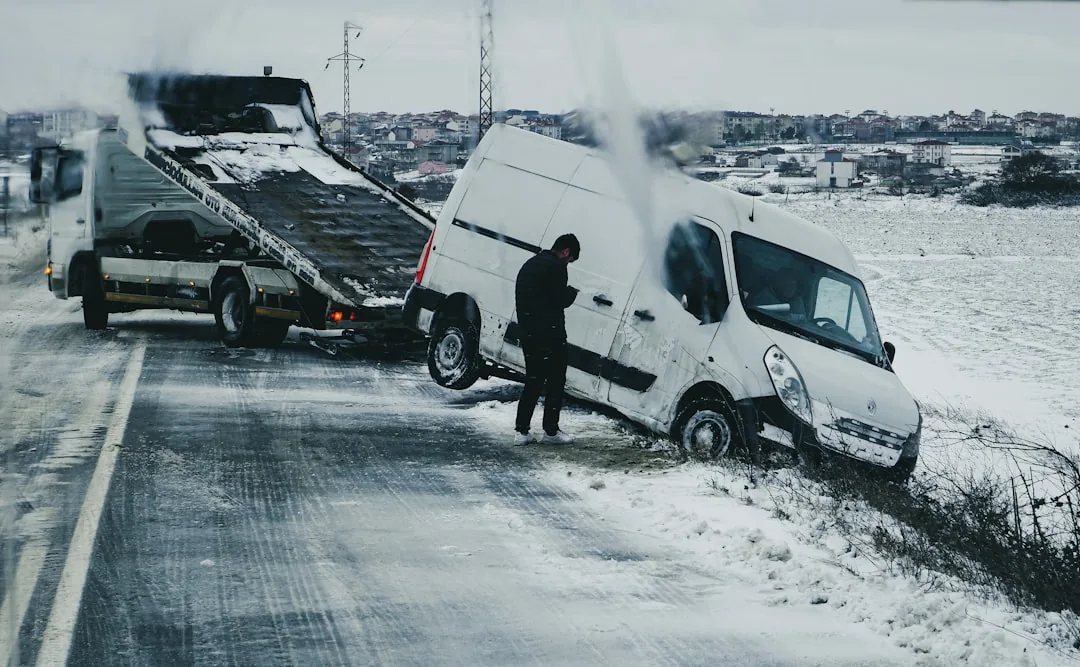
Your Dashcam Is the Ultimate Judge and Jury
If there’s one single piece of advice from this entire post, it’s this: your 블랙박스 (beullak bakseu) — the dashcam, literally “black box” — is your most important safety tool in Korea. Not your tyres, not your ABS. Your dashcam.

Contesting a fault ratio in Korea without dashcam footage is, in most cases, a losing proposition. Witness testimony is unreliable. Memory is unreliable. The other party’s account will differ from yours. Korean insurance companies and courts rely heavily on video evidence precisely because it removes that ambiguity. This is especially critical for non-contact accidents — the scenario where you braked hard to avoid someone, they drove off, and now you have a neck injury and no proof of what caused it. Without footage, you have almost nothing.
The Korean driving culture and accident reporting systems post goes into more detail on how the claims process actually works in practice, but the short version is this: Korea’s dashcam penetration rate is among the highest in the world because the legal system essentially requires it. If you’re driving here without one, you’re unprotected in the one situation where protection matters most.
💡 Pro Tip:
Before every winter drive, check that your dashcam’s SD card is functioning correctly and that the recording is active. Cards fail silently — the camera appears to be on, but nothing is being written to the card. A 30-second check before you leave could be the difference between a winnable insurance claim and an unwinnable one.
If you have an accident and you’re not sure how to handle the documentation and reporting side of things in Korean, JustAskJin can walk you through the process step by step — translating the forms, explaining what to say to your insurer, and making sure nothing gets lost in translation during what’s already a stressful situation.
Practical Rules for Safe Winter Driving in Korea
Based on everything in the research and my own experience on Gyeonggi-do roads, here’s what I actually do — and what I’d tell any expat heading out in January or February.
- Treat wet-looking roads as slush when it’s below zero. If the thermometer says sub-zero and the road surface looks wet, slow down as if it’s slush. You can’t tell the difference visually. Assume the worst case.
- Cut your speed by half and double your following distance. Not a guideline — a hard rule. On a low-friction winter surface your stopping distance can grow several times over, so the gap that feels safe in summer leaves you almost no room at all.
- Check your tyres before winter hits. Winter or all-season tyres make a real difference on Korean roads. The Ministry of Land, Infrastructure and Transport sets minimum tread depth requirements — don’t wait until the first snowfall to find out your tyres don’t meet them.
- Verify your dashcam before every winter trip. As above. This is non-negotiable.
- Don’t handle the roadside negotiation yourself. If you’re in an accident, get safe, photograph the scene, and call your insurer. Let the professionals work through the fault ratio system. Your Korean doesn’t have to be perfect — that’s what your insurer’s claims team is for.
- Watch for the transition periods. The most dangerous window is when temperatures have been below zero overnight and start climbing toward zero during the day — that’s when snow converts to slush. Mid-morning commutes on clear-sky winter days are often more dangerous than they appear.
The Bottom Line
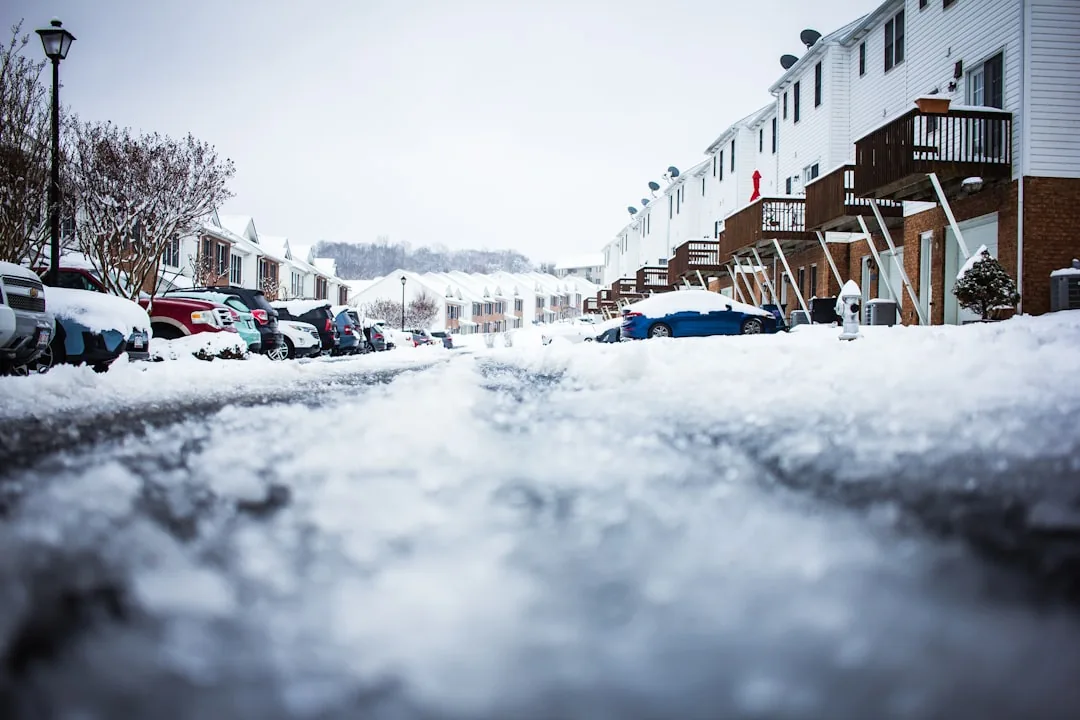
Korea’s winter road danger isn’t what most expats expect. It’s not the dramatic blizzard — it’s the quiet, deceptive surface that forms when temperatures sit just below freezing and the road looks completely ordinary. The fact that slush — a surface that looks like a harmless wet road — is deadlier than the ice everyone fears is what should reset your instincts entirely. It reset mine.
Beyond the physical risk, understanding how Korea’s fault ratio system and dashcam evidence requirements actually work is what separates an expat who’s legally protected from one who isn’t. The system isn’t designed to be unfair to foreigners — it’s just built on assumptions about what documentation you’ll have, and if you don’t have it, you lose. A working dashcam, a safe following distance, and a clear understanding of slush conditions will get you through Korean winters far better than any amount of general “drive carefully” advice.
Drive carefully — but drive specifically carefully. Korea requires it.
Frequently Asked Questions
What are slush roads in Korea, and why are they more dangerous than ice?
Slush roads (슬러시 도로) form when snow partially melts at temperatures around -3°C to -4°C, creating a half-frozen slurry on the road surface. The danger is that slush looks identical to ordinary wet pavement, so drivers maintain normal speeds even though the low-friction surface sharply increases their braking distance. Korean road-safety reporting has put the fatality rate on slush at roughly three times that of normal conditions — deadlier than fully frozen or snow-covered roads — making it one of the most underestimated winter hazards in Korea for expat drivers.
How is fault determined in a multi-car pile-up on Korean winter roads?
Korea uses a 과실비율 (fault ratio) system where responsibility is apportioned among all involved parties rather than assigned 100% to one driver. There’s no fixed formula: fault is decided case by case under the insurers’ standards, and in chain collisions the car that triggered the pile-up can be assigned a share even for vehicles it never directly contacted. Each link in the chain is assessed individually based on following distance, speed, and road conditions at the time of impact.
If I’m rear-ended and pushed into the car in front of me, am I responsible for the front car’s damage?
Generally, no. If you were stopped safely or travelling normally and the force of the rear impact pushed you forward, the car that initially struck you bears the overwhelming majority of fault. You are not typically held liable for damage to the vehicle you were pushed into. That said, maintaining an adequate following distance — especially in winter conditions — is always your obligation and can affect how insurers assess your position.
Can I claim insurance for a neck injury from an emergency stop if there was no physical contact?
Yes. Korean insurance law recognises non-contact accidents. You can file a claim against the driver who created the hazard that forced your emergency stop, even if your vehicle never touched theirs. The claim requires two things: dashcam footage that clearly shows the other vehicle’s behaviour and your emergency response, and a medical diagnosis documenting the injury. Without both pieces of evidence, the claim will almost certainly fail.
Why is a dashcam considered essential for driving in Korea?
Korea’s fault-ratio system depends heavily on objective evidence, and dashcam footage is the most reliable form of that evidence. Contesting a fault determination without footage is extremely difficult — witness accounts are inconsistent, and each party’s recollection will differ. This is especially true for non-contact accidents, where without dashcam proof of what caused your emergency response, you have almost no legal recourse. Korea’s dashcam penetration rate is among the highest in the world precisely because the system is built around the assumption that drivers have it.