There are days when the to-do list feels endless — a wife’s Korean language class, a business call that can’t wait, a hospital appointment that keeps moving. For us, navigating the Korean government hourly childcare program, known as 시간제 보육 (sigan-je bo-yuk) — hourly childcare, has been the closest thing to an oasis we’ve found in Hwaseong. If you’re an expat parent wondering what government benefits available to expat parents in Korea actually look like in practice, this one deserves your full attention.
📌 Quick Summary:
Korea’s hourly childcare program (시간제 보육) lets families with babies 6–36 months use government-registered daycare facilities by the hour. The rate is 5,000 KRW/hour, with eligible families paying just 2,000 KRW after a 3,000 KRW government subsidy — up to 60 hours per month. Bookings are made through the i-Sarang portal at childcare.go.kr, and you pay with the 국민행복카드 (Gukmin Haengbok Card — National Happiness Card). Spots fill fast, especially in areas with only one independent-class facility.
What Is 시간제 보육 — and Why Expat Parents Need to Know About It
The premise is simple: instead of enrolling your child in full-time daycare, you drop in for the hours you actually need. You pay only for what you use. The government chips in with a subsidy. No long-term commitment, no fixed schedule eating up your whole week.
For multicultural families like ours — where my wife is navigating Korean language classes while I’m building a new business — that flexibility isn’t a luxury. It’s the difference between making progress and grinding to a halt.
A couple of booked hours is also how we finally managed a visit to a no-kids cafe in Bongdam that had turned us away with the baby.

According to the 2025년 시간제보육 만족도 조사 결과 (2025 Hourly Childcare Satisfaction Survey), 97% of parents who used the service said they were satisfied, and 98% said it helped reduce their childcare burden. Those aren’t small numbers. They reflect something real — a program that works, when you know how to use it.
One common misconception worth clearing up immediately: using 시간제 보육 does not reduce your 부모급여 (bumo geupyeo — parental cash benefit) or 양육수당 (yangyuk sudang — childcare allowance). Both are paid in full regardless. You simply use the card you’ve already been issued — the National Happiness Card to pay for hourly childcare fees — and the subsidy is applied automatically. If you’re not using the 국민행복카드, note that any other payment method means you pay the full 5,000 KRW per hour with no government offset.
Independent vs Integrated Hourly Daycare Korea — Which Class Type Is Right for Your Baby
Navigating Korea’s Childcare System as an Expat?
From the i-Sarang portal to child registration at the district office — the paperwork can feel overwhelming. Jin can help you work through it step by step, in plain language.
Ask JinThis is the decision most new users get stuck on, and it matters more than it first appears.
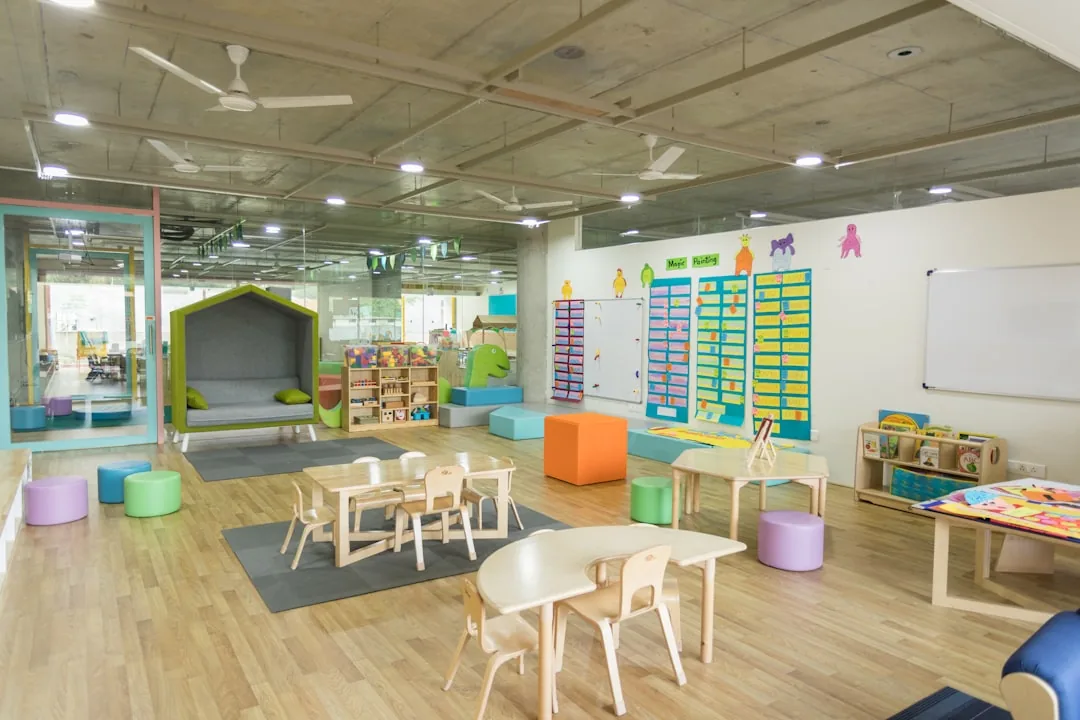
독립반 (Dongnipban — Independent Class) operates as a fully separate room from the regular daycare children, with its own dedicated teacher. It’s for babies aged 6 months to 36 months, available Monday to Friday, 09:00–18:00. Think of it as a private bubble — your child is only with other hourly care babies.
통합반 (Tonghapban — Integrated Class) places hourly children into a regular daycare class that has unfilled spots. It runs 09:00–16:00, covering morning slots (09:00–12:00), afternoon (13:00–16:00), or full-day (09:00–16:00). The age range covers 6 months up to the 2세반 which for 2026 means children born between January 1 and December 31, 2023.
We chose 독립반 for our daughter. She was born prematurely and was physically smaller than most babies her age at 10 months. We wanted her first social experiences to be with babies at a similar developmental stage, not in a mixed classroom where she might feel overwhelmed. That was our personal call — not a rule. If there’s a good 통합반 near you with reliable availability, it can absolutely work well.
Here’s the practical reality in Hwaseong’s Hyohaeng district: there is exactly one 독립반 facility. Three 통합반 options. With only one independent class option in the area, slots disappear quickly. I’ve watched a week of openings vanish overnight.
How to Book Hourly Childcare in Korea — Step by Step via i-Sarang
All bookings go through the i-Sarang portal (childcare.go.kr), available on both desktop and mobile. The helpdesk number is 1566-3232, and the main line is 1661-9361. Keep those saved — they’re useful when you hit a wall with the system.
Here’s how the process works from start to finish:
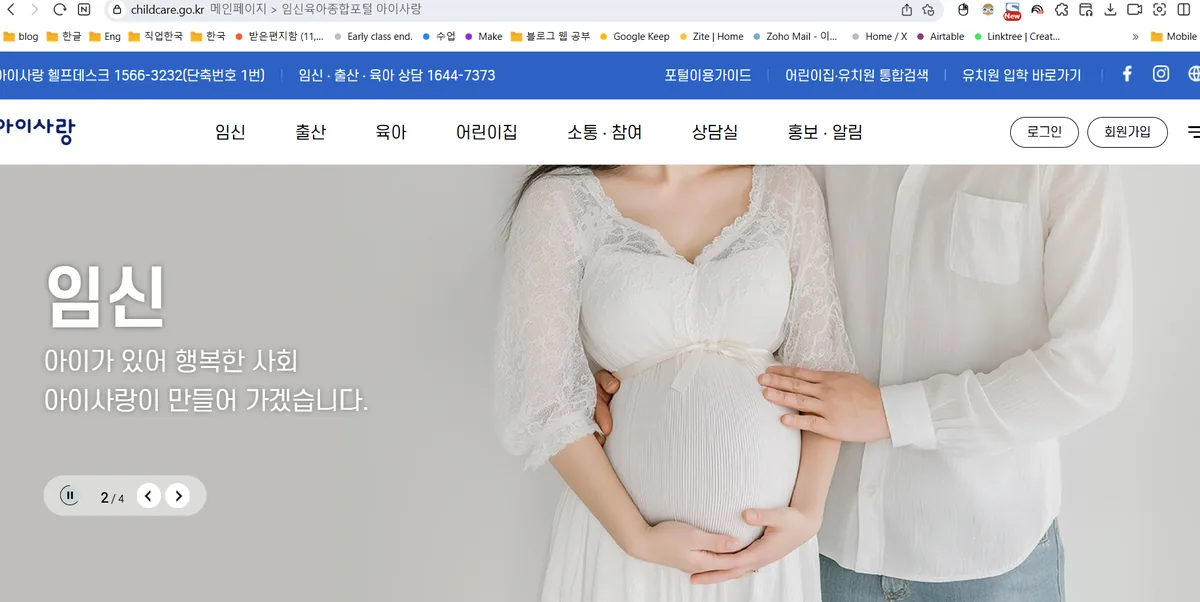
Step 1: Go to the i-Sarang Homepage
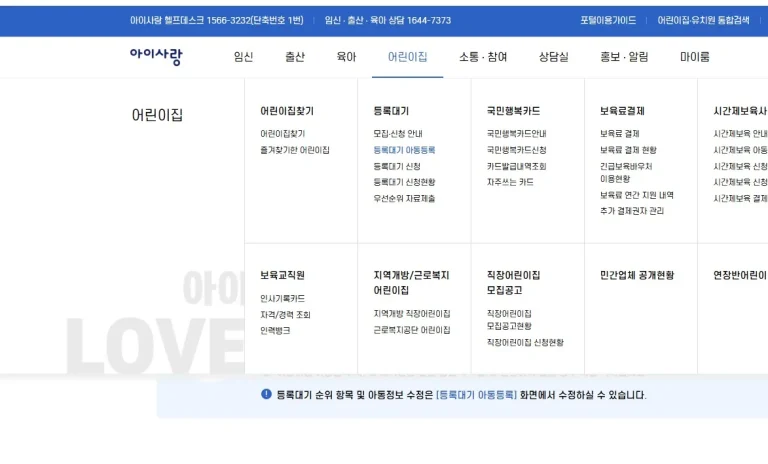
Open childcare.go.kr in your browser. You’ll land on the main government childcare information portal with navigation covering 임신 (pregnancy), 출산 (childbirth), and 육아 (childcare) sections.
Before visiting a clinic for allergy symptoms, check your health insurance coverage—understanding your NHIS or private plan benefits will help you navigate allergic rhinitis treatment options and medication costs in Korea.
Eligibility for Korea’s hourly childcare program is based on your child’s age, and with the shift to man-nai age counting since 2023, it’s important to confirm which age method your local daycare is using when registering.
Before enrolling in childcare, many facilities request documentation from Korea’s free infant health check-ups, so it’s wise to complete at least one check-up during your baby’s first year.
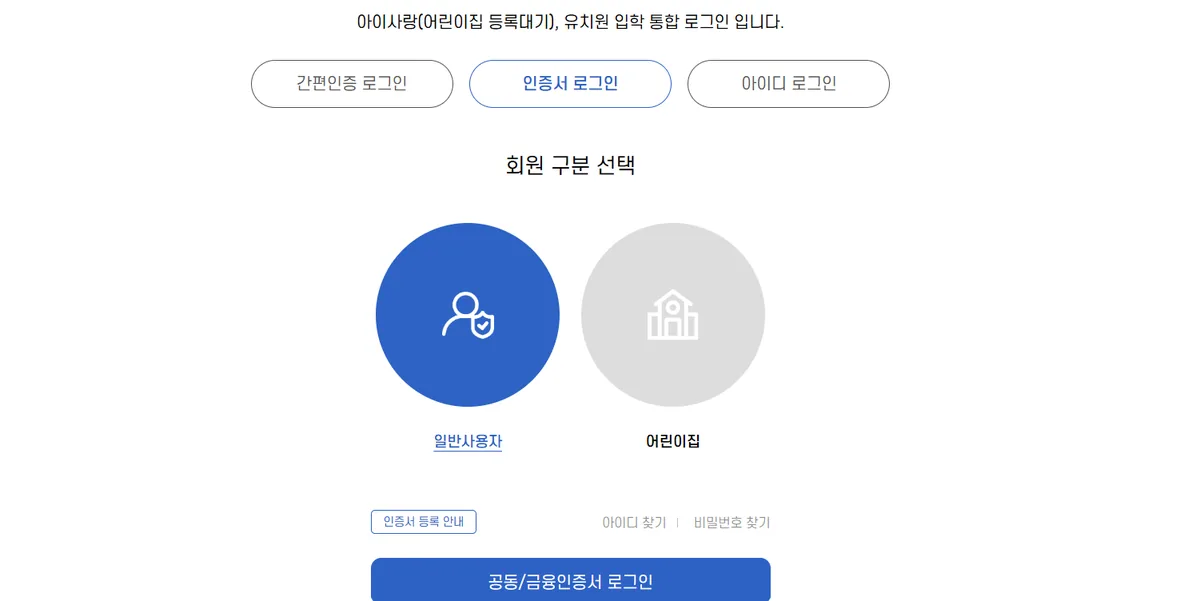
Step 2: Log In with Your 공동/금융인증서
This is where many expats get stuck. To make a reservation, you must use the 공동/금융인증서 (gongdong/geumyung injeungseo — Joint or Financial Certificate) login. A regular ID and password won’t give you access to the booking system. Select 일반사용자 (ilban sayongja — Regular User) from the account type options, then proceed with the certificate login.
If you’re a foreign national, your child registration must be completed through your local 시군구 (si-gun-gu — district office) and the facility’s 관리기관 (gwalli gigan — management institution) before you can book — the online self-registration that Korean parents use doesn’t work with foreign registration numbers. You’ll need to visit in person with your 외국인등록사실증명서 (Certificate of Alien Registration — available from Government24, a 주민센터, or your local immigration office) and the parent’s original 외국인등록증 (ARC). Staff will register your child manually in the backend, and only then will their name appear in the app and booking become possible. Plan ahead — this can’t be done same-day. For navigating these registration hurdles, JustAskJin can help you work through the paperwork in plain language.
A common login headache for foreign users: if your name is spelled even slightly differently across your telecom provider, bank account, and ARC — a missing hyphen, an extra space, different capitalisation — the identity verification system treats you as a different person and blocks you. Before setting up the app, visit your mobile carrier and bank to make sure the English spelling of your name matches your 외국인등록증 exactly. This alone saves hours of frustration.
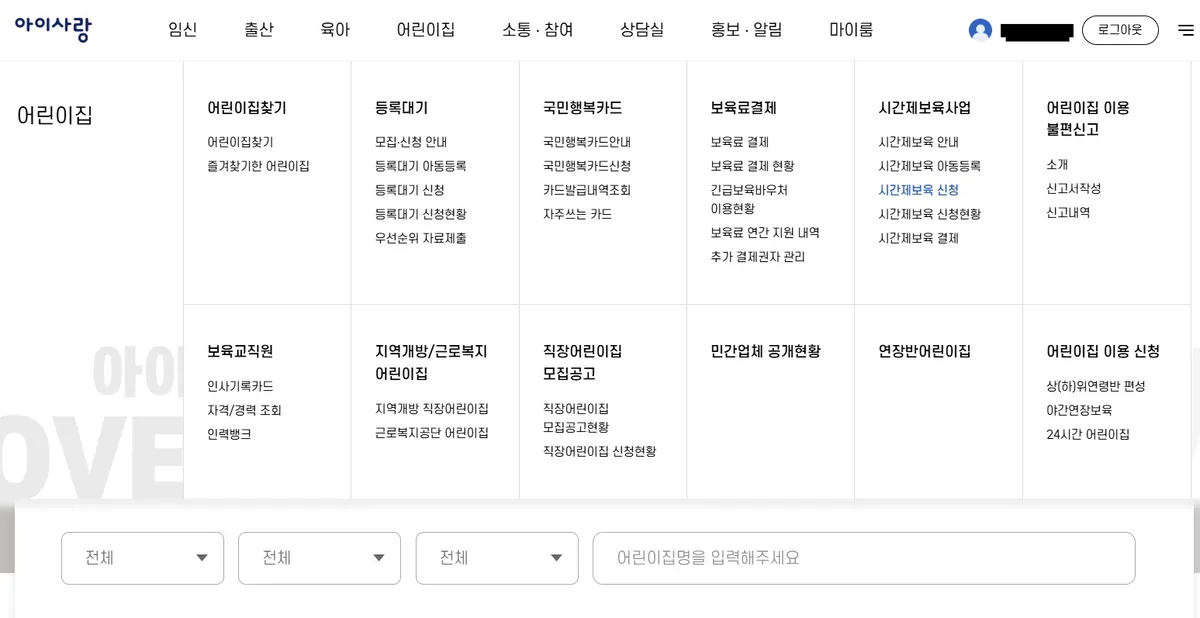
Step 3: Register Your Baby and Select 시간제보육
Before you can reserve anything, your child’s information must be registered on the portal. Once that’s done, navigate to the 시간제보육 신청 (hourly childcare application) section under the 시간제보육사업 menu.
For more details on how this registration process fits into the broader enrollment timeline, I recommend reviewing understanding Korea’s full daycare enrollment and waiting list system.
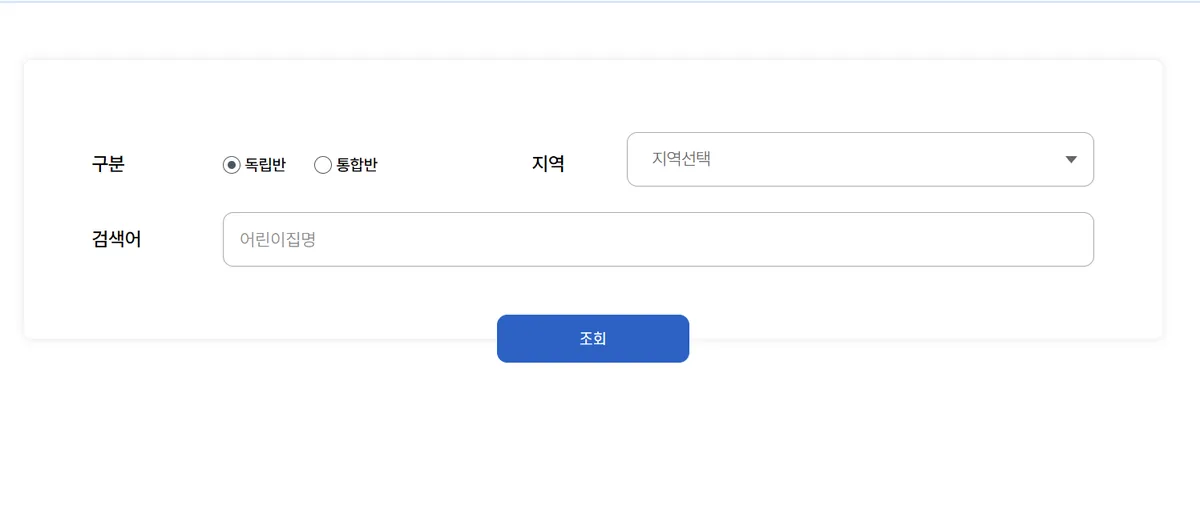
Step 4: Choose Your Class Type and Search by Area
Select either 독립반 or 통합반, then enter your region to see available facilities. Note: if your child was registered through a management institution rather than online, you can only book 독립반 by phone — 통합반 requires online registration to reserve online.
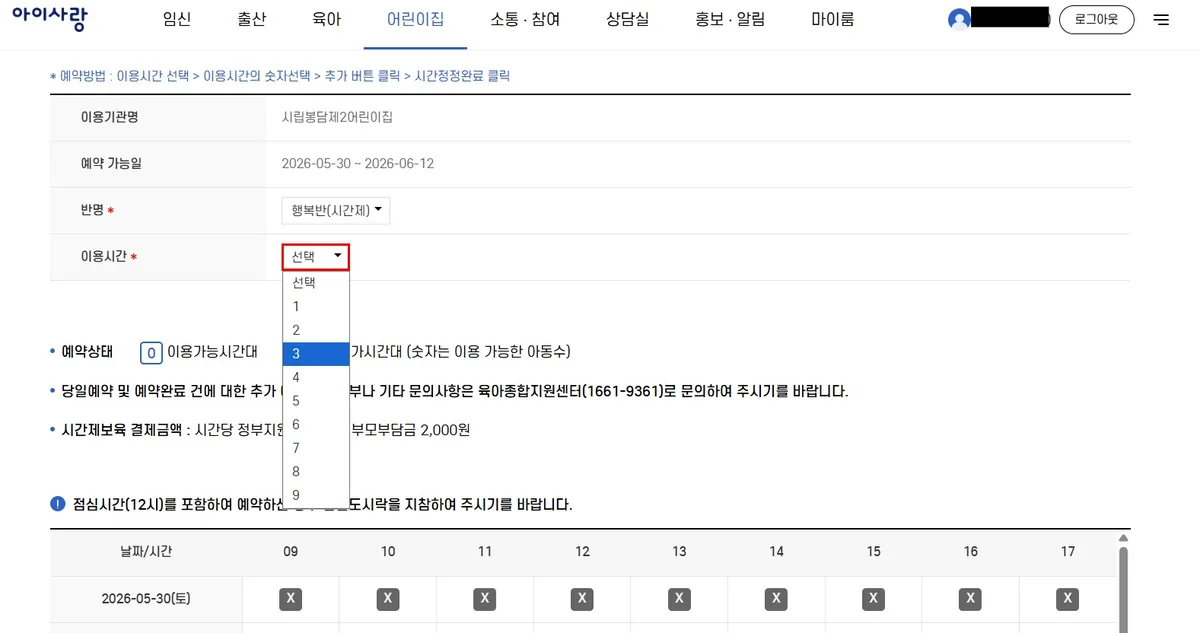
Step 5: Choose Your Preferred Hour Slot
A dropdown shows available time slots. Pick the hour or block that works for your schedule. 독립반 allows same-day booking up to 1 hour before the session starts; 통합반 can be booked up to 24:00 the day before.
Step 6: Select Your Date on the Calendar
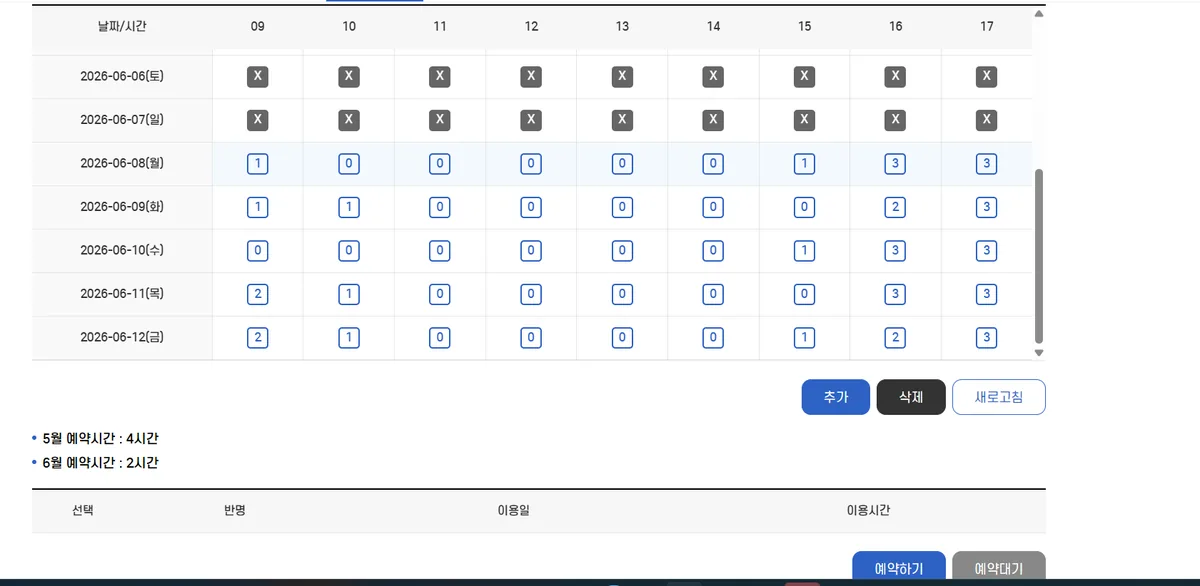
The calendar displays real-time availability. Slots open 14 days in advance at 9:00 AM. This is not a drill — set a reminder. Popular facilities fill within hours of slots opening. Cancellations happen regularly too, so check back if your first-choice date is full.
💡 Pro Tip:
Treat the 14-day booking window like a ticket drop. Set a 9:00 AM alarm two weeks ahead of every week you need care. And take the cancellation rules seriously: cancel by the day before and there’s no penalty, but same-day cancellations earn you -1 to -2 penalty points, a no-show costs -3, and unauthorised overtime (not picking up on time) can hit -4. If your monthly total reaches -7 points, all your remaining bookings that month are wiped and online reservations are locked until the next month. Points reset on the 1st. One exception: illness (with a doctor’s note submitted the same day) and fine-dust emergency days are penalty-free.
Running late for pickup? You cannot extend via the app. Call the facility or 1661-9361 at least 1 hour before your booking ends to request an extension — otherwise it’s treated as unauthorised overtime.
🎒 What to Pack — Because the Facility Provides Nothing
This catches a lot of parents off guard, especially if you’re used to full-time daycare where meals and supplies come included. Hourly childcare centres do not provide meals, snacks, or basic supplies as a rule. You need to bring everything: nappies/diapers, wet wipes, a spare change of clothes, your baby’s water bottle, and any food — formula, baby food, packed lunch, snacks — for the hours you’ve booked. If your session covers nap time, bring a personal blanket too.
There is one exception: if you call the facility in advance, some centres can provide a meal from their kitchen for an extra 1,000–2,000 KRW on top of the hourly fee. But this must be arranged beforehand — don’t just show up expecting lunch.
Tips for First-Time Hourly Childcare Adaptation — Start Slow, Stay Present
The first time we walked into the facility, I wasn’t prepared for how it would feel. The teachers were warm, genuinely warm — they called our daughter cute without hesitation, which as the parent of a half-Korean, half-African baby in a small Korean city, lands differently than you’d expect. I remember thinking: I never thought I’d be here, doing this, as a parent. And then sitting on the floor watching a 10-month-old who had spent most of her life in the NICU and at home try to make sense of a completely new room, new smells, new voices.

The teacher gave us advice that has stuck: don’t start with long blocks. Book one hour. Stay with your baby during that first session. Let them see that you’re there, that the teacher is kind, that the room is safe. Then gradually extend from there over several weeks.
The reasoning matters. If a baby’s only experience of the facility is suddenly being left for three hours with strangers, the place becomes associated with separation. Short, positive, parent-present sessions first — that builds the association the other way.
The teacher also recommended regular attendance during the adaptation period, rather than occasional long visits. Consistency helps. A baby who comes once a fortnight for a big block hasn’t actually adapted — they’re just surviving the experience each time. Weekly short sessions over a few weeks create genuine comfort.
💡 Pro Tip:
For the first few visits, stay in the room or just outside it. Only once your baby has started exploring the space and engaging with the teacher should you start stepping out briefly. Let the progression happen at their pace, not yours. And don’t worry about wasted bookings during this phase: if your baby is distressed and the teacher calls you for an early pickup, the system allows up to 3 penalty-free early departures within the first month of use. It’s built into the rules precisely because adaptation takes time.
The honest part is this: even knowing all of that, even knowing the service exists for exactly our situation, I still wondered if we were pushing her too early. Not guilt exactly — more the specific ache of a decision that is clearly right but still costs something. Every parent who has used a service like this probably knows that feeling. It doesn’t mean you’re doing it wrong.
Korean Childcare Subsidy Eligibility for Expats — What You Actually Get
Let’s be concrete about the money, because it’s genuinely good value if you qualify.
- Hourly rate: 5,000 KRW per hour
- Government subsidy: 3,000 KRW per hour
- Your cost (if eligible): 2,000 KRW per hour
- Monthly subsidised hours: Up to 60 hours
- Your cost if not receiving parental benefits: Full 5,000 KRW per hour
Here’s the part that trips up a lot of expat families, so read it carefully. The 3,000 KRW subsidy is tied to your child receiving 부모급여 (parental cash benefit) or 양육수당 (childcare allowance) — and those benefits, as a rule, require Korean nationality and a valid resident registration number. In practice that means children of multicultural families who hold Korean nationality (like our daughter, through her Korean parent) get the subsidised 2,000 KRW rate. A child who is a foreign national and registers through the facility’s management institution generally pays the full 5,000 KRW per hour, with no government subsidy.
There’s one important exception: some local governments fund their own subsidies so foreign-national children get partial or full support. Hwaseong is actually a national leader on this — it was among the first cities in Korea to fully subsidise childcare fees for foreign children in regular daycare, and from 2026 it even provides 100,000 KRW per month to undocumented migrant children. However, these local subsidies are generally designed for full-time enrolled daycare, not hourly care. Whether Hwaseong’s programme can be applied to offset your 시간제보육 fees (e.g. as a post-hoc reimbursement) is something you’d need to confirm directly with the Hwaseong 육아종합지원센터 (Childcare Support Centre) or the 화성시청 여성다문화과 (Women & Multicultural Affairs Division). The central system still defaults foreign hourly care to full self-pay, so don’t assume — call first.
Payment goes through the 국민행복카드 (Gukmin Haengbok Card — National Happiness Card), and this is where expats hit a wall they don’t see coming: overseas-issued cards do not work. A Visa, Mastercard, or Amex issued outside Korea can’t be charged at the facility terminal or registered in the i-Sarang app. You’ll need a 국민행복카드 issued by a Korean bank, which you can apply for in person with your 외국인등록증 (Alien Registration Card). Even when you’re paying the full 5,000 KRW with no subsidy, some centres will only accept the 국민행복카드 — a few take a regular domestic card, but don’t count on it. Sort the card out before your first booking. If you’re not sure how, our post on using the National Happiness Card for government childcare benefits covers the setup in detail.
⚠️ Fees and subsidy rates are based on the most recent official information available as of 2026. Always confirm current rates at childcare.go.kr before booking, as these figures are subject to government policy updates.
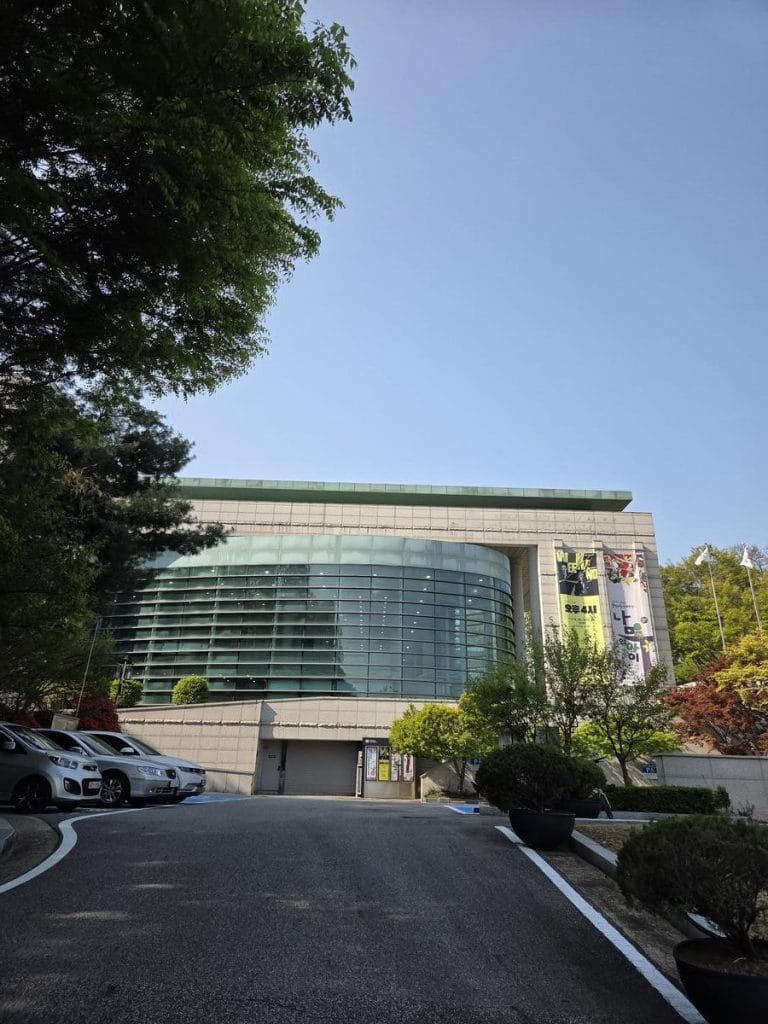
📍 시립봉담제2어린이집 (Sillip Bongdam Je-2 Childcare Centre)
Address: 37, Sangri 1-gil, Bongdam-eup, Hwaseong-si, Gyeonggi-do, South Korea
If you want to explore what else is available locally beyond hourly care, we’ve also written about other affordable childcare options in Hwaseong worth knowing about — including a free playroom that costs nothing at all.
Frequently Asked Questions
Can expats and foreign nationals use Korea’s hourly childcare program?
Yes — but the cost depends on your child’s nationality. Foreign nationals can use the service after completing an in-person registration at the facility’s management institution (online self-registration doesn’t work for foreign registration numbers). You’ll need your 외국인등록사실증명서 and the parent’s 외국인등록증. Once registered, you can book through the i-Sarang app like any other parent. However, the 3,000 KRW/hour government subsidy is tied to receiving 부모급여 or 양육수당, which generally requires Korean nationality. Children who hold Korean nationality (e.g. through a Korean parent in a multicultural family) qualify for the subsidised 2,000 KRW rate. Foreign-national children typically pay the full 5,000 KRW/hour. Some local governments (including Hwaseong) run their own subsidy programmes for foreign families — check with your local 육아종합지원센터 to confirm your child’s status.
Will using 시간제 보육 reduce my 부모급여 or 양육수당?
No. Using the hourly childcare program does not reduce or deduct from your 부모급여 (parental cash benefit) or 양육수당 (childcare allowance). Both are paid in full regardless of how many hours of 시간제 보육 you use each month. You simply pay the hourly fee using your 국민행복카드, and the government subsidy is applied automatically at the time of payment.
What is the difference between 독립반 and 통합반?
독립반 (Independent Class) is a fully separate room exclusively for hourly childcare babies aged 6–36 months, with its own dedicated teacher, available Monday to Friday 09:00–18:00. 통합반 (Integrated Class) places hourly babies into existing regular daycare classes that have spare spots, and runs 09:00–16:00. The right choice depends on your child’s age, developmental stage, and what’s available in your area — both are legitimate options.
How far in advance can I book hourly childcare on i-Sarang?
Slots open 14 days in advance at 9:00 AM on the i-Sarang portal (childcare.go.kr). For 독립반, you can also book same-day up to 1 hour before the session starts. For 통합반, the latest you can book is 24:00 the day before. In popular areas with limited facilities, slots for the best times can fill within hours of opening — treat the 14-day window like a ticket release and set a reminder.
What happens if I need to cancel a booking?
Cancel by the day before and there’s no penalty. After that, a point system kicks in: same-day cancellation before your slot is -1 point, during your slot is -2, a no-show is -3, and unauthorised overtime (not picking up on time) is -4. If your monthly total reaches -7 points, all your remaining bookings for that month are automatically cancelled and online reservations are locked until the 1st. Points reset monthly. Two exceptions: if your child is sick (submit a doctor’s note or prescription the same day) or a fine-dust emergency is declared, the cancellation is penalty-free. If you’re running late, call the facility or 1661-9361 at least 1 hour before your end time to request an extension — this can’t be done in the app.