When our daughter finally came home from the NICU, I stood in our apartment holding this tiny fighter — born at just one kilogram — and felt the full weight of everything still ahead of us. The national health check-up schedule was the last thing on my mind. But it crept up on us faster than I expected.
📌 Quick Summary:
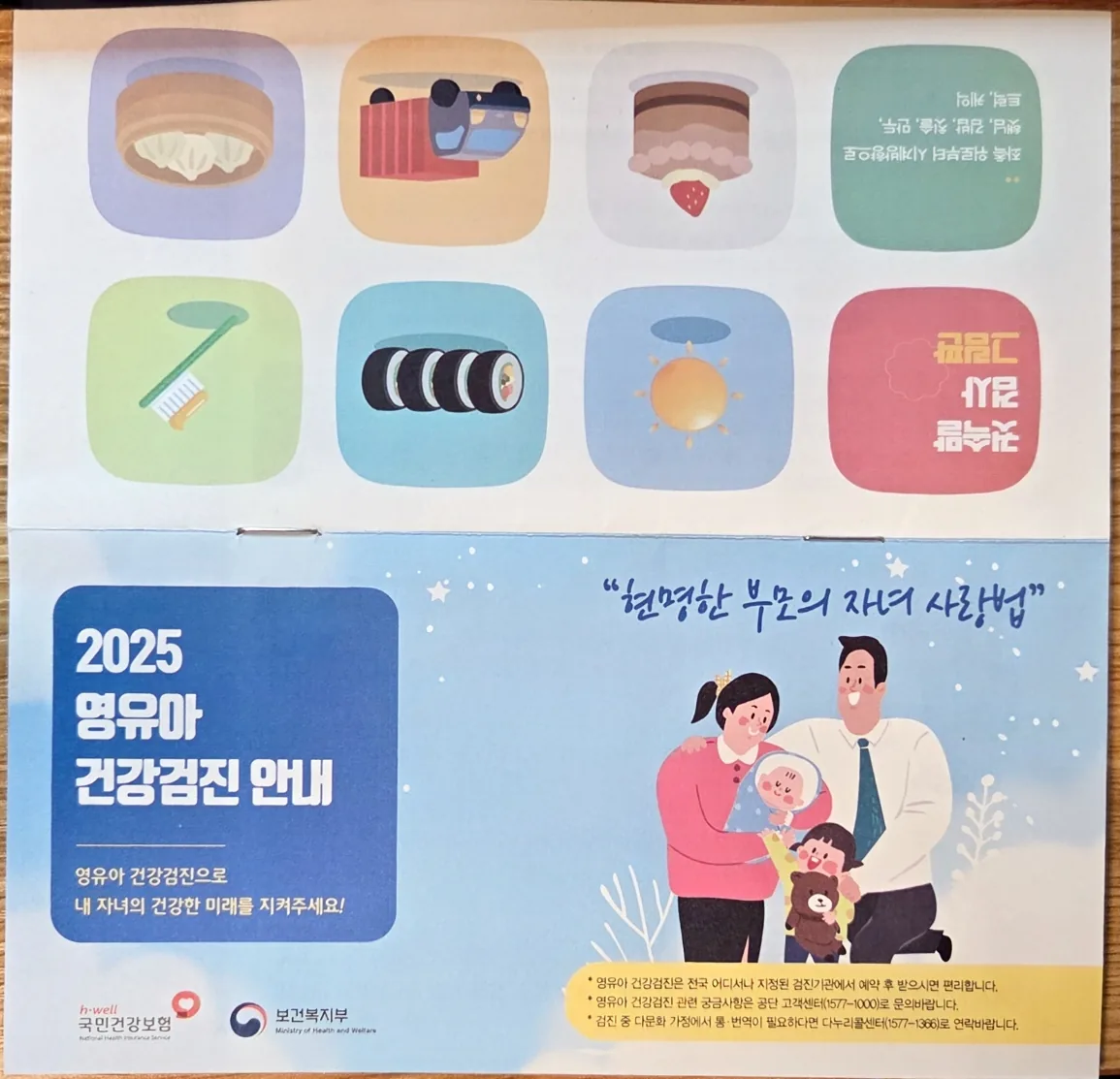
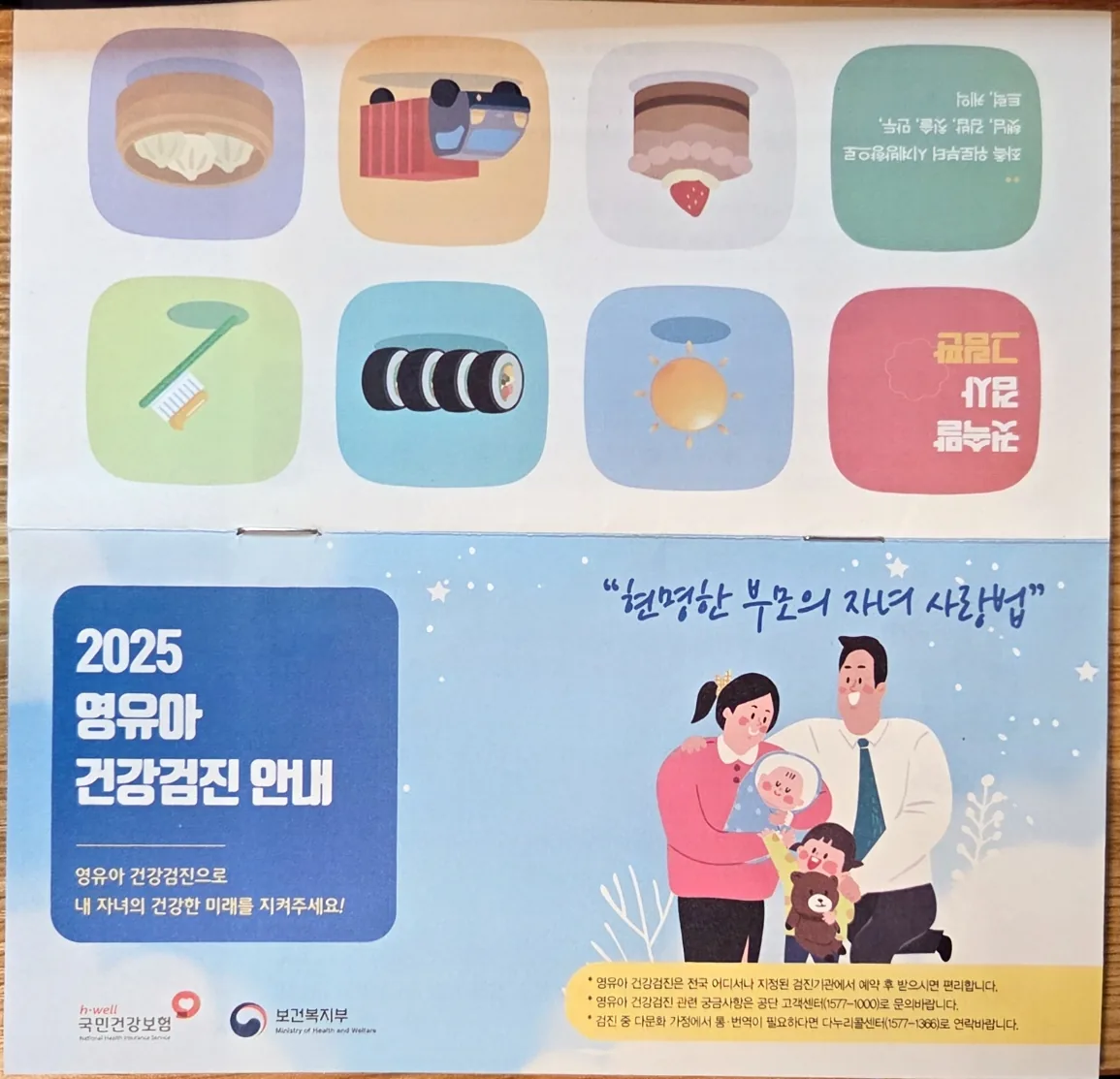
Korea offers a fully free national infant health check-up program — eight general check-ups plus four oral (dental) check-ups, from 14 days old through 71 months. As an expat parent — especially if your baby arrived early — the fixed schedule can feel daunting. This post walks through how the program works, what our NICU preemie’s first check-up was really like, and how to book quickly using the Tokdak app.
If you’re researching the free infant health check-up Korea for expats, the short answer is: yes, you’re eligible if you’re enrolled in the National Health Insurance Service, and yes, the check-ups are genuinely free — but only when taken within the specific age window. Miss that window by even a day and you’re paying out of pocket. That detail matters more than it sounds. And if you’re also navigating a premature birth and NICU stay in Korea, the standard timeline gets complicated fast.
What Is Korea’s National Infant Health Check-up Program?
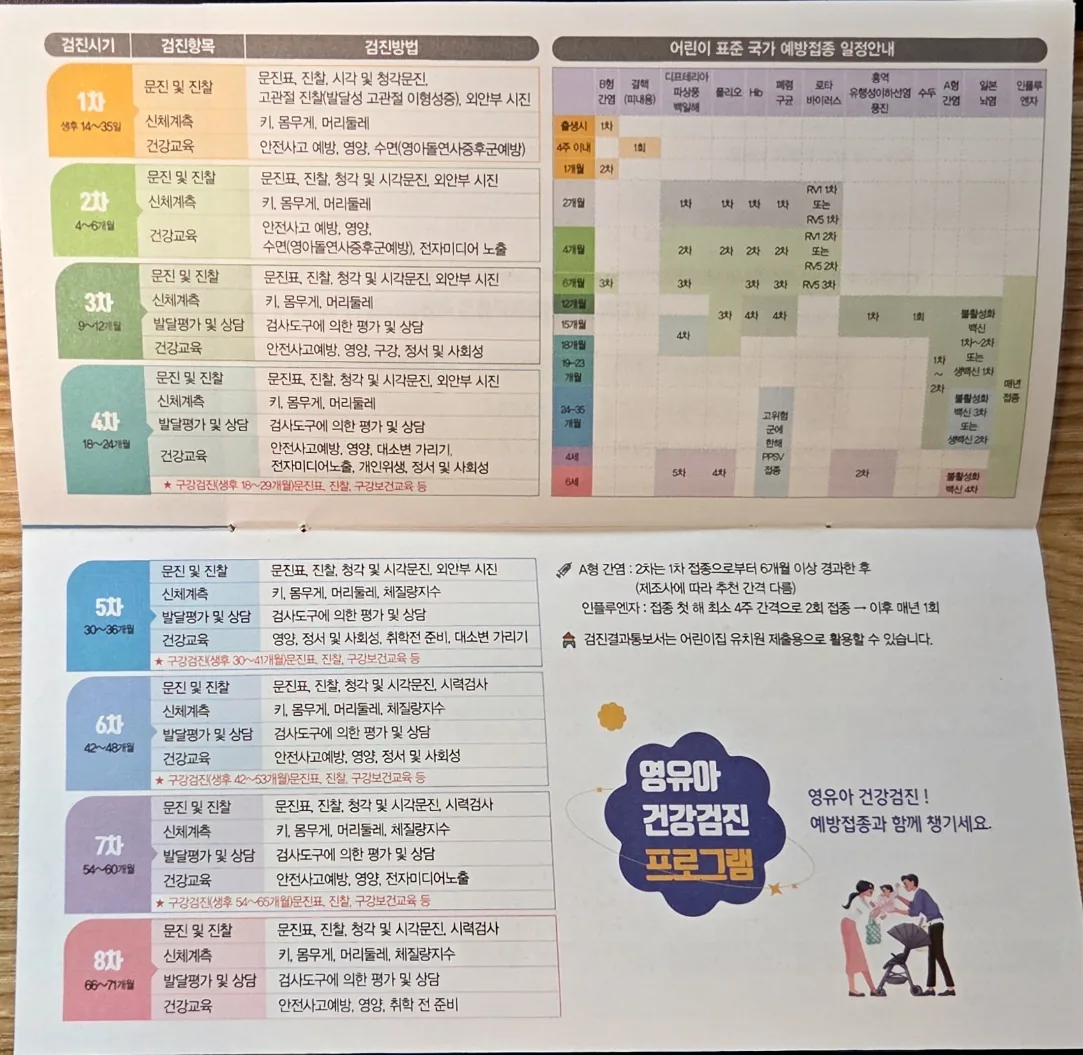
The official name is 영유아건강검진 (yeong-yu-a geongang geomsim — infant and child health check-up). It’s run by the National Health Insurance Service (NHIS) and runs on two tracks: eight general health check-ups and four oral (dental) check-ups, from 14 days old through 71 months — just under six years. Each general check-up includes physical measurements, a developmental assessment and counselling, and health education for parents; the developmental screening is added from the 9–12 month visit onward. The oral check-ups are done separately, at a dental clinic rather than your pediatrician, and are also free within their own age windows — which is exactly why they’re easy to miss if no one tells you to book them.
The general check-ups (at a pediatric or screening clinic) are timed around these age windows:
- 1st: 14–35 days
- 2nd: 4–6 months
- 3rd: 9–12 months
- 4th: 18–24 months
- 5th: 30–36 months
- 6th: 42–48 months
- 7th: 54–60 months
- 8th: 66–71 months
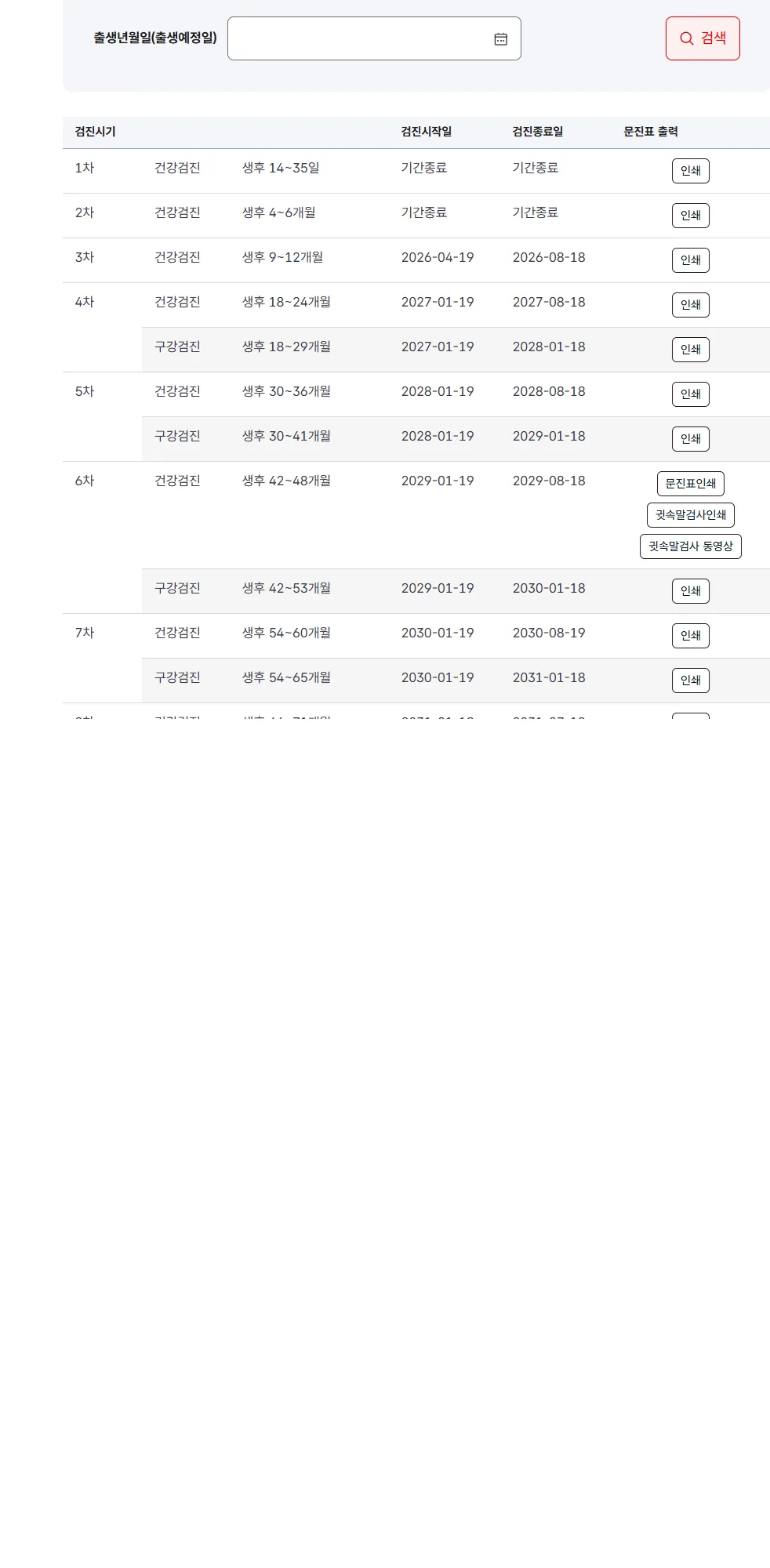
The four oral check-ups are booked separately, at a dental clinic:
- 1st: 18–29 months
- 2nd: 30–41 months
- 3rd: 42–53 months
- 4th: 54–65 months
One misconception worth clearing up: many expat parents assume the check-ups are free whenever you go. They’re not. The zero-cost guarantee applies only when you attend within the designated age window. Outside that window, you’re paying the clinic’s full non-covered rate — which can run to tens of thousands of won depending on the clinic. The NHIS sends your check-up eligibility notice digitally, and if you haven’t opened it, they mail a paper copy. You can also look up your child’s check-up schedule by birth date on the NHIS website or their mobile app.
As long as your child is enrolled under the National Health Insurance — which applies to foreign residents with valid registration — the program is available to you. This is true whether you’re on a work visa, a spouse visa, or a long-term residency status. If you’re unsure about your eligibility, the NHIS foreign-language helpline is reachable at 033-811-2000.
Our Experience: A Preemie Who Didn’t Fit the Chart
Our daughter spent her first two months in the NICU. After discharge, we drove to Seoul roughly once a week for follow-up appointments at the main hospital for another two months. It was exhausting in the way only new parents of a medically fragile baby understand. The idea of adding another check-up to the schedule — a government one that didn’t know our daughter existed outside of a standard growth curve — felt pointless.
The NICU coordinator put it plainly: our baby would almost certainly fall outside the normal range on the national developmental screening. She was born at one kilogram. She was catching up, not behind — there’s a difference — and we shouldn’t panic when the numbers looked small. That framing helped. But it also made us question whether the 영유아건강검진 (yeong-yu-a geongang geomsim) was worth pursuing at all in those early months.
We missed the first and second check-ups. It felt like the right call at the time.
Then something shifted. Our daughter started growing. Slowly, steadily, visibly. And the coordinator mentioned, almost as a footnote, that some 어린이집 (eorin-i-jip — daycare centres) request check-up results as part of enrollment. Not all of them, but some. If you’re preparing your child for childcare and kindergarten, having that documentation ready is just sensible. That nudged us toward booking the third check-up, around the nine-month window.
** These health check-ups are just one piece of South Korea’s family support ecosystem—explore the full scope of expat childbirth support policies including fertility testing, parental leave, and housing benefits.
At ten months, she weighed just over seven kilograms. Born at one kilogram. The pediatrician told us she was now at the lower end of the normal range. I hadn’t realised how much I needed to hear that sentence until I heard it.
The doctor’s practical notes from that visit: increase solid meals from twice to three times a day, and start brushing those two tiny bottom teeth that had appeared. Both felt like small milestones in their own way.
Navigating Korean Healthcare as an Expat Parent?
From NICU aftercare to infant check-ups, the system has a lot of moving parts. If you have questions about what you’re entitled to as a foreign resident — or just need someone to help you make sense of it — Jin is here to help.
Ask JinFinding a Clinic When Your Area Is Short on Pediatricians
Our area of Hwaseong has plenty of young families — and not nearly enough pediatricians to serve them. The closest clinic had a wait of over a month for a check-up appointment. That’s not unusual. Pediatric shortages in Korean suburbs are a real and ongoing problem, and the free check-up system puts extra pressure on clinic capacity.
The solution was simple once I thought of it: look a bit further. A clinic a short drive away had availability within days. That clinic was Wellbom BF Pediatrics (웰봄BF소아청소년과), which offers the standard 영유아건강검진 program and books through the Tokdak app.
📍 Wellbom BF Pediatrics (웰봄BF소아청소년과)
Address: 72-13 Geomsaeng-gil, Hyangnam-eup, Hwaseong-si, Gyeonggi-do, 2F
How to Book a Pediatric Appointment Using Tokdak
The 똑닥 (Tokdak) app has become the standard booking tool for pediatric clinics across Korea. When I called one clinic to ask about appointments, they immediately redirected me to Tokdak. Phone bookings for infant check-ups are increasingly rare. The app is the system now.
A note on cost: as of 2026, Tokdak charges an annual membership fee of 10,000 won for its reservation and remote check-in features. That covers a full year, and if you leave Korea before the year is up, refunds are calculated on a per-day basis — no penalty fee. Searching nearby hospitals and checking wait times remains free.
Here’s how to book a check-up through the app:
- Download and set up Tokdak. You’ll need to verify your identity through a Korean mobile number. If your registered name on the telecom doesn’t exactly match your ARC (외국인등록증 — oegugin deungnok-jeung — alien registration card), the verification will fail. Check with your carrier before you start.
- Search for nearby clinics. Open the app and allow location access. A list of clinics near you appears, with real-time wait numbers visible even without a paid membership.
- Select the clinic and choose “영유아건강검진.” Not all appointment slots are the same — make sure you’re selecting the health check-up category specifically, not a standard consultation slot.
- Pick a time and confirm. The calendar shows available slots. If your nearest clinic has nothing for weeks, try widening your search radius. A thirty-minute drive saved us a month of waiting.
💡 Pro Tip:
Once you’ve confirmed your appointment, you still have homework to do before you show up. The questionnaire and developmental screening form must be filled out in advance — either through the NHIS website or directly in the Tokdak app. Arriving without them completed will slow down your entire visit.
The Questionnaire: Do It Before You Leave Home
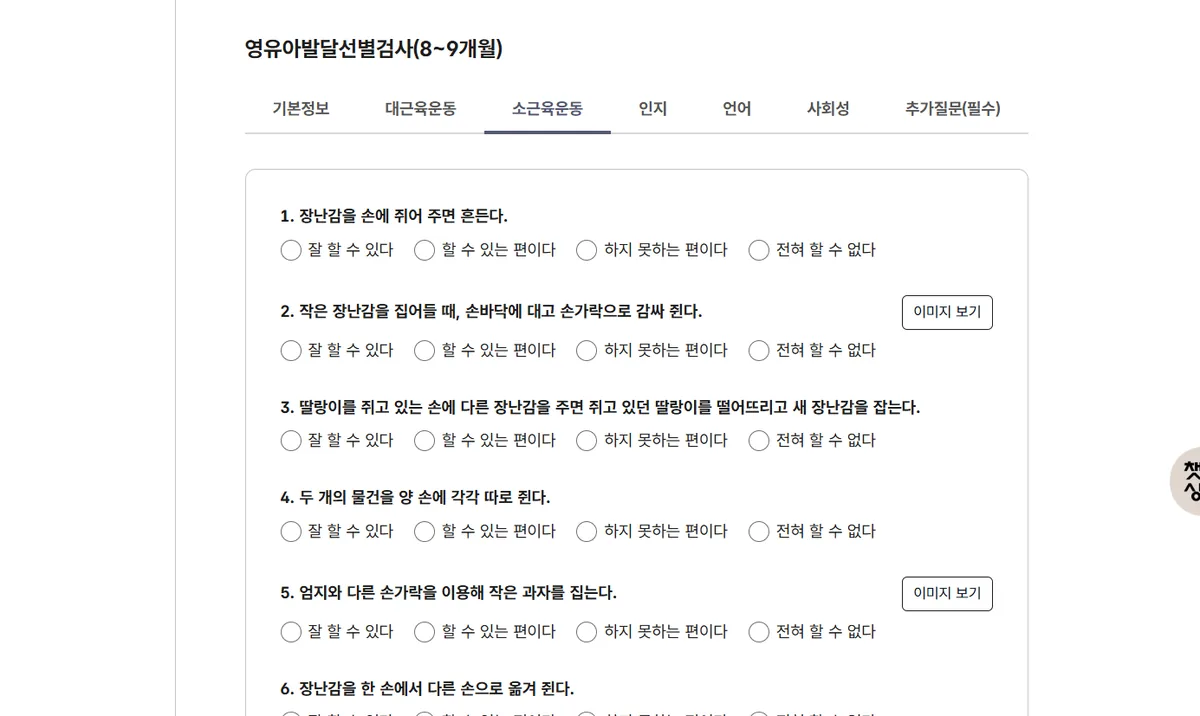
The 문진표 (munjinpyo — health questionnaire) and the developmental screening assessment are two separate documents, both required. They cover your child’s medical history, feeding habits, sleep, and developmental milestones. The developmental screening portion is divided into sections by skill area — communication, motor development, social interaction — and asks whether your child can do specific things for their age.
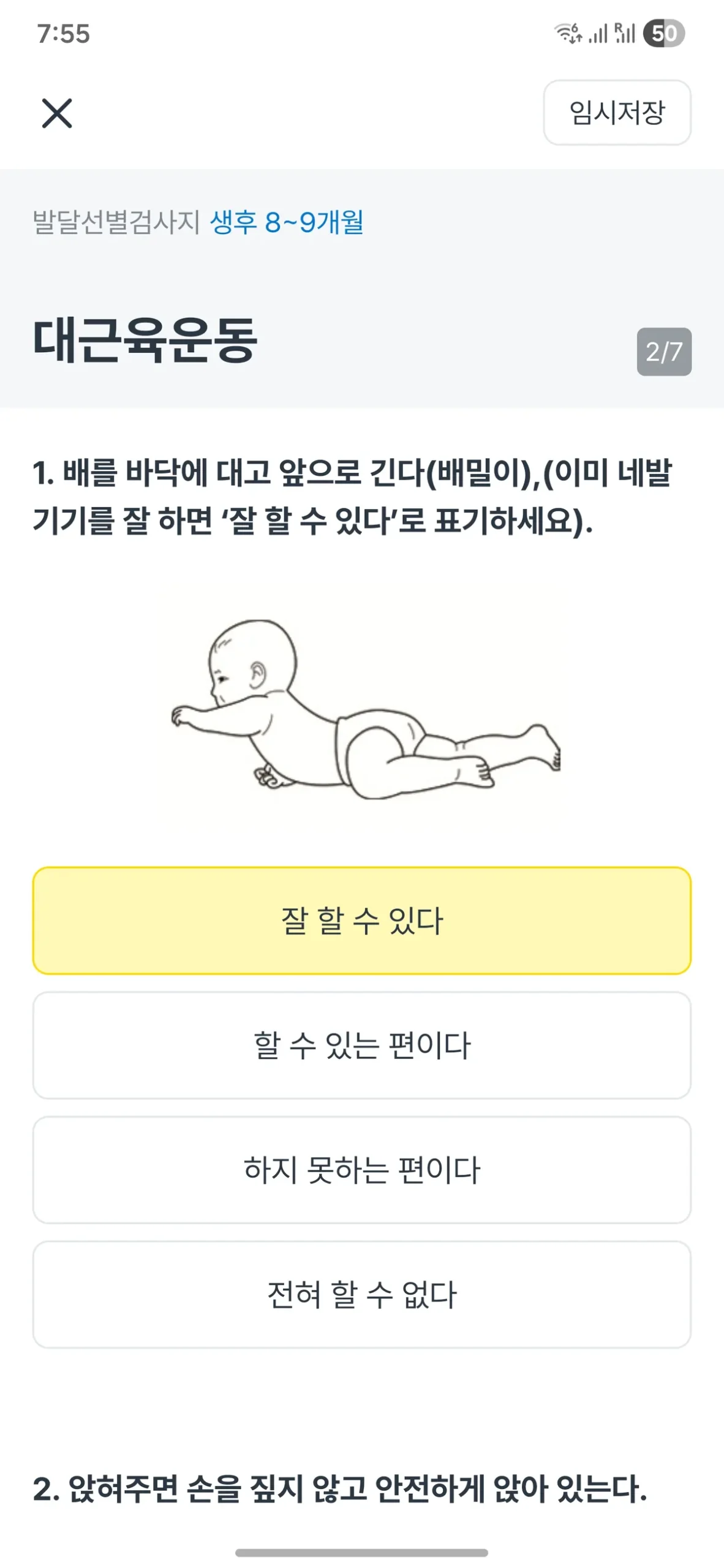
For a preemie parent, filling this out the first time is emotionally loaded. The questions are written for a full-term timeline, so on paper our daughter looked behind on milestones she was, by her own clock, right on time for. What steadied me was holding onto corrected age — her age counted from her due date, not the day she actually arrived — and knowing a good doctor reads the screening with that in mind. It was the same thing the coordinator had been telling us all along, just written down. Seeing it in print still stings a little. The important thing is to answer honestly, and to make sure whoever reviews it knows she was born early — it changes how the whole sheet reads. The doctor uses your answers as a starting point for conversation, not as a pass/fail verdict.
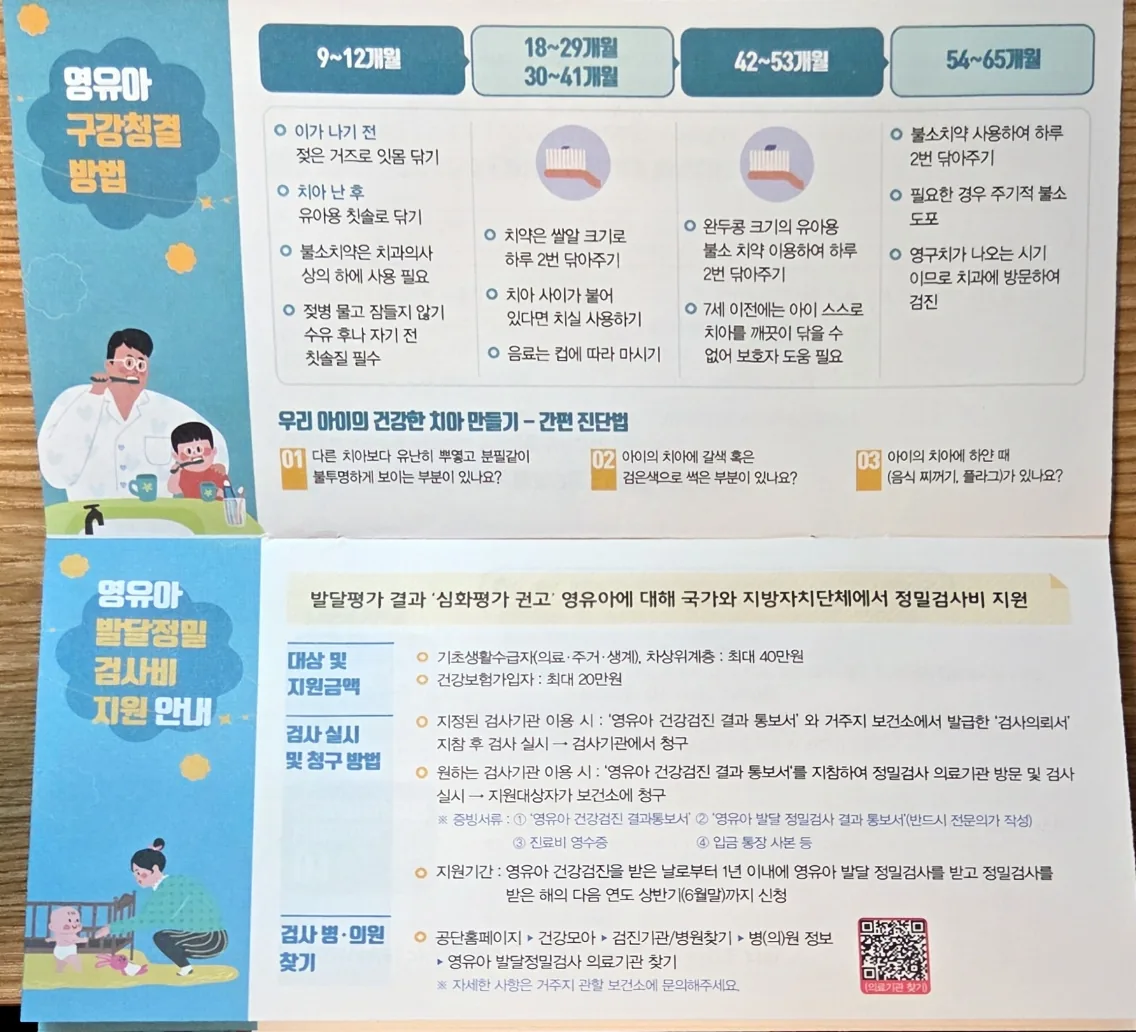
One thing I wish I’d known going in, because it would have taken some of the fear out of that envelope: if the screening ever comes back as 심화평가 권고 (sim-hwa-pyeong-ga gwon-go — a recommendation for a closer look), you’re not left to cover the follow-up on your own. Through your local public health centre (보건소), the cost of the in-depth developmental testing is subsidised — up to 200,000 won for families on National Health Insurance, more for lower-income households — and foreign families enrolled in the same insurance qualify on the same terms. In Hwaseong you apply at your district health centre. A recommendation for a closer look is not a diagnosis; for a lot of preemies it’s just the screening doing its job.
You can complete both forms through the NHIS website under the family health management section, or through the Tokdak app directly. Either way, complete them before your appointment — not in the waiting room.
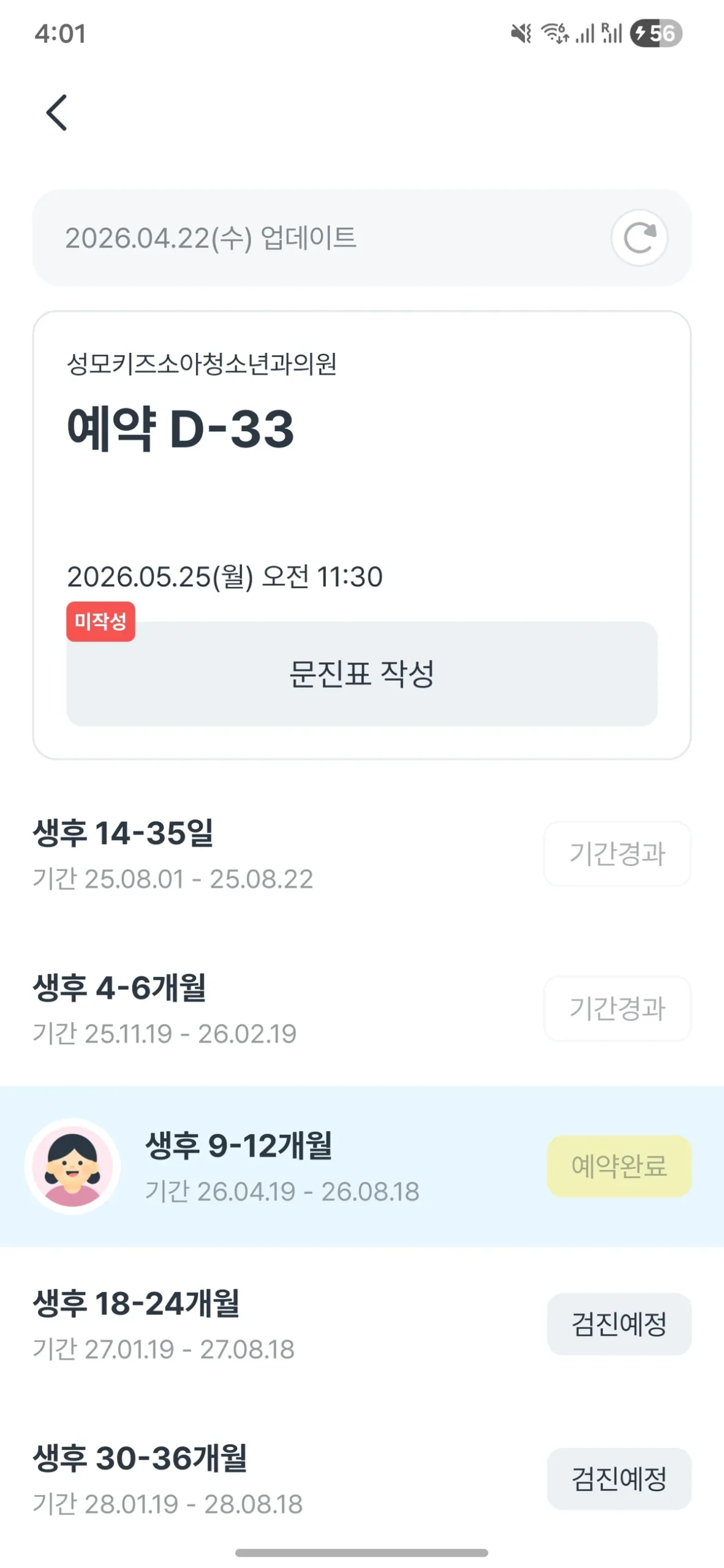
What to Bring on the Day
Keep it simple. The clinic needs your health insurance card and the check-up eligibility notice from NHIS. Since 2024, clinics are required to verify patient identity at the point of care — bring your ARC or your child’s documentation. If you’ve completed the questionnaire online in advance, it’s already in the system, but a screenshot on your phone doesn’t hurt.
The visit itself is calm and unhurried. They measured height, weight, and head circumference. The doctor reviewed the screening form with us, gave us the feeding and oral hygiene advice, and that was it. Thirty minutes, total. The results were communicated before we left the building.
If you have questions about how this system fits into the broader range of government programs available to families in Korea, the NHIS English helpline (033-811-2000) is genuinely useful — they handle foreign resident queries regularly. For any missed check-ups or lost eligibility notices, the general hotline is 1577-1000.
Our daughter smiled at the doctor the whole time. Two tiny bottom teeth and a face that has no idea how far she’s already come.
Frequently Asked Questions
Are expats in Korea eligible for the free infant health check-up program?
Yes. The free infant health check-up Korea for expats program is available to any child enrolled under the National Health Insurance Service, which includes foreign residents holding a valid ARC. Eligibility applies regardless of visa type — work, spouse, or long-term residency. If you’re unsure, contact the NHIS foreign-language helpline at 033-811-2000.
What happens if we miss the check-up window?
If you attend outside the designated age window, you lose the government subsidy and must pay the clinic’s full non-covered rate, which can reach tens of thousands of won. There are no late-entry exceptions. Track your child’s windows carefully using the NHIS website or mobile app, which lets you look up the schedule by birth date.
How do premature babies fit into the standard check-up schedule?
The schedule is based on chronological age from birth, not corrected gestational age. This means preemie babies may fall outside normal ranges on developmental screenings — particularly in the early visits. Doctors understand this context and use the results as a starting point for discussion, not a diagnosis. Your NICU coordinator or pediatrician can help you interpret results in light of your baby’s adjusted age.
Does the Tokdak app work for foreign residents?
Yes, but setup requires a Korean mobile number, and the name on your telecom account must exactly match the name on your ARC. Even a minor spacing or spelling discrepancy will cause identity verification to fail. Confirm the match with your carrier before you attempt registration. The annual membership fee is 10,000 won and is refunded on a per-day basis if you cancel early.
Do I need to bring anything special to the check-up appointment?
Your ARC or your child’s identification documents. Since 2024, identity verification at the point of care is mandatory. Complete the 문진표 (health questionnaire) and developmental screening form before you arrive — both can be filled out via the NHIS website or the Tokdak app.