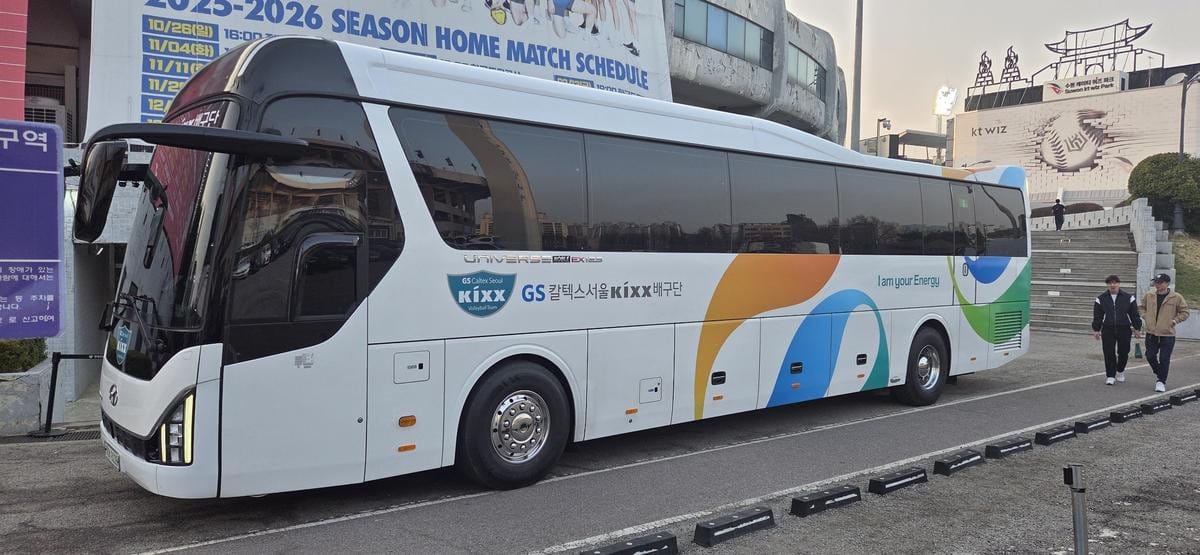
The teal bus was parked in the same spot.
I noticed it the moment I walked toward the stadium entrance. Most people walked past it without a second glance. I stopped for just a second. The last time I saw that bus, I was standing next to it in the cold with my friend, waiting. We had no reason to hurry — the car park after a match is chaos, everyone leaving at once, so we just stayed. We waited about twenty minutes. And then she came out.
That was the first day I ever spoke to Reina Tokoku.
This time, on March 26th, I was alone. My friend had something come up at work and canceled the same day. I sorted the ticket refund — one seat back, small service fee, nothing major — and drove to Suwon by myself. Playoff Thursday night. GS Caltex versus Hyundai Hillstate. I’ve written about this stadium before, and about how I became a fan of Korean women’s volleyball in the first place. If you haven’t read that post, the short version is: a Japanese colleague’s wife, a connection across countries, and a player I felt I had to go and support. That story is already told. This one picks up where it left off.
The Multicultural Mirror
I’ll mention it briefly because it matters to understanding why I keep coming back.
Reina Tokoku — outside hitter, number 24 — has a Ghanaian father and a Japanese mother. My wife is from Zimbabwe(South Africa). I’m Korean. We have a daughter born 8months ago, two months premature, already making her presence known. Africa and Asia, in one household. When I first heard Reina’s story, something clicked immediately. She’s navigating spaces that don’t always have a box for people like her. So are we.
That’s not the whole reason I became a fan. But it’s part of it.
What the Postseason Did to Her Game
If you’ve only watched GS Caltex in the last few weeks, you haven’t seen the full picture.
Reina came back from injury mid-season. The online volleyball community was watching her closely — too closely, some of it. Opposing servers targeted her receiving deliberately. That’s just strategy: find the weakness, apply pressure, repeat. When receiving breaks down, everything else follows. There were matches where she was brilliant and matches where she was clearly struggling, and I watched all of them with a particular kind of anxiety I don’t feel watching other teams.
I think I understood, at least in the abstract, what she was carrying. Coming back from injury in a foreign country, knowing your teammates covered for you while you were out, feeling the pressure to prove you’re worth the wait. That weight doesn’t show up in the stats.
Then the postseason arrived and something shifted.
Her spikes got sharper — not occasionally, consistently. She started reading the court differently, using her teammates instead of carrying plays alone. The team became more fluid around her. By the time the playoffs started she looked like a player who had worked through something hard and come out with more, not less.
I also started genuinely caring about the whole roster. What started as following one player became following a team — 유가람, 김미연, 김효임, 권민지, 김지원. Players who hustle every single point, who cover for each other without making a show of it. I’m a GS Caltex fan now. I didn’t expect that.
Playoff Night: The Away Section That Showed Up
Thursday evenings have a different quality to weekend games. The upper tiers had gaps. Weekday playoff energy has its limits against the workday waiting the next morning.
If your visiting friends are up for something active before the match, Seoul Trail Course 2 is a surprisingly tough half-day hike that starts right at a subway station in northern Seoul.
But the away section was something else.
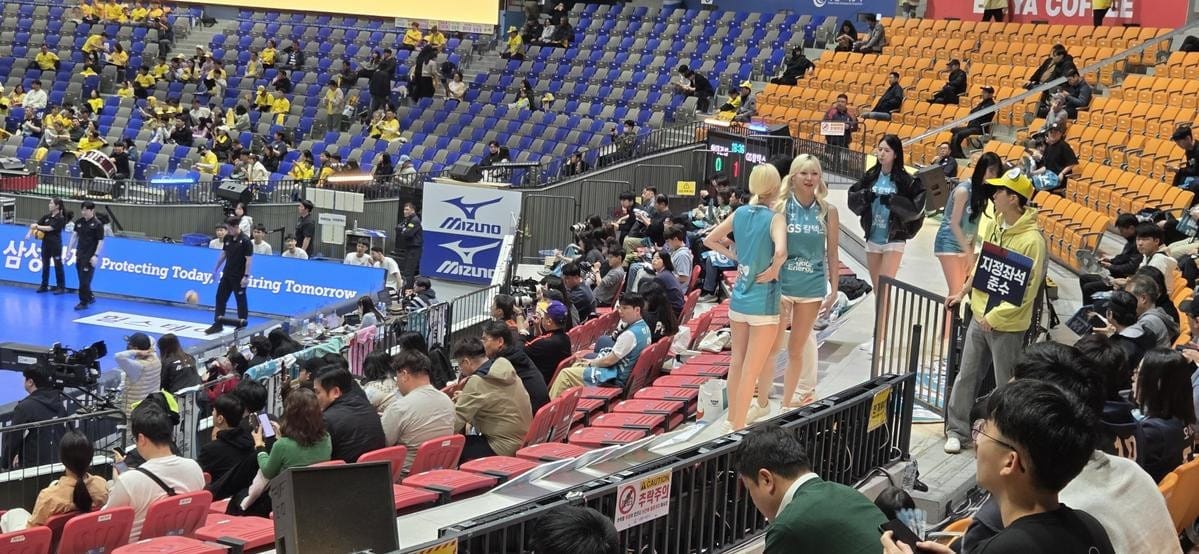
The GS Caltex fans had come in numbers that didn’t match the rest of the atmosphere. Mint green everywhere. The cheer squad had expanded from the usual three — one male leader, two cheerleaders — to six for the postseason. Extra cheerleaders, an extra mascot. They distributed teal towels to everyone in the away seats. They brought oversized printed banners of the players’ faces, held high enough that the athletes on court could actually see them during play.
I read an article after the match. Some GS players said they felt the crowd that night — that the noise from the away section helped them play better. I love that detail. A group of people who drove to someone else’s stadium on a Thursday made a tangible difference. I was one of them. Sitting alone in a row that was otherwise empty, with a clear view of everything.
Parking: Don’t Make My Mistake
Quick practical note before the match review.
Unlike the Hwaseong stadium — which has free parking — Suwon’s sports complex charges a fee. There’s a QR code system in the car park. You scan it, and it shows you a discounted rate for match visitors. It helps to understand how to navigate Korean parking systems before you go.
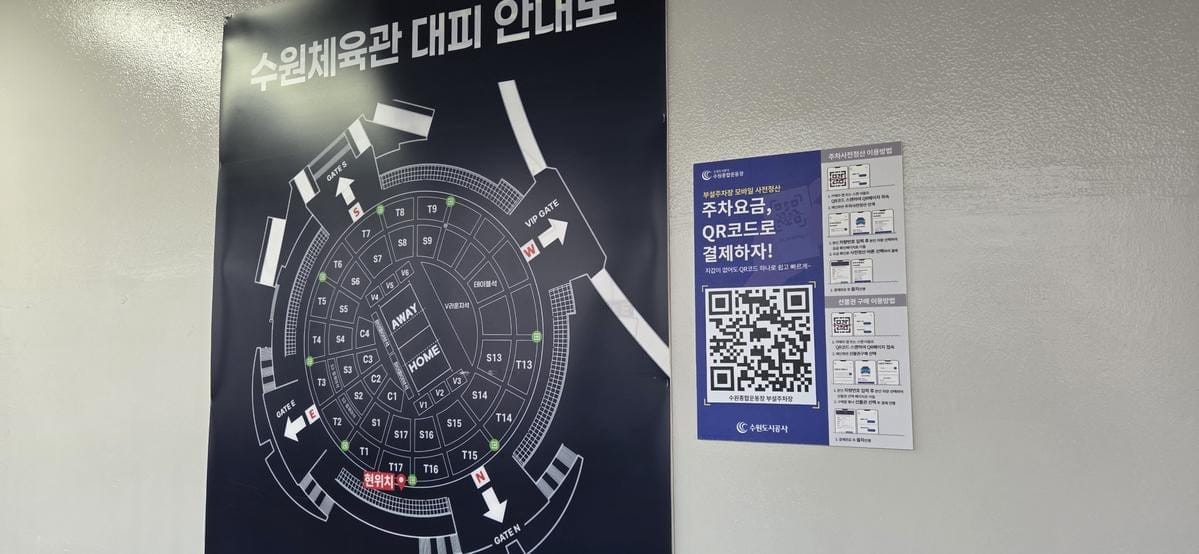
Here’s where I went wrong. I scanned the code, saw the discounted price on my screen, and assumed it had applied automatically. It hadn’t. You have to complete the payment on that page before you leave. If you walk away from the screen without finishing, you pay the full rate on exit.
Location guide: Suwon Gymnasium
Address: 893 Suwon-cheon-ro, Jangan-gu, Suwon-si, Gyeonggi-do
Use your preferred map for directions.
I stayed about three and a half hours. I paid 6,000 won. I should have paid 2,000 won. Scan the code, complete the payment immediately. That’s it.
For tickets, book through the KOVO website in advance. Good first-floor seats sell fast even on weeknights. I’ve covered the full booking process in a previous post — check that if you need a step-by-step walkthrough.
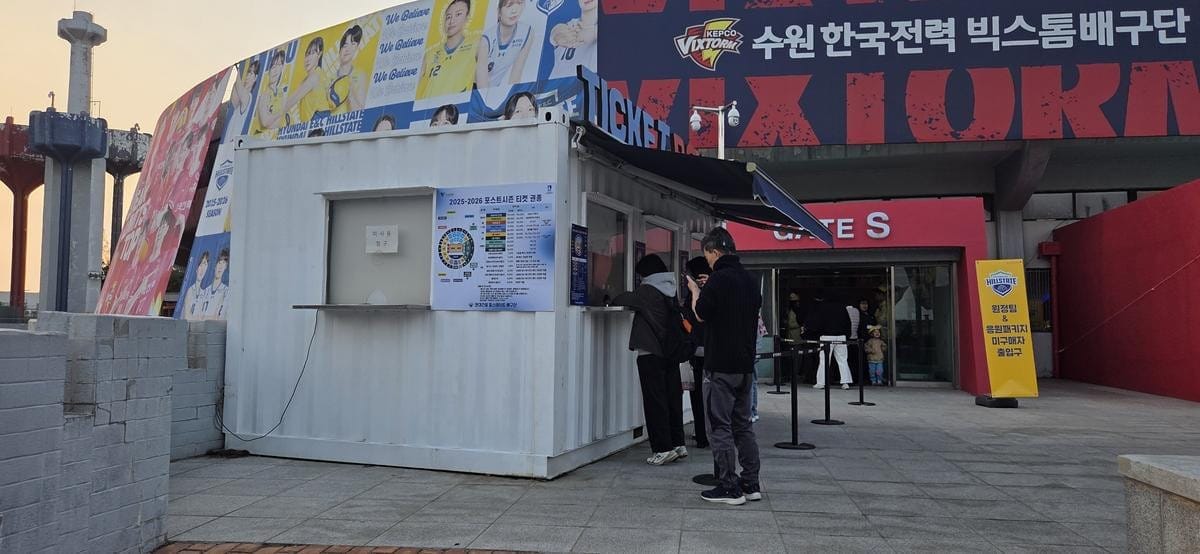
Inside the Stadium: Older, Tighter, More Alive
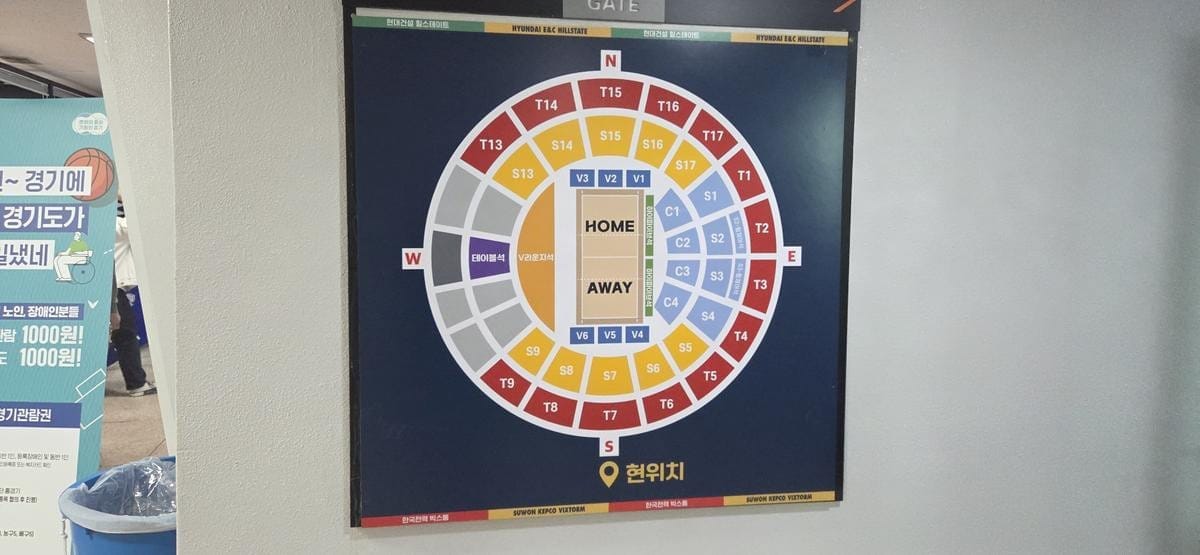
The Suwon volleyball stadium is older than Hwaseong. Narrower aisles, smaller toilets, the kind of worn-in feeling that comes from decades of real use. But older and smaller has an unexpected advantage: everything feels closer.
I was on the second floor and the court felt immediately present. The sharp sound of a spike, players calling switches, the set leaving fingertips — you catch all of it. There’s more 생동감 (saengdonggam — vividness, aliveness) in a tight stadium than a large modern one. The atmosphere compresses.
There’s a small convenience stand for snacks and drinks, a merchandise shop with home team gear, and a photo booth area.
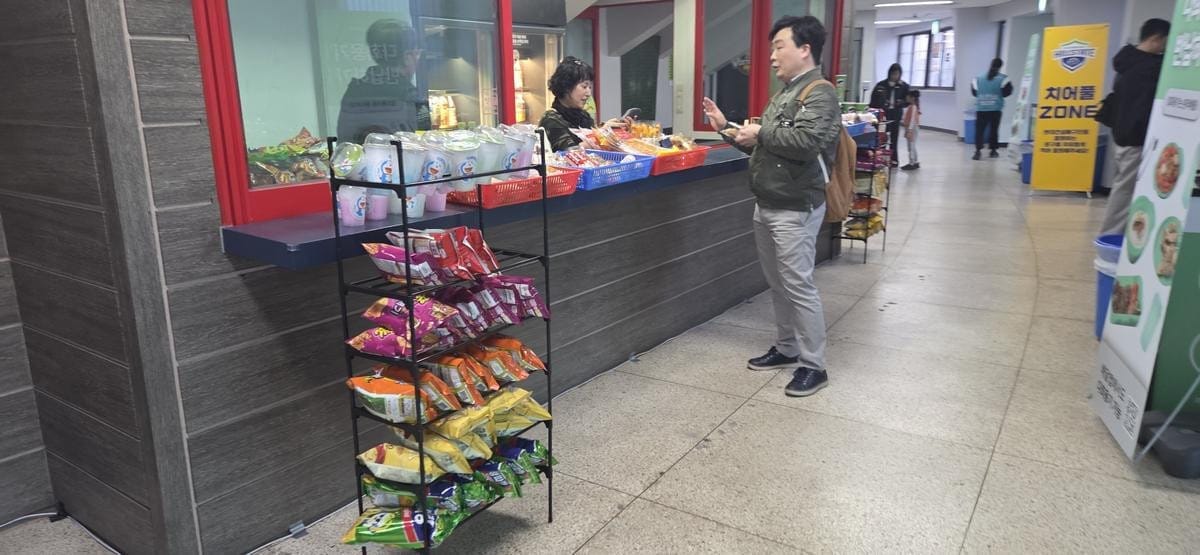
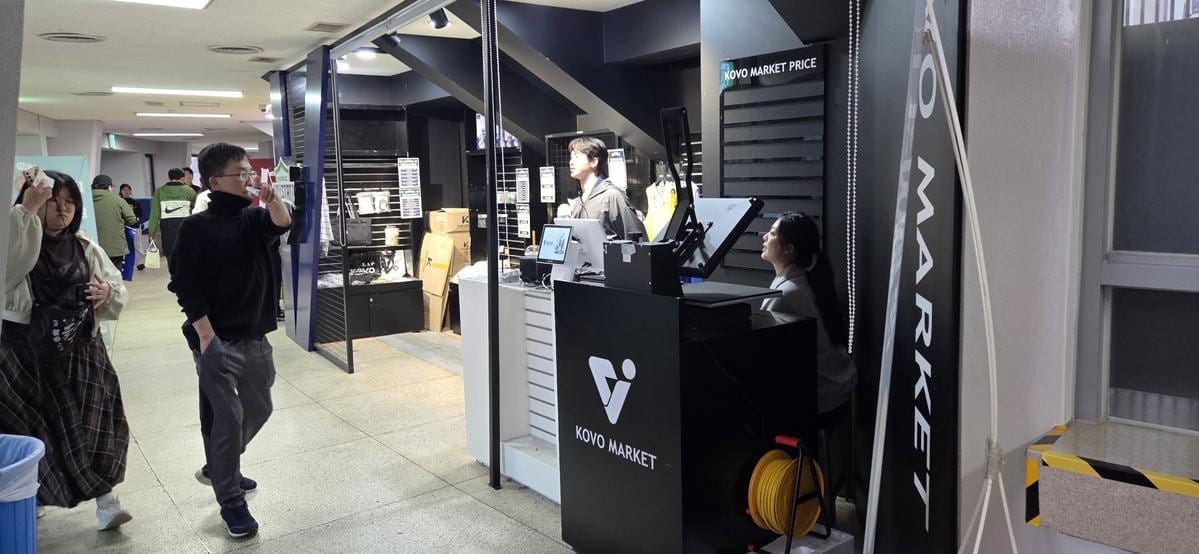
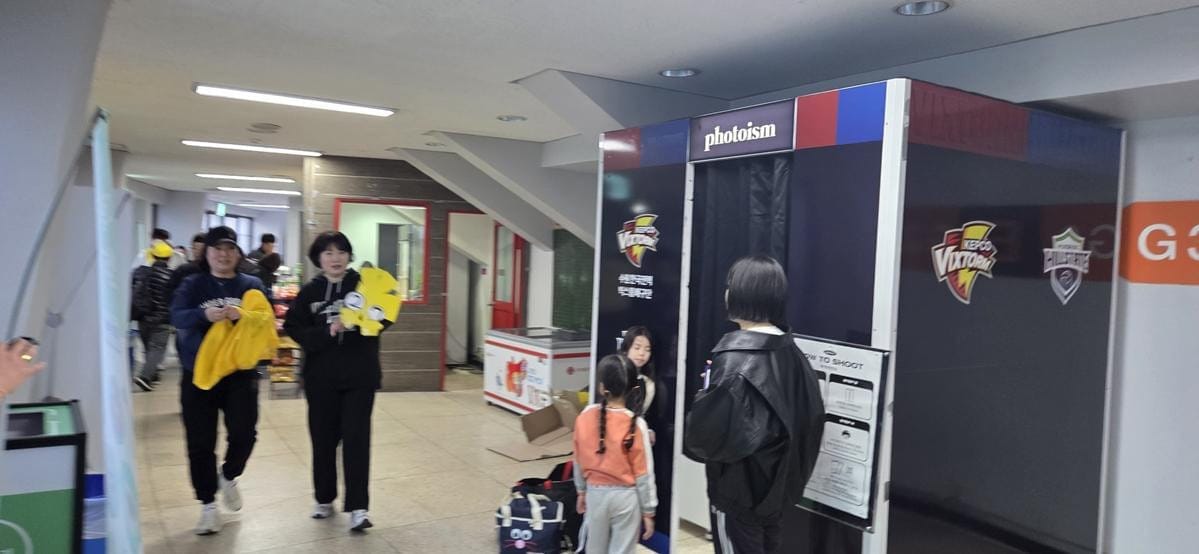
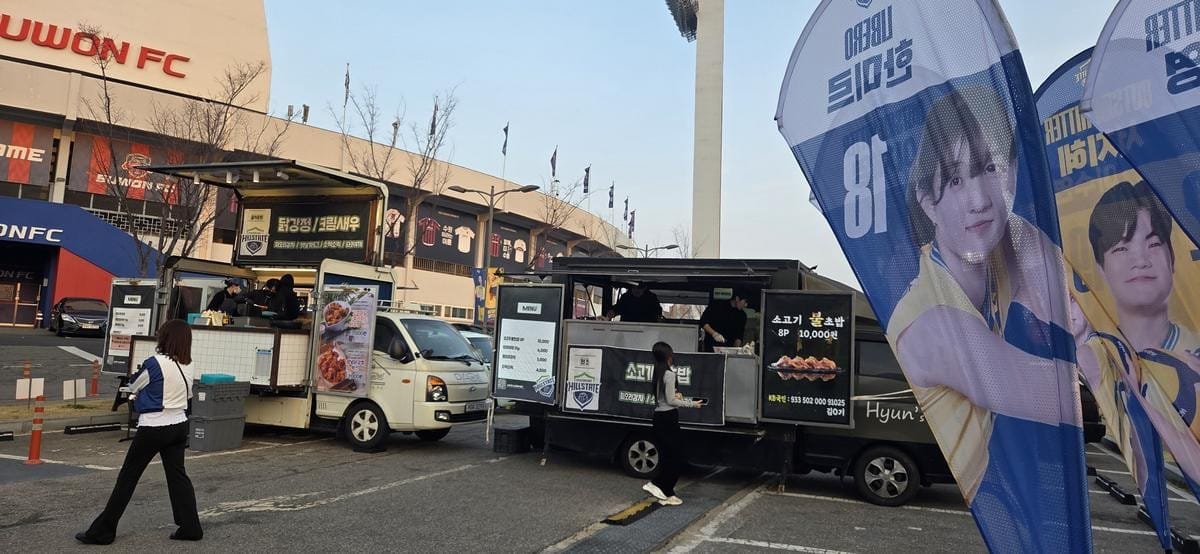
One note on food: eat before you arrive. Food trucks are set up outside but the menu is limited and it’s not dinner.
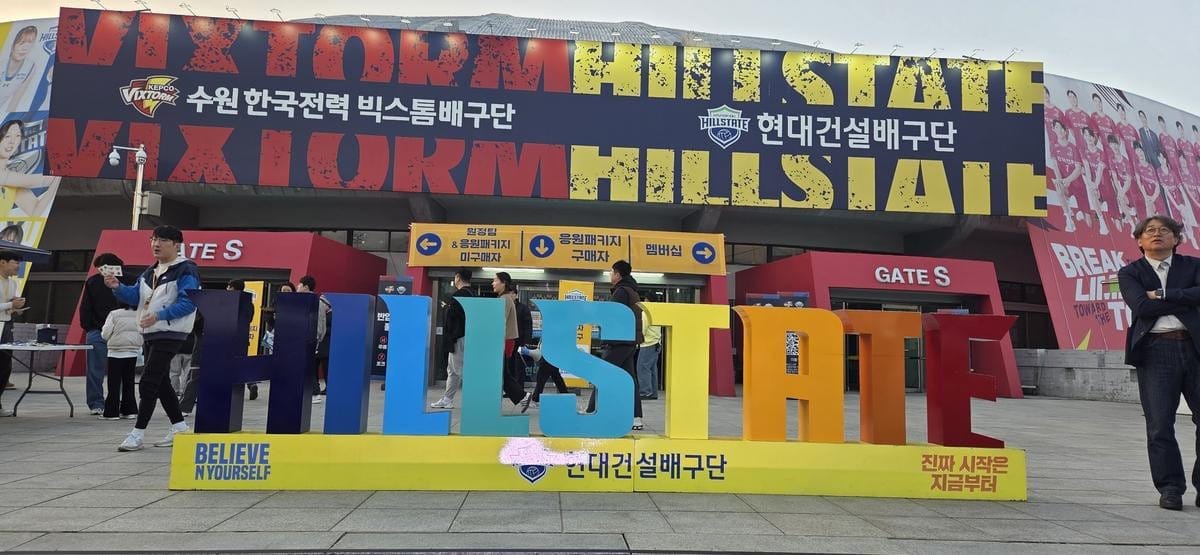
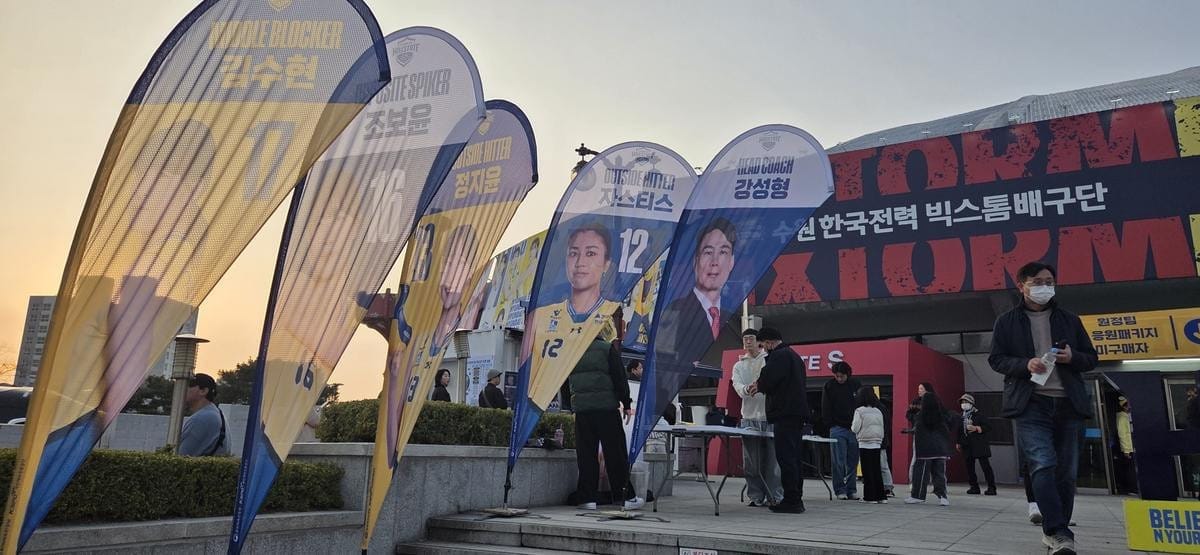
The Hillstate sign above the entrance is hard to miss — useful landmark when you’re orienting yourself in a complex that also houses a baseball stadium and a football ground.
After the Final Whistle
GS Caltex won. Reina scored the final point — she ended the game.
If the video does not load, you can watch it directly on YouTube here .
The away section erupted. Teal towels spinning everywhere.
I walked down from the second floor to the first. She came toward the stands and I waited at the court edge. I spoke to her in Japanese — it’s been that way every time — and I told her, half joking: don’t come back to Suwon. She looked at me. I explained the logic: they’d won game one here, if they won game two in Seoul the series would be over. Come back to Suwon and the schedule gets harder, the rest gets shorter. She smiled. Took her a moment. She’s always smiling.
I didn’t say much else. I didn’t need to. She’ll read this eventually — I’ll make sure it reaches her through the same person who first told me her name.
So let me say it here instead.
I have a daughter. 8 months old, born two months early, already tougher than she has any right to be at that size. She watched a volleyball match on TV with me recently. She mostly looked at the ceiling. But I have a feeling — the kind a parent gets that they can’t fully explain — that one day she’s going to know exactly who Reina Tokoku is. A woman with a Ghanaian father and a Japanese mother, who came to a foreign country and played through injury and grew stronger in the postseason. That’s not a small story. That’s the kind of story I want my daughter to carry.
If You’re in Korea This Winter
The V-League season runs roughly October to March, with the postseason — called 봄배구 (bom baegu), spring volleyball — extending a little further for the top three teams.
Go to a match. Sit wherever the tickets are available. Let the cheering culture do what it does. And if you see number 24 on the court, cheer loud.
She’ll hear you. And somewhere in the away section, so will I.