My friend Sara’s favorite leather wallet had one problem — the zipper pull had snapped clean off. She didn’t want to throw it away, but had no idea where to take it. That’s when I pointed her toward one of the small metal container boxes you’ve probably walked past a hundred times without a second glance. A few hours later, she had her wallet back. Total cost: ₩5,000. That’s the magic of korea street shoe repair booths — and if you’re an expat who doesn’t know they exist, this guide is for you.
What Is a Gudu Suseon (구두수선)?
Gudu suseon (구두수선) literally means “shoe repair,” and the booths that offer this service are one of Korea’s most underrated pieces of street infrastructure. They’re small — sometimes no bigger than a walk-in wardrobe — usually built from a repurposed container or prefab kiosk, and almost always operated by a single craftsman who has been doing this work for decades. You’ll find them near busy subway exits, bus terminals, and pedestrian shopping streets. Most people walk straight past them. Once you know what to look for, you’ll start spotting them everywhere.
These aren’t franchise businesses or chain stores. Each one is independently owned, which means quality, prices, and hours vary. But the craft is consistent — these men (it’s almost always a man of a certain age) are genuinely skilled. Think of them as hidden masters of leather and sole work.

What Can They Actually Fix?
Shoes are the obvious answer, but the range of what a good cobbler will take on is wider than most people expect. Heel replacements are the bread and butter — both rubber and leather heels, full and half replacements. Sole re-glueing is another common job, as is polishing and conditioning leather. But the real surprise for expats is that many of these booths will also handle bags, wallets, belts, and other leather accessories. A broken zipper pull, a snapped strap, a seam coming apart — if you ask, there’s a good chance the answer is yes.

How to Find a Korea Street Shoe Repair Booth Near You
This is where Google Maps will let you down. Korea’s street-level businesses are best found through local mapping apps, and for shoe repair booths specifically, Naver Map and KakaoMap are your two best options.
PC Version
If you’re on a desktop or laptop, open Naver Map, Kakaomap and search for 구두수선 or 구두방. The results will show you registered cobbler booths near whatever location you set. You can filter by distance and check whether they have listed hours or a phone number — useful for calling ahead before you make the trip.

Mobile
On your phone, KakaoMap, Navermap works just as well. Search 구두수선소 and it will surface nearby booths with map pins. Tap any result to see the address and, sometimes, user reviews. This is the fastest option when you’re already out and need a quick fix.

Naver Map, Kakaomap PC → search 구두수선 or 구두방 | KakaoMap, Naver Map mobile → search 구두수선소. Both will show you registered booths near you. Always call ahead if possible — hours are not standardized.
Prices and What to Expect
Heel replacement typically runs between ₩5,000 and ₩15,000 per side depending on the type of heel and material. A full leather polish costs around ₩3,000 to ₩5,000. Wallet or bag repairs vary — simple fixes like a zipper pull might be ₩3,000 to ₩8,000, while more involved stitching work could run higher. These are not fixed prices; each cobbler sets their own rates.
The more important thing to know is that most of these booths are cash or bank transfer only. Card machines are rare. Come prepared with small bills. Because these small repair booths deal almost exclusively in cash, you might end up with a pocket full of change, so it’s good to know how to exchange coins at a Korean bank once it piles up.
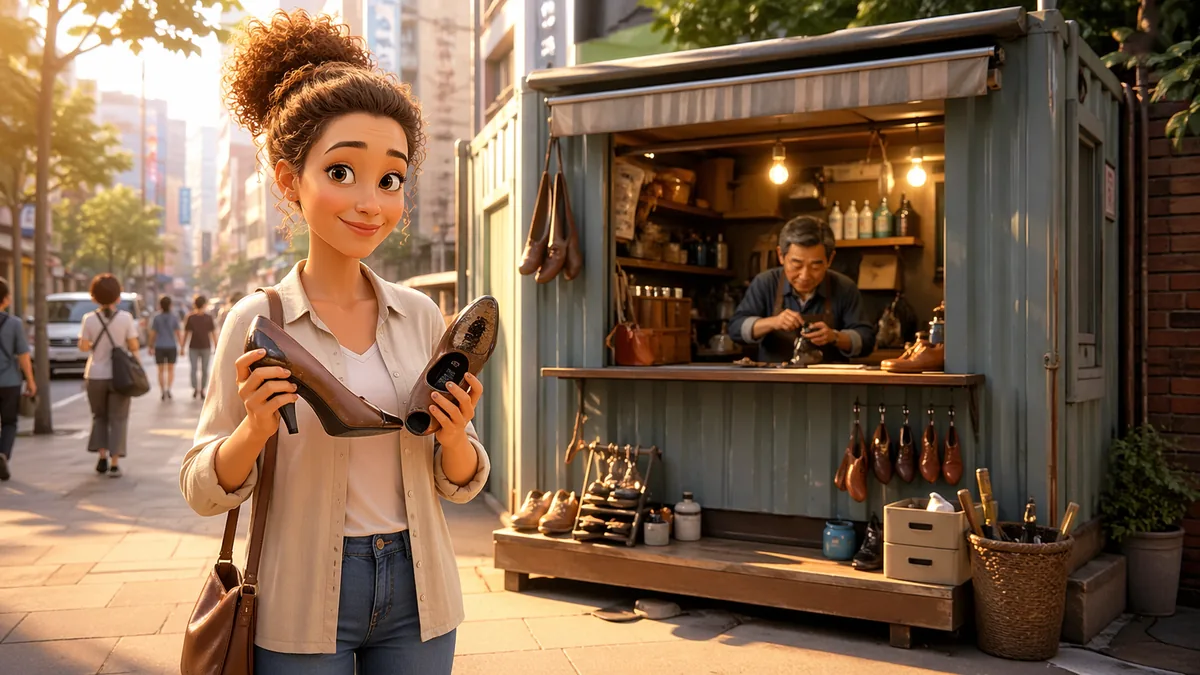
Turnaround time for a heel replacement is typically 3 to 4 hours if the cobbler isn’t backed up. Some booths in busy areas might ask you to leave it overnight. For simple polish jobs, you can often wait on the spot.
Practical Tips Before You Go
The biggest challenge for expats is that most cobblers don’t speak much English. But you don’t need much language to make this work. Point at what’s broken, mime what you need done, and show your phone if necessary. Most experienced cobblers are used to non-verbal communication — they’ve seen every type of damage and can figure out what you want quickly.
If you walk past a booth regularly near your home or office, take a note of its location and the owner’s number while you don’t need it. Hours vary wildly — some open as early as 8am and close by 5pm, others run later into the evening. There’s no standardized schedule, and many take unannounced days off. Having a number to call before you make a trip will save you a wasted journey.
One last thing: don’t throw away shoes or leather goods just because they look beyond saving. Korean cobblers have a reputation for resurrecting things that most people would assume are finished. The craft tradition runs deep, and if you’re lucky, you’ll find one of the hidden masters who can make a five-year-old pair of dress shoes look like they just came out of the box.

Need Help Navigating Daily Life in Korea?
From finding local services to sorting out paperwork — JustAskJin is here to help expats handle the everyday stuff that Korea makes surprisingly complicated.