There’s something quietly nerve-wracking about walking into a police station when you’ve done absolutely nothing wrong, especially when you are just going to apply for an international driving permit in Korea.
You know you’re clean. Your record is fine. You’re just here for a small booklet. And yet the moment you push through that door and see the uniforms, something in your chest does a thing. I noticed it the first time I went to Hwaseong West Police Station for an International Driving Permit. Silly, maybe. But I don’t think I’m alone in that.
The feeling lasted about forty seconds. Then the officer at the counter smiled, took my documents, and the whole thing was so simple and unhurried that I almost laughed at myself for tensing up at the entrance.
If you’re living in Korea and planning to drive abroad — whether it’s a family trip where you need to prepare car seats, a work assignment, or a long-planned adventure — an International Driving Permit is something you genuinely need to sort before you leave. Not because your Korean license with the English back is necessarily invalid, but because the real world doesn’t always match the rulebook. Rental desk agents, toll booth operators, border crossing officials — plenty of them won’t know what the Geneva Convention says about license recognition. What they will recognize is a booklet that says “International Driving Permit” in nine languages on the cover.
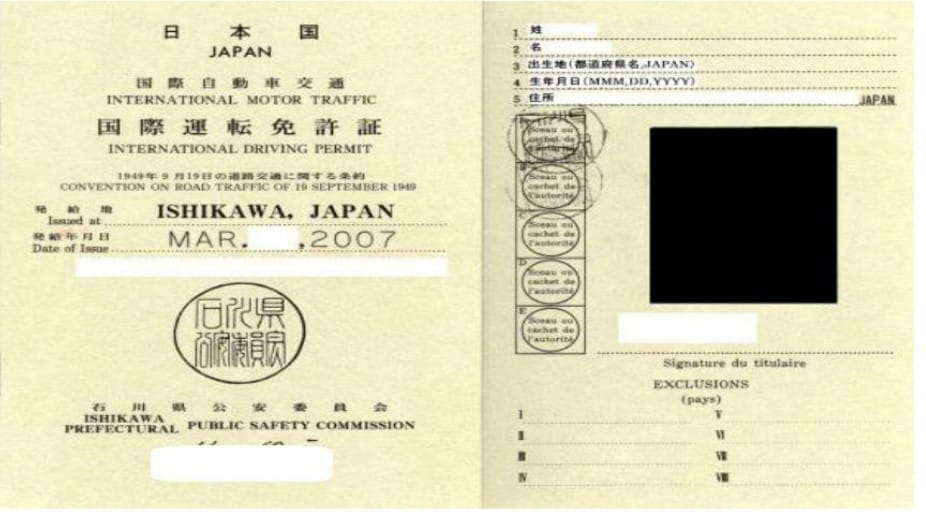
I learned this the practical way. Years ago, living in Japan for work, I had a trip coming up to South Africa with my wife’s family. Safari. Long drives. Her mother in the back seat. I was going to be the one behind the wheel, and I knew it well in advance — this trip had been planned for a long time. So I converted my Korean license to a Japanese one, then cycled thirty minutes to the nearest driver’s license center to get a Japanese IDP issued on it.
In Japan, the paperwork itself isn’t complicated. The waiting, though — that’s a different matter. You sit. You wait. You sit some more. The government process moves at its own pace and it will not be hurried. I had the time, the bicycle, and the patience. Eventually I walked out with the permit.
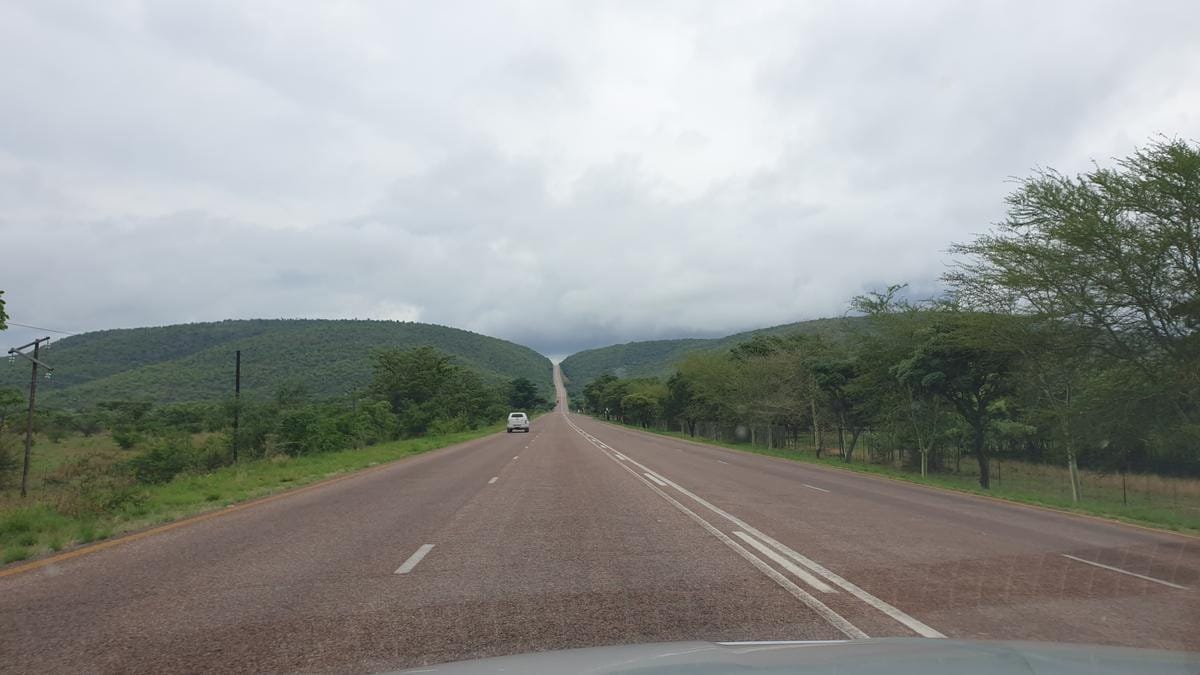
The South Africa trip went well. I’ll be honest — I hadn’t done much research in advance about whether a Japanese IDP would be accepted there. I just believed it would work, and I got in the car and drove. Through Zambia. With my mother-in-law in the back. On roads that were not smooth. At a few border crossings and toll gates, someone would ask for documents, I’d hand over my license, passport, and IDP together, and we’d be waved through. No drama. Brave or naive — it worked out.
But I’d still tell anyone planning a similar trip: look it up first. Don’t drive on faith the way I did.
Now, back to Korea. If you’re based in the Hwaseong or Namyang area, getting your IDP in person is genuinely the easiest route. The place to go is 화성서부경찰서 — Hwaseong West Police Station.
Location guide: Hwaseong West Police Station
Address: 570 Namyang-ro, Namyang-eup, Hwaseong-si, Gyeonggi-do
Use your preferred map for directions.
화성서부경찰서 (Hwaseong West Police Station)
경기 화성시 남양읍 남양로 570
Weekdays 9:00 – 18:00
Lunch rotation covered — someone is always at the counter
The civil affairs office — 종합민원실 — is where you’re headed. It’s a small space. Compact, functional, not intimidating once you’re past the entrance moment I described earlier. The officers there know exactly what they’re doing and they’re genuinely friendly about it. You hand over your documents, sign in a couple of places, collect your receipt, done. I’d estimate ten to fifteen minutes from parking to walking out with the permit in hand.
If driving isn’t your preference, booking an express bus to Incheon Airport using BusTago is a stress-free alternative that eliminates parking fees and navigation concerns.
Once your permit is sorted, the next practical step is making sure your vehicle is road-ready — our car maintenance guide for Korea covers tires, engine oil, and the Korean phrases you need at a local repair shop.
Speaking of parking: there’s a small lot out front, but it doesn’t hold many cars. I’ve been lucky both visits — one space free each time, both times felt like fortune rather than expectation. Give yourself a few extra minutes in case you have to wait for a spot. The approach road to the entrance has a slight incline, so slow down a little on the way in.
One important note before you go: there is no self-photo booth anywhere near the station. You need to bring your photo already prepared.
The spec is standard Korean passport size — 3.5cm × 4.5cm, taken within the last six months, head length between 3.2cm and 3.6cm from crown to chin. If you’ve been to a photo studio recently for a passport or any other official document, or followed a DIY baby passport photo guide at home, you likely have spare prints from that session. Studios typically give you six to eight copies at once. Don’t throw them away and don’t let them expire. Keep a set somewhere sensible and you’ll never need to make a special trip just for a photo.
What to bring:
- 운전면허증 (Korean driver’s license)
- 여권(passport) or a copy
- one passport photo (within 6 months, passport size)
- 9,000 won — card payment accepted.
That’s the complete list. Nothing else. Sign where they ask, take the receipt, put it somewhere you won’t lose it. If you’re going for work, use the company card at the counter rather than paying out of pocket and chasing reimbursement later.
Now, a question that comes up constantly: if your Korean license already has English on the back, do you actually need a separate IDP?
Yes. Get the IDP.
As of April 2024, the Korean IDP covers 69 countries across 108 regions. But the more important reality is this — the person checking your documents at a rental counter, a toll gate, or a border crossing may have no idea what international convention applies. They see a format they recognize, or they see something that makes them uncertain. Uncertainty causes delays. In a foreign country, on a tight schedule, with people waiting in the car, that’s not a situation you want.
Carry all three, every time you drive abroad:
국제운전면허증 + 한국운전면허증 + 여권
Not one. Not two. All three together. That combination is what makes everything smooth.
One more thing on this: the English name on your IDP must match your passport exactly. Spelling, spacing, everything. A single character difference can make the permit unrecognizable at the moment you need it most. Check it when they hand it to you before you leave the counter.
If you can’t make it to a police station during the week, the online route exists. It’s run through the Korea Road Traffic Authority — 한국도로교통공단 — and it works, but with conditions.
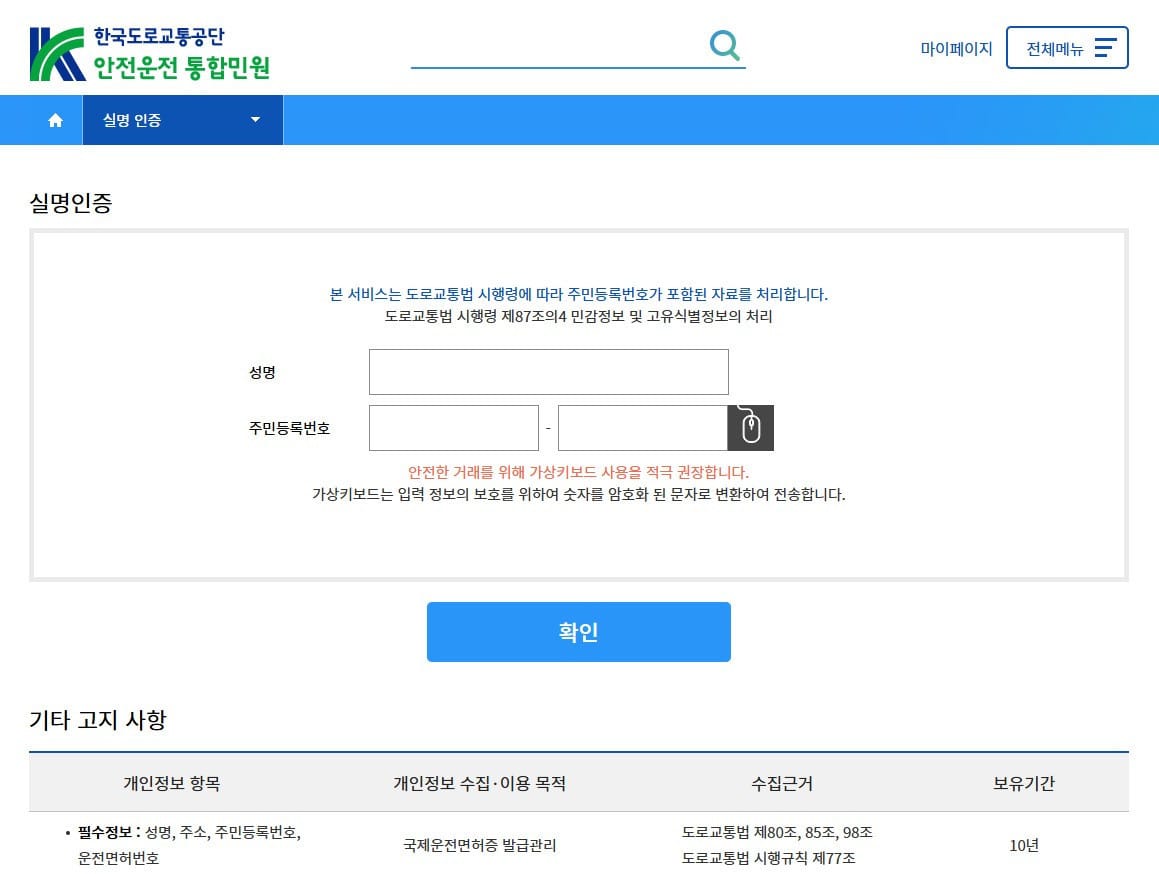
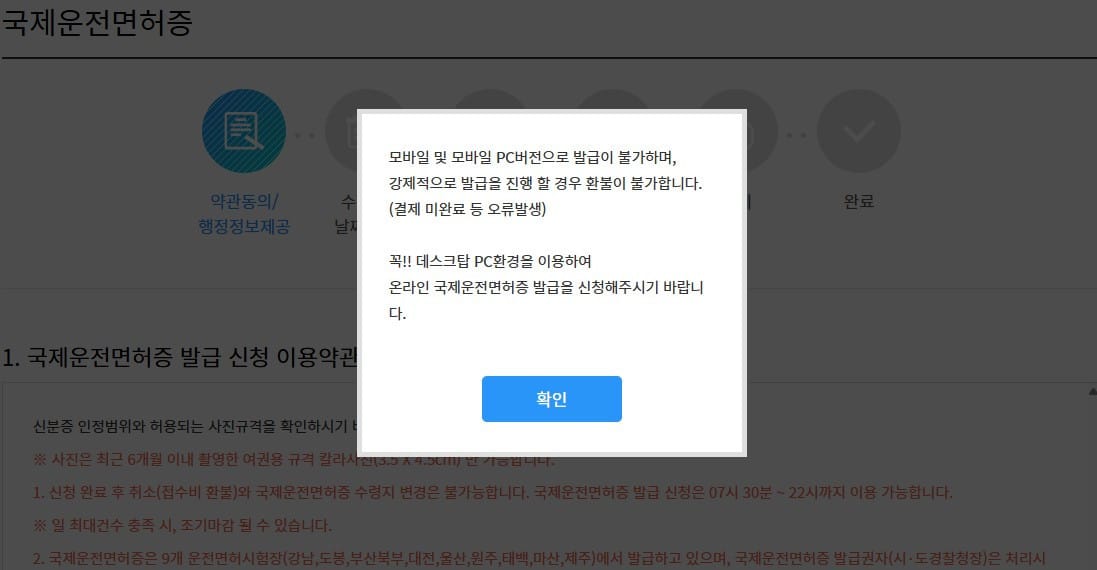
First: desktop only. The government website says so and means it. Don’t start on your phone.
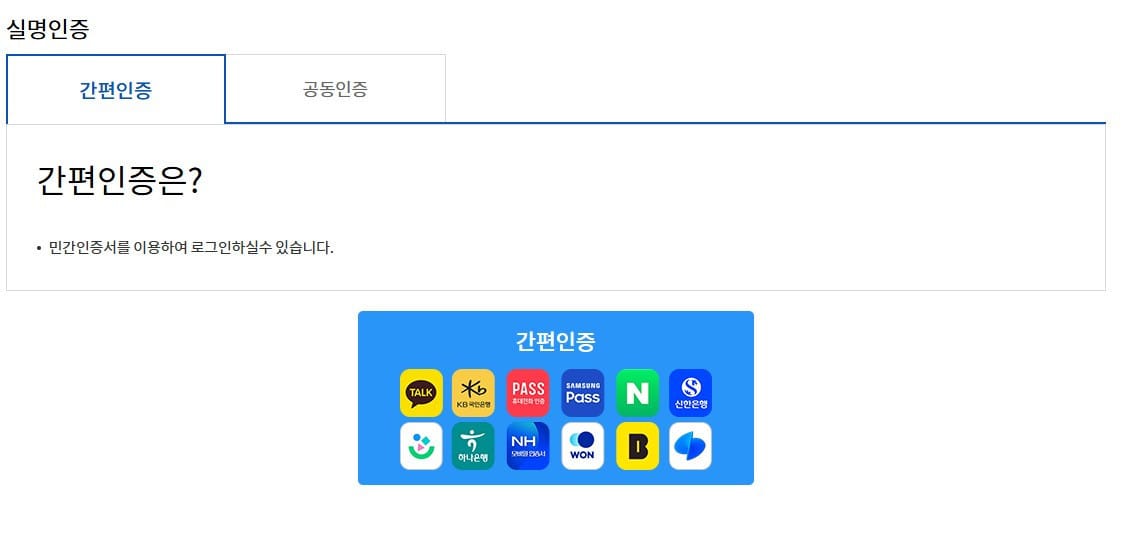
You’ll authenticate through a mobile verification app — PASS or a Korean bank certificate work fine.
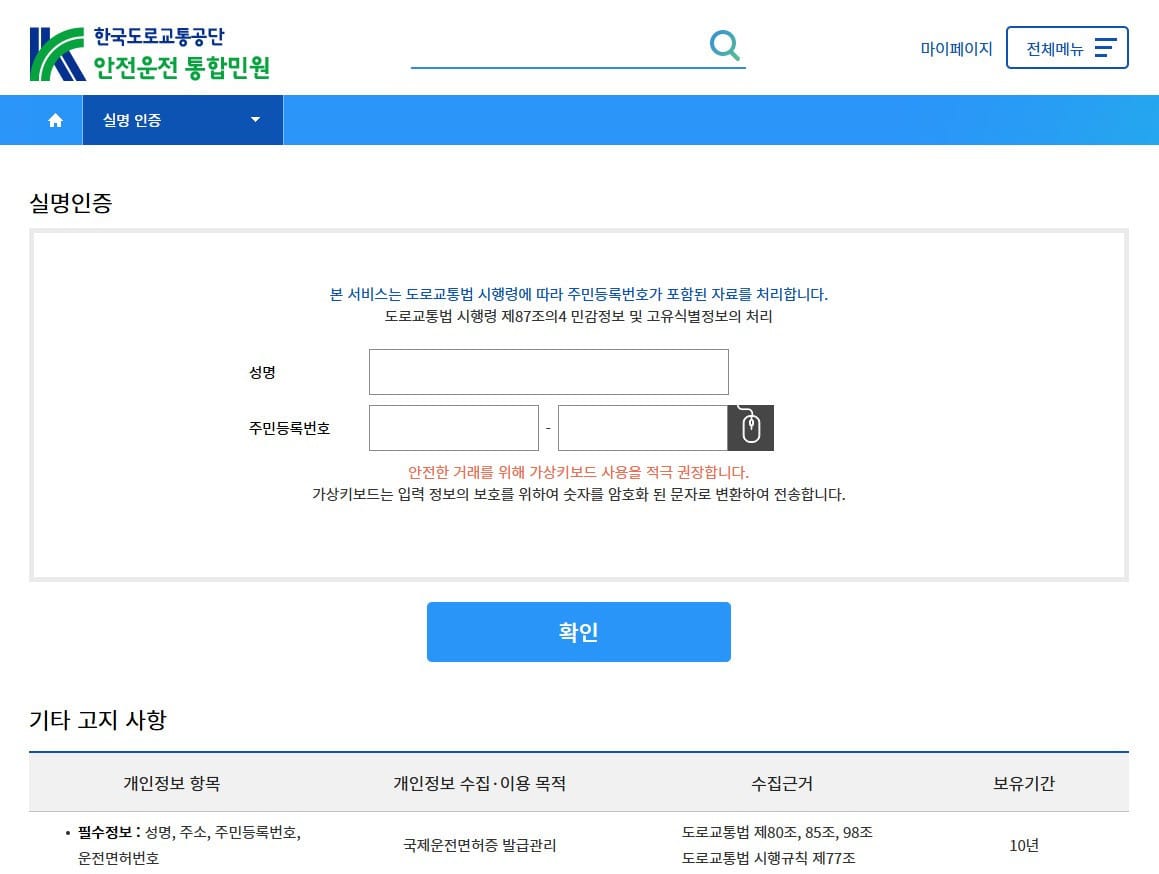
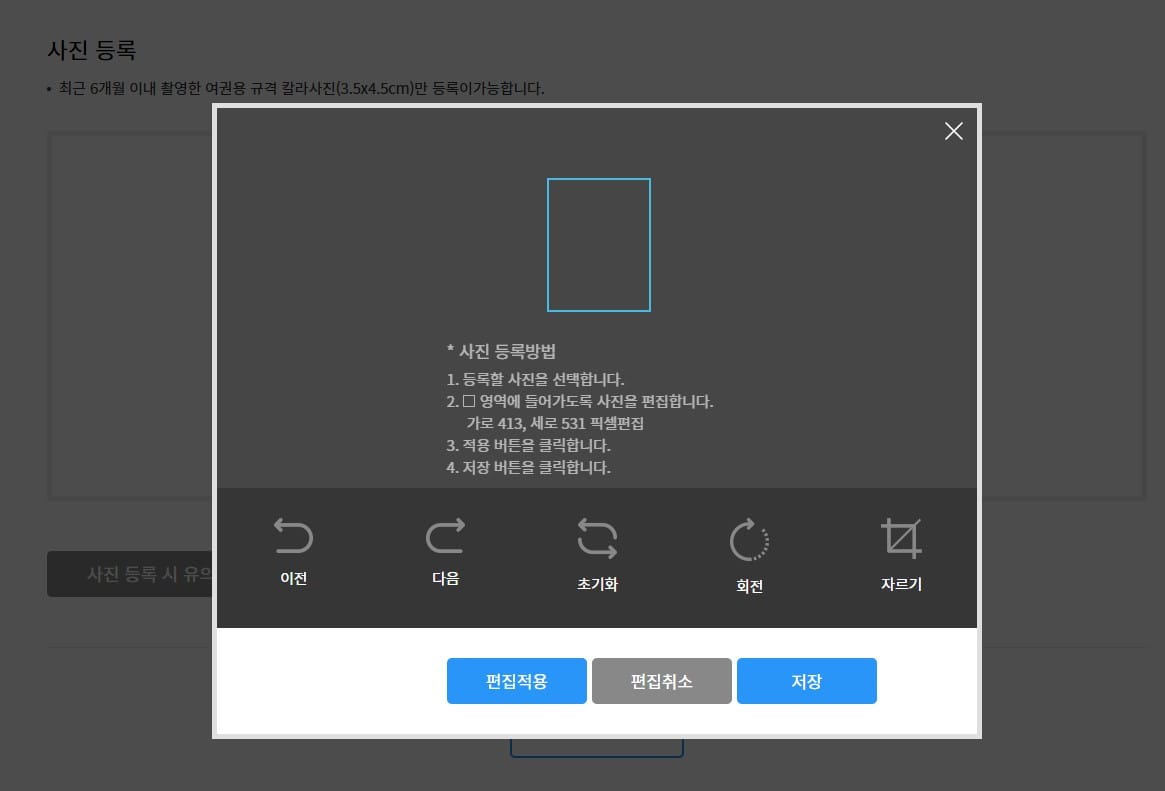
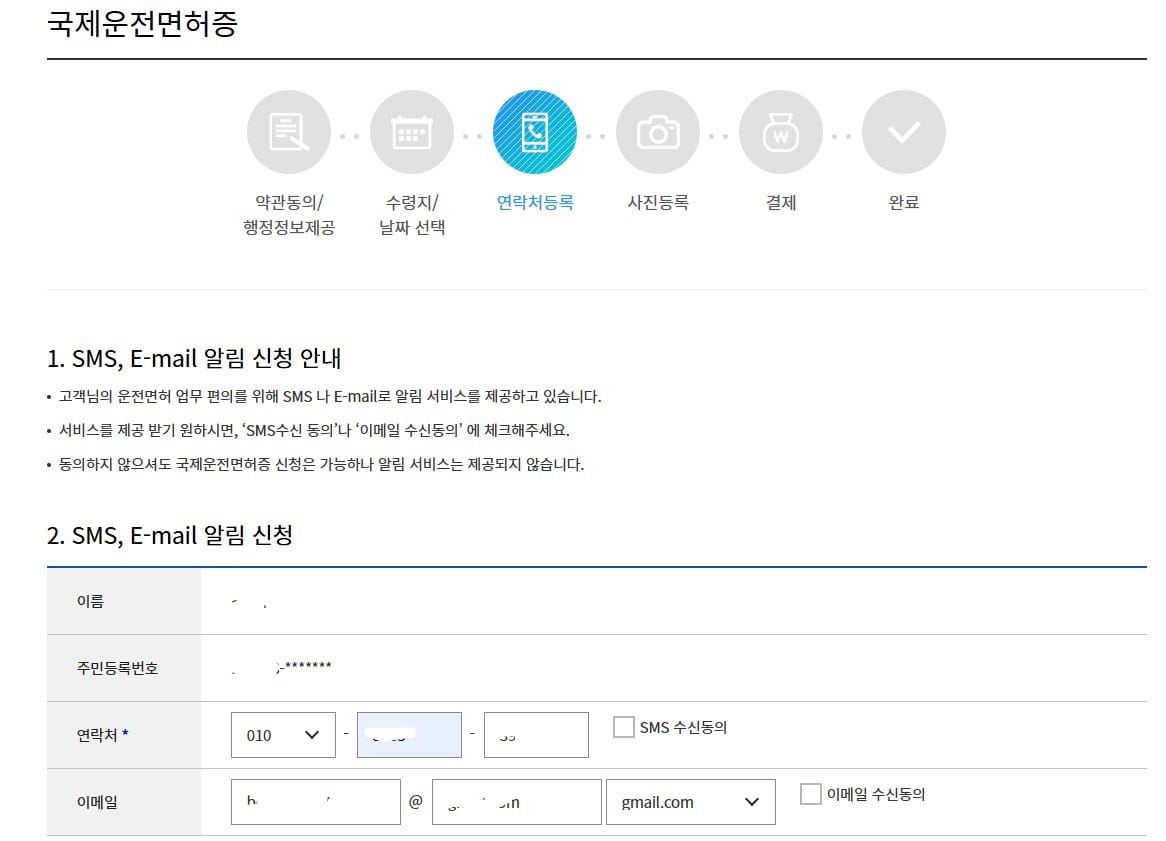
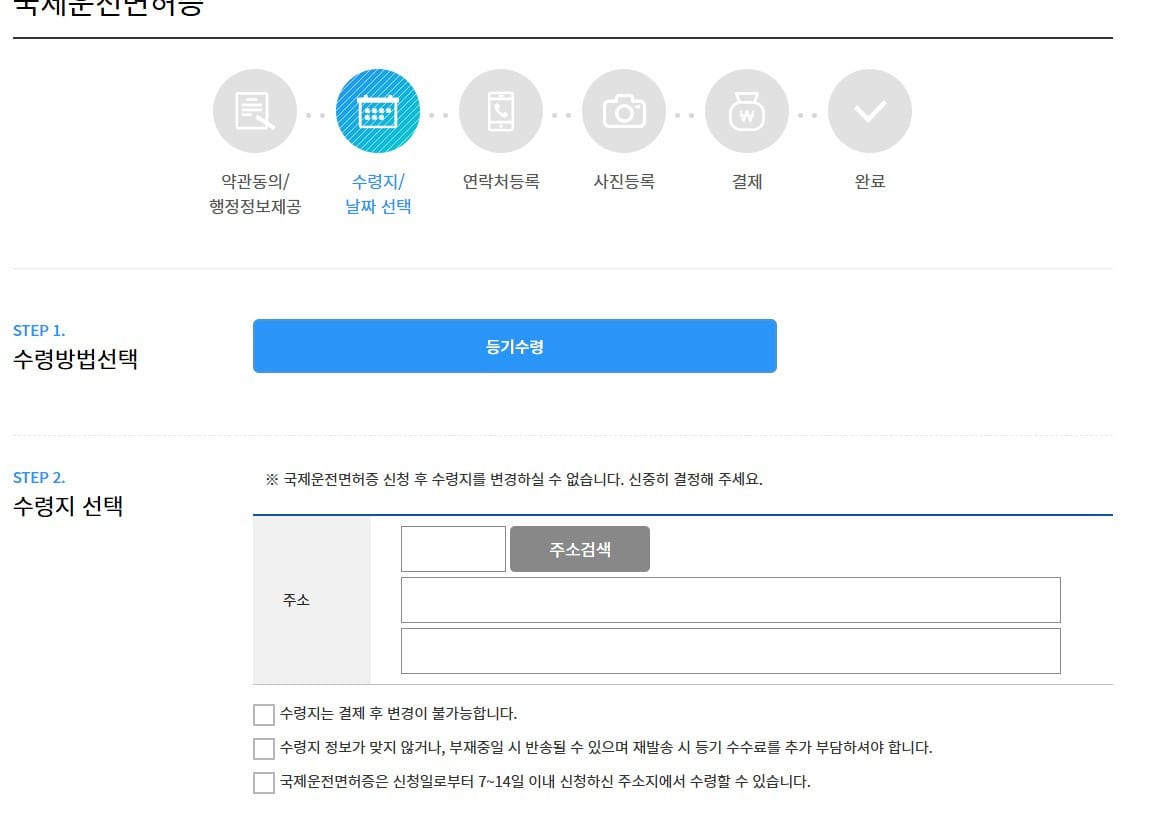
Then you enter your personal details, upload your photo, and fill in the delivery address.
Online hours are 7:30am to 10pm daily. The cost is 9,000 won plus roughly 3,800 won for registered post delivery. Processing takes around five days, sometimes up to two weeks depending on volume.
If your departure is more than two weeks away, online is perfectly fine. If you’re leaving within the week, go to the station.
There’s also an airport option if you’re flying out of Incheon. Terminal 1, 3rd floor, 경찰치안센터. Terminal 2, 2nd floor, 정부종합센터. Weekdays only, 9am to 6pm, counter closes noon to 1pm for lunch. No weekends, no public holidays. Same-day issuance, same 9,000 won fee. Useful if you’re catching an early weekday flight and somehow didn’t sort this beforehand.
| Method | Cost | Processing Time | Hours |
|---|---|---|---|
| Police Station (in-person) | 9,000원 | Same day | Weekdays 9–6, lunch covered |
| Online | ~12,800원 | 5 days – 2 weeks | 7:30–22:00 daily, desktop only |
| Incheon Airport | 9,000원 | Same day | Weekdays 9–6, closed 12–1 |
That small burgundy booklet has traveled with me to more countries than I expected when I first applied for one. It doesn’t look like much. But at a border crossing in central Africa with a car full of family, it was the one thing I was glad I hadn’t forgotten.
Getting it in Korea takes a lunch break and a short drive. There’s genuinely nothing complicated about it — the hardest part is remembering to go before you need it.
If this saved you a trip abroad’s worth of stress, pass it along to someone who’s planning to drive overseas and thinks their English license probably covers it. And if you’re a foreign national in Korea trying to figure out how license conversion works in the first place, that process deserves its own walkthrough.
If you are looking for a complete overview of navigating the roads here, check out my Complete Guide to Driving in Korea for Expats.
Arriving in Korea soon?
Don’t navigate your first day alone
I meet you at Incheon or Gimpo airport and guide you through everything — SIM card, T-money, transport, and getting to your accommodation. Personal support from $180.
Book arrival support →