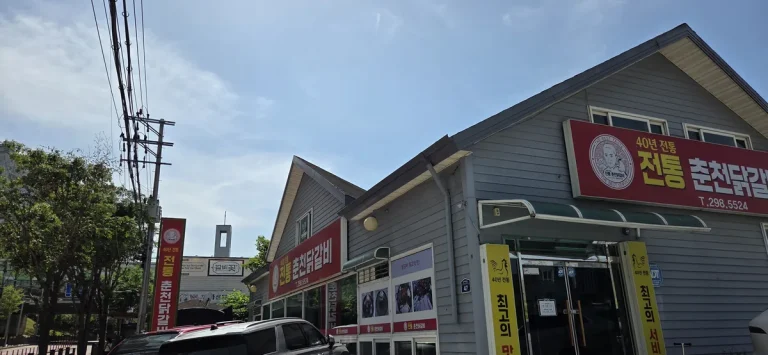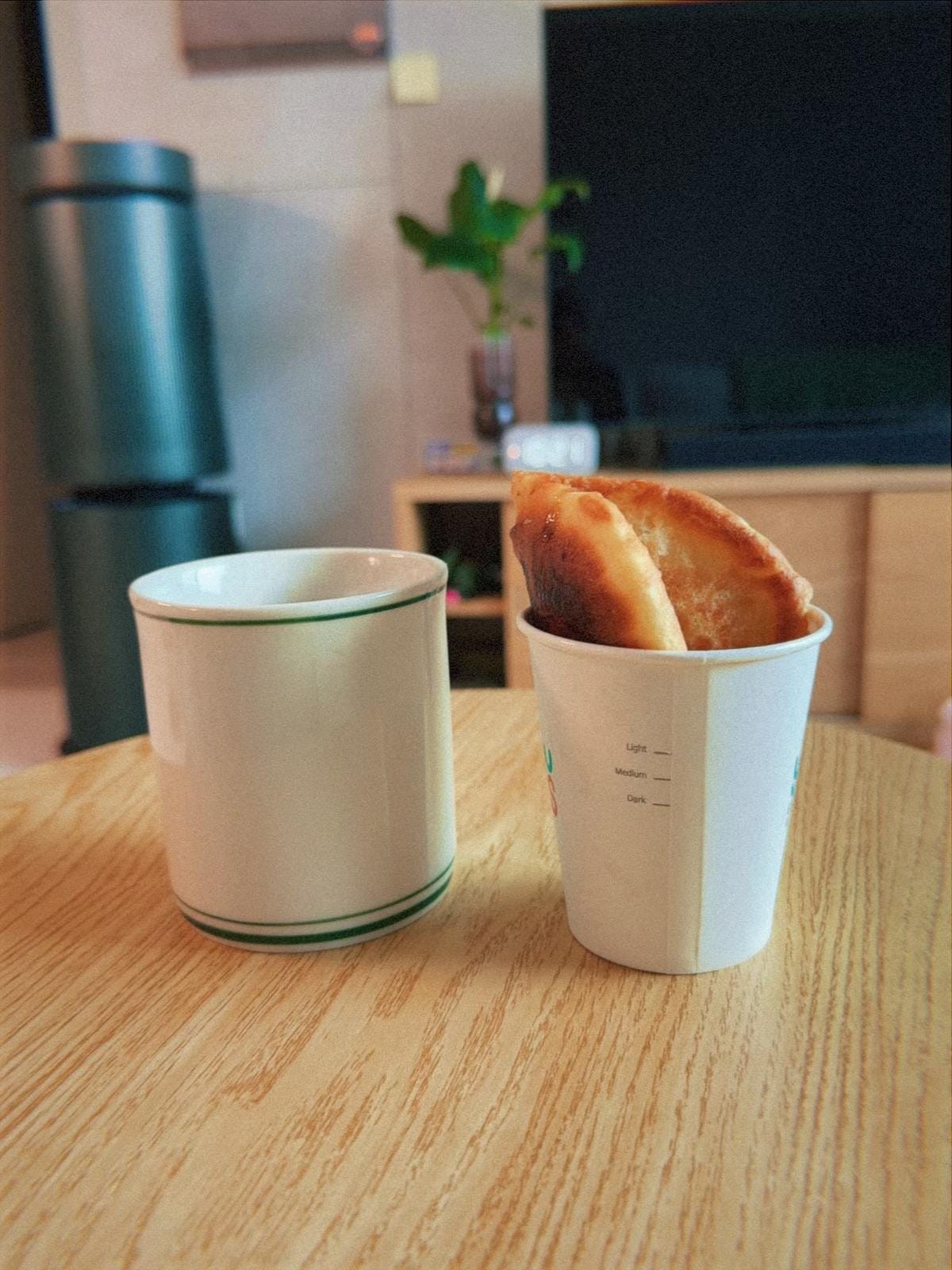
It is the middle of March here in Hwaseong, but the morning air still carries that biting winter chill. When I lived in Japan and Australia, the transition to spring always felt a bit more predictable, but Korea has a funny way of holding onto the cold. we decided to skip our usual western-style Sunday breakfast. Instead, we turned to my absolute favorite Korean winter street food: Hotteok (호떡).
If you have spent any time walking the vibrant streets of South Korea during the colder months, you have probably seen the small trucks and tented stalls selling classic snacks like gimbap, tteokbokki, fish cakes (eomuk), and sweet, crispy dakgangjeong. But the true king of winter street food, in my humble opinion, is Hotteok—a pan-fried dough stuffed with dark brown sugar, cinnamon, and chopped nuts. In this post, I am going to share my expat-friendly guide on how to bypass the street stalls and easily make these sweet, gooey pancakes right in your own kitchen using a simple supermarket kit.
The Magic of Hotteok and Why You Should Make It at Home
There is an undeniable romance to buying a scorching hot Hotteok from a street vendor. You watch them press the dough flat on a massive oiled griddle, the edges crisping up to a beautiful golden brown. However, the price of this nostalgia has gone up. Nowadays, a single piece usually costs around 2,000 won. If you are feeding a family or a group of friends, you might get a slight discount (like 6 for 10,000 won), but it adds up quickly.
By comparison, making Hotteok at home is not only incredibly beginner-friendly, but it is also highly economical. A boxed DIY kit costs three to four times less than buying the equivalent amount on the street, and the taste is remarkably identical. Furthermore, if you are an expat living in apartments in Korea, the smell of cinnamon and sweet sugar frying in your kitchen on a lazy weekend morning makes your home feel incredibly warm and cozy.
These kits also make fantastic souvenirs. Last weekend, a friend of mine visited us all the way from Minnesota in the US. I whipped up a batch of these pancakes for her, and she was absolutely blown away. If you are a traveler looking for a unique, affordable gift to bring back to your friends and family, this is it. It’s a literal taste of Korea packed into a lightweight box.
Where to Buy the Kit and What You Need
You do not need to hunt down a specialty baking store to find these kits. I bought mine from my local favorite, the Easy Buy Supermarket Bongdam. Honestly, any mid-sized to large Korean grocery store (like E-Mart, Homeplus, or Lotte Mart) will stock them, usually in the baking aisle next to the pancake and brownie mixes.
Equipment you will need from your kitchen:
- A wide, flat frying pan.
- A generous amount of cooking oil (vegetable, canola, or sunflower oil works best).
- A sturdy spatula or a specialized Hotteok press (called a nurumgae).
- A large mixing bowl.
- Disposable plastic gloves (trust me, you need these for the sticky dough).
What is Inside a Korean Hotteok Kit?
The instructions on the back of the box are almost entirely in Korean, which can be intimidating for newcomers or those utilizing Soft Landing Korea services who are just getting used to reading Hangul. Don’t worry; the process is virtually foolproof.
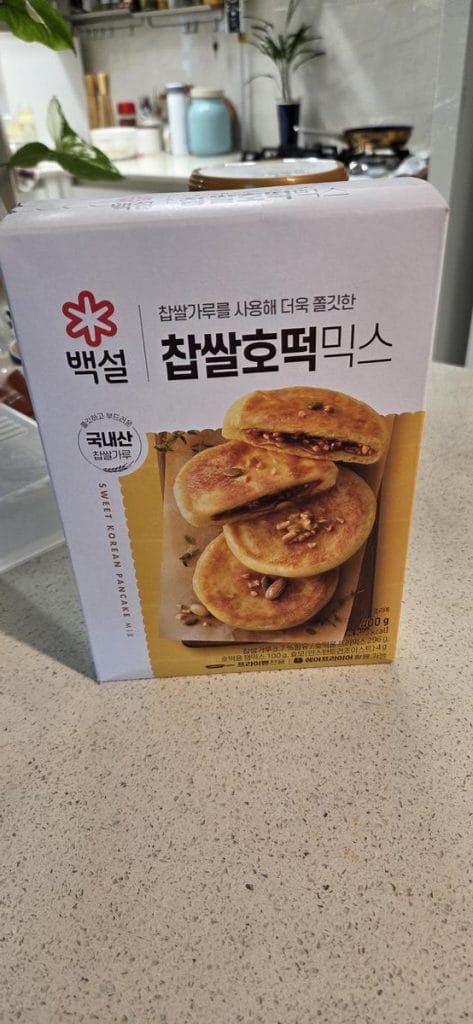
Sitting on my kitchen counter, the cardboard box looked simple enough, featuring a mouth-watering picture of the finished product oozing with melted sugar.
When you crack open the box, you will hear the satisfying crinkle of plastic. Inside, everything is perfectly pre-measured. You will find three distinct, sealed plastic packets laid out before you.
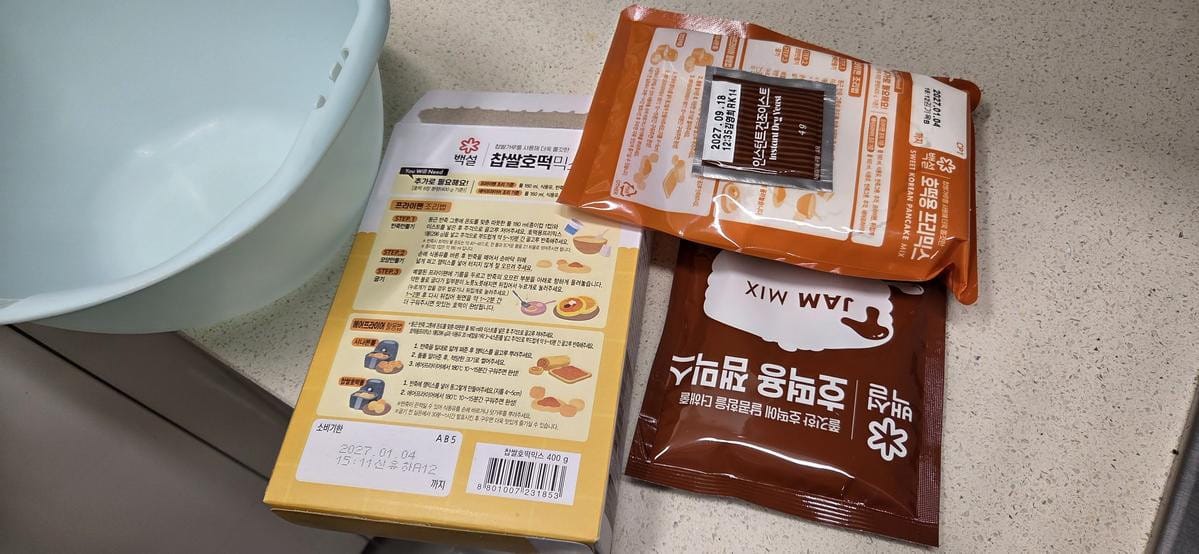
The smallest packet contains the dry active yeast. The largest, heaviest bag contains the pale, pre-seasoned dough powder. The final medium-sized bag holds the “sweet powder,” which is a fragrant mixture of dark brown sugar, cinnamon, and crushed peanuts and seeds. It smells earthy, sweet, and nutty the moment you tear it open.
Step 1: Waking Up the Yeast
The secret to the perfect, chewy texture of Hotteok lies in the yeast. According to the Korea Tourism Organization, traditional Hotteok dough is fermented to give it a slightly sour, complex flavor that balances the intense sweetness of the filling. Thankfully, the kit speeds this up.
You need to mix the yeast with exactly 180ml of lukewarm water. The temperature is crucial here—ideally around 45°C (113°F). If you use water that is too cold, the yeast won’t wake up. If you use water that is boiling hot, you will kill the yeast, and your dough will be flat and dense as a rock.
I poured the warm water into my bowl and sprinkled the tiny yeast granules over the surface. Stirring it gently, the water turned into a cloudy, slightly yellowish liquid, emitting that distinct, comforting, bready aroma.
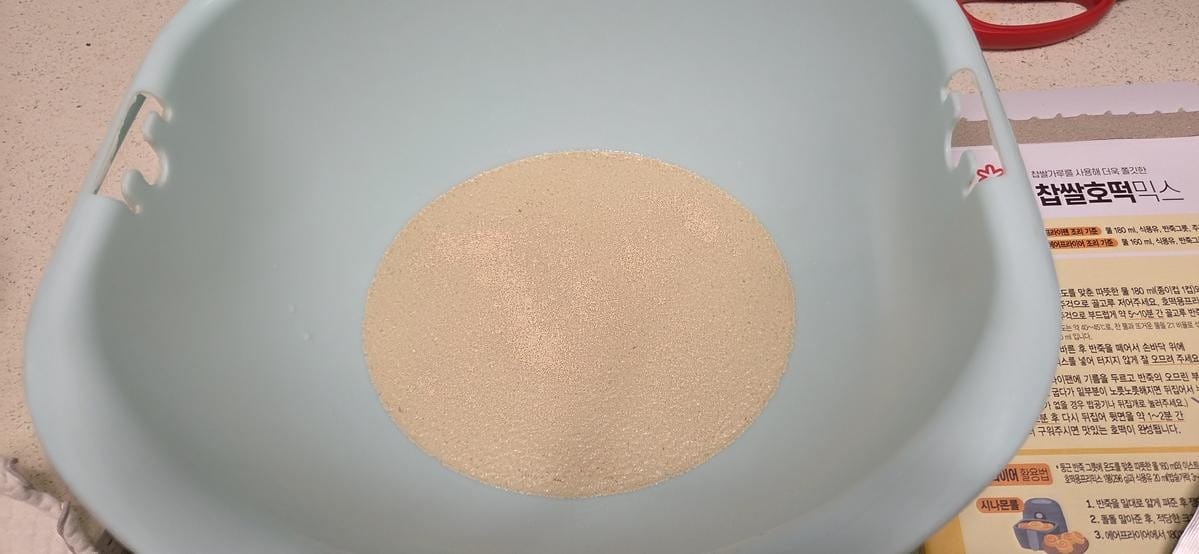
Step 2: Mixing the Sticky Dough
Once the yeast is happily dissolved, it is time to add the large bag of dough powder into the bowl. This is where the physical work begins.
At first, as you mix the powder into the yeast water with a spatula, it looks shaggy and dry. But as you get your hands in there (wearing your plastic gloves!), the hydration takes over. The dough transforms into a thick, incredibly sticky, pale mass.
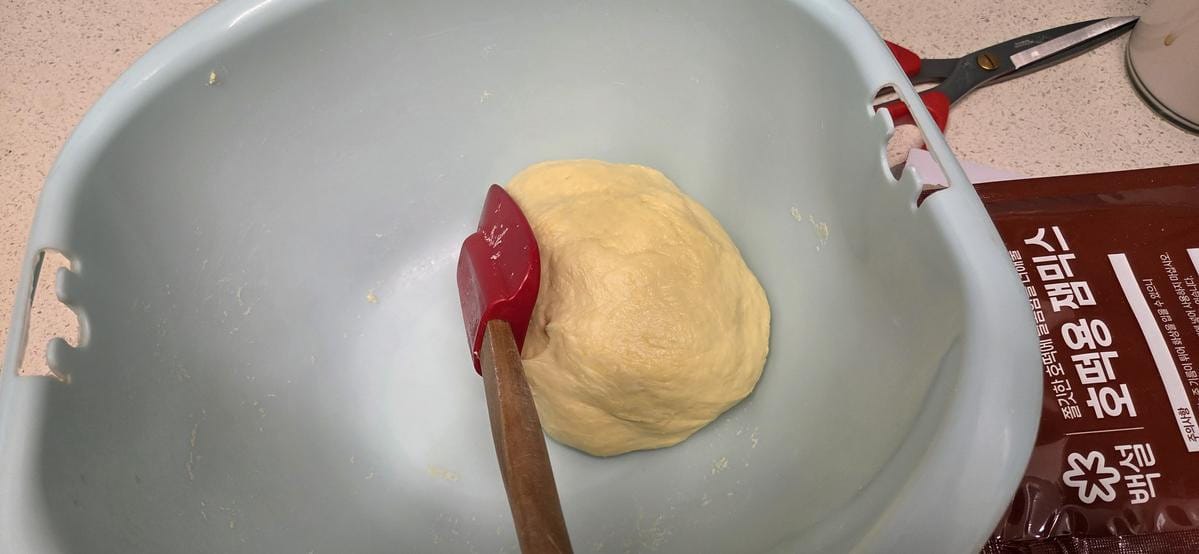
Pro Tip: Keep kneading it for about 5 to 10 minutes. As you work the dough, you will actually feel the texture changing beneath your fingers. It becomes noticeably more elastic and slightly less sticky as the gluten develops. You want it to feel springy.
Step 3: Stuffing the Dough Like a Dumpling
Once your dough is ready, it is time to assemble. The box usually makes enough for about 8 small pancakes, but I prefer to divide my dough into 6 slightly larger, thicker portions. This size fits perfectly into a standard disposable paper cup—the authentic Korean street food vessel!
How to stuff the Hotteok:
- Rub a few drops of cooking oil onto your gloved hands. This prevents the dough from sticking to you entirely.
- Grab one of your 6 portions of dough and roll it into a ball.
- Flatten the ball in the palm of your hand, making a slight indentation in the center, almost like a small bowl.
- Spoon a generous amount of the sweet powder into the center. (Remember to divide your powder into 6 mental portions so you don’t run out on the last one!)
- Carefully pinch the edges of the dough together, sealing the sugar inside completely. It should look like a giant, round dumpling. Make sure there are no tears, or the sugar will leak out in the pan!
Note: If you love a crunchy texture, you can add extra sunflower seeds or pumpkin seeds into the sugar mixture at this stage. Seed Hotteok (Ssiat Hotteok) is a famous variation originating from Busan!
Step 4: Frying to Golden Perfection
Now, head to the stove. Put your frying pan on medium heat and add your cooking oil. Do not be shy with the oil! Hotteok dough is like a sponge; it needs to shallow-fry to get that iconic crispy, slightly greasy street-food texture.
When the oil is shimmering and hot, place your dough ball into the pan, seam-side down. Let it cook for about 30 seconds until the bottom is slightly firm.
Now comes the tricky part: flattening it. Using your spatula (or a greased nurumgae press), gently push down on the dough ball to flatten it into a pancake shape. Because the dough is highly elastic, it will resist. Do not push too hard or too fast! If you use excessive force, the dough will rupture. The sugar filling will seep out into the hot oil, burn instantly, and leave a bitter taste and an ugly, charred look on your beautiful pancake.
Press gently, flip it, and press again. It doesn’t take long. Flip it a couple more times until both sides reach a deep, glorious dark brown color. That is my personal favorite level of doneness—maximum crunch on the outside, soft and chewy on the inside.
The Authentic Way to Enjoy Your Hotteok
Once they are ready, you could simply put them on a plate. But if you want the true Korean experience, fold a small disposable paper cup slightly, and slide the hot Hotteok right inside. I don’t know why, but eating it out of a paper cup just makes it taste 10% more delicious. It protects your hands from the grease and catches any rogue sugar drips.
A massive word of warning: Eat slowly. The melted sugar inside is essentially culinary lava. If you take a massive bite immediately out of the pan, that sweet, molten liquid will burn the roof of your mouth. Take small bites from the edge, blowing gently to let the steam escape.
Hotteok Kit Quick Reference Guide
| Factor | Street Vendor Hotteok | Supermarket Kit Hotteok |
|---|---|---|
| Cost | ~2,000 won per piece | ~1,000 won per piece (or less) |
| Time Required | Instant (if you find a stall) | 20-30 minutes of prep and cooking |
| Customization | Limited to vendor’s menu | High (add your own nuts, cheese, etc.) |
| Souvenir Value | None (must be eaten hot) | Excellent (lightweight, easy to pack) |
Frequently Asked Questions (FAQ)
Can I save the leftover dough for the next day?
It is not recommended. The yeast will continue to ferment, and the dough will become overly sour and lose its structure. It is best to cook all the pancakes at once. You can reheat cooked Hotteok in an air fryer the next day!
I don’t have a special Hotteok press. What can I use?
A sturdy, wide spatula works perfectly. You can also use the flat bottom of a heavy metal bowl or a small saucepan—just make sure to rub some cooking oil on the bottom so it doesn’t stick to the dough!
Is Hotteok vegan?
Many traditional Hotteok recipes and basic supermarket kits are naturally dairy-free and vegan, using vegetable oils and yeast dough. However, always double-check the ingredient list on the specific box you buy, as some brands might add milk powder or butter flavorings.
A Perfect Sunday Morning
Replacing our usual Sunday morning hotcakes with these fresh, piping-hot Hotteok was the best decision. Paired with a strong mug of black coffee, the intense sweetness of the brown sugar filling was perfectly balanced.
My wife, who can sometimes be critical of overly sweet desserts, absolutely devoured hers. Sitting at our dining table, looking at the golden-brown pancakes on the plate next to our steaming coffee mugs, I felt a deep sense of contentment.
If you are ever wandering a Korean supermarket, or if you simply want a fun weekend cooking project, grab a Hotteok kit. It is a foolproof way to bring the heartwarming magic of Korean street food straight into your own kitchen. Have you ever tried making Korean street food at home? Let me know, and I will keep you updated if I find any other easy recipes that double as great souvenirs!