Korea’s total fertility rate hit a record low of 0.72 in 2023. Then something shifted. Birth numbers rose in 2024 — the first increase in nine years — and the rebound has continued in the years since. I live in Hwaseong, Gyeonggi-do, and my wife noticed it before I did: more strollers, more young families at the local market, more children in the apartment complex. We have a daughter of our own now, born prematurely at 32 weeks by emergency C-section. So when I say this system is working, I’m not reading from a government press release — I watched the invoice arrive and discovered, only then, that the surgery had been fully covered. That moment is what drove me to write this guide to South Korea expat childbirth support in 2026.
The policies have genuinely improved. But “the system works, but the entry is opaque” — that’s the honest summary. If you’re an expat family in Korea, whether dual-income, multicultural, or somewhere in between, the support available to you is significant. The barrier isn’t eligibility. It’s knowing which scheme applies to you and applying correctly before the baby arrives. For the full picture on pregnancy benefits including the National Happiness Card, that’s covered separately — this post focuses on the three policies that matter most right now, plus what you need to know about birth registration.
📌 Quick Summary:
South Korea’s recent family support reforms are among the most substantial the country has introduced. C-section costs are now zero. Parental leave pay now starts at ₩2.5 million per month for the first three months, then steps down — with a superior 6+6 full-salary scheme for dual-income parents. Housing special supply is now accessible multiple times. Fertility testing is supported across your 20s, 30s, and 40s. For expats, the policies apply broadly — but eligibility depends on insurance status, visa category, and correctly self-identifying which scheme you qualify for on gov.24.
C-Section Costs Are Now Zero — What That Actually Means
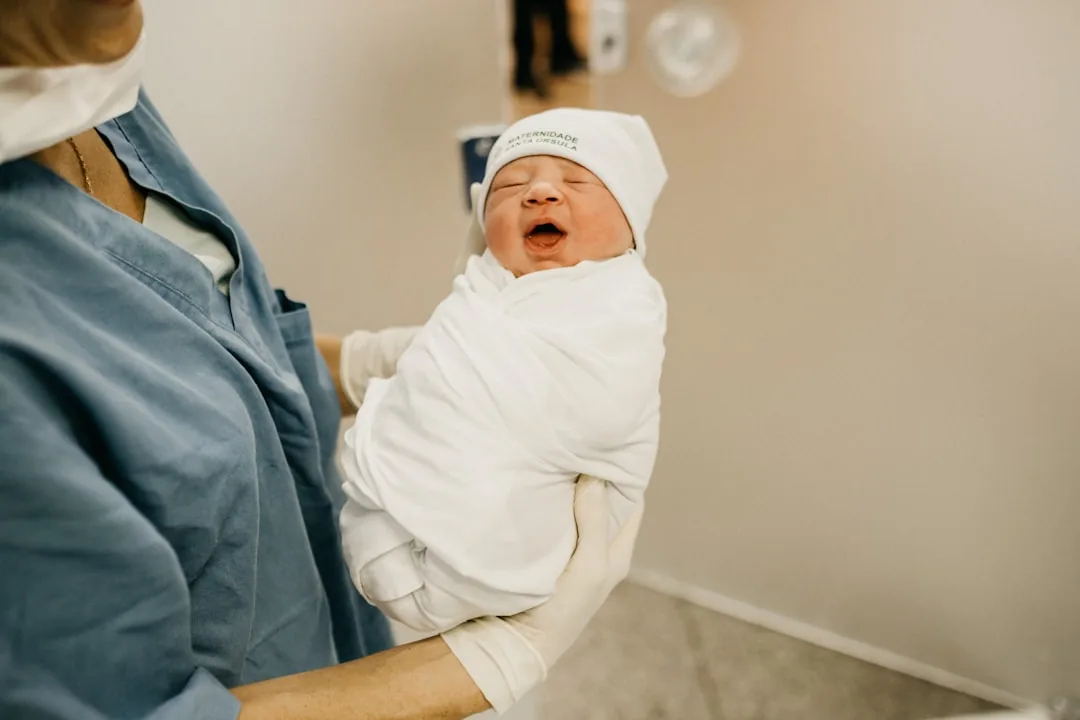
From January 2025, the 5% patient co-payment for caesarean deliveries was abolished entirely under an amendment to the National Health Insurance Act. Natural births were already cost-free under Korea’s insurance framework; the logic for keeping C-sections at 5% was to discourage elective procedures. That logic has aged poorly. According to data from the Health Insurance Review and Assessment Service, over 64% of deliveries in Korea are now C-sections — nearly two in three births. The policy changed to reflect medical reality.
My wife’s emergency C-section at 32 weeks was covered in full. I didn’t know that when we rushed to the hospital. I found out when the bill came. That’s the honest version of how this policy works for most expat families: it applies automatically through your insurance, not through any application you make in advance. You don’t need to register or claim separately. The coverage flows through 국민건강보험 (gungmin geongang boheom — National Health Insurance).
The condition that matters for expats: you must be enrolled in Korean national health insurance. If you’re employed and your employer has registered you, you’re covered as a direct employee (직장가입자, jikjang gabija — workplace subscriber). If you’re a non-working spouse on an F-6 visa, your enrollment status depends on whether your partner’s insurance covers dependents — check this with your employer’s HR well before your due date. A non-working spouse who is not enrolled will not receive the same coverage.
💡 Pro Tip:
Don’t wait until the third trimester to check your insurance status. If you or your partner are on a short-term visa, recently changed jobs, or are freelancing, there may be a gap in coverage you’re not aware of. Contact the NHIS directly or ask your employer’s HR. The policy is generous — but it only works if you’re enrolled.

Fertility Test Support: Coverage Across Your 20s, 30s, and 40s
Korea’s approach to fertility has moved upstream. Rather than waiting for couples to encounter problems, the government now funds pre-conception health checks at three separate life stages. The 임신 사전건강관리 (imshin sajeong geonganggwalli — pre-pregnancy health management) programme covers fertility testing costs once in your 20s (under 30), once in your 30s (30–34), and once again in your 30s–40s (35–49). Each window is triggered by age at the time of application — not the date of the test — so timing matters.
Planning a Family in Korea as an Expat?
Navigating parental leave applications, insurance gaps, and housing benefits in a second language is genuinely hard. If you’re not sure which scheme applies to you — or where to even start — Jin can help you work through it.
Ask JinFor women, support covers AMH (ovarian reserve) testing and gynaecological ultrasound, up to ₩130,000 per application. For men, semen analysis is covered up to ₩50,000. Applications go through your local 보건소 (bogeon-so — public health centre). Critically, the programme is open to unmarried individuals and couples in de facto relationships, not just registered married pairs — a meaningful inclusion for mixed-nationality families where marriage registration can be administratively complex.
Expats with a Korean spouse can generally access this through their local health centre using their 외국인등록증 (oegugin deungnokjeung — Alien Registration Card). For couples where both partners are foreign nationals, eligibility depends on residency registration and insurance status — confirm directly with your nearest 보건소 before assuming access. The Ministry of Health and Welfare publishes updated programme guidelines annually.
Beyond the five headline policies covered in our childbirth support overview, expats should dive deeper into our comprehensive guide to Korea’s parental leave benefits, eligibility requirements, and 2025 policy changes to understand the full financial and logistical scope of maternity and paternity leave.
Beyond childbirth benefits, expat families in Korea face equally critical financial risks when securing housing—understanding Jeonse and Wolse deposit protection is essential to safeguard your family’s housing stability.
** Expat parents should be aware that eligibility for the government’s 2026 childbirth support policies often depends on your employment visa category and status — details covered in our comprehensive guide to Korean labor law for foreign workers.
On infertility treatment: the support structure has also been reformed. The previous system allocated separate cycle limits by treatment type (fresh embryo IVF, frozen embryo IVF, artificial insemination). Those category limits have been consolidated into 25 cycles per child — meaning the 25-cycle allocation resets with each new pregnancy, which is a significant change for families hoping to have more than one child through assisted reproduction.
Parental Leave Benefits for Expats: The Numbers and the Scheme You Probably Haven’t Heard Of
Standard parental leave pay — 육아휴직 급여 (yuga hyu-jik geup-yeo — parental leave benefit) — has risen sharply, but it isn’t a flat ₩2.5 million a month, and that’s the first thing to get straight. The cap is tiered: ₩2.5 million per month for the first three months (100% of your ordinary wage), ₩2 million for months four to six, then ₩1.6 million (80% of wage) from month seven onward. The old ceiling was a flat ₩1.5 million, so this is a real jump — just front-loaded, not flat. The other change, almost invisible in English-language expat forums, is the removal of the return-to-work clawback. Previously, 25% of your parental leave payments were withheld and released only after you returned to work for six months. That money is now paid in full during leave. For families managing a NICU stay or extended early childcare, that difference is material.
However, if you’re a dual-income couple with a child under 18 months, I’d recommend investigating the 6+6 부모육아휴직제 (bumo yuga hyu-jikje — parental leave scheme) before defaulting to standard parental leave. Under this scheme, both parents receive 100% of their salary — not the ₩2.5 million cap — for the first six months each, when both take leave within the child’s first 18 months. For most dual-income expat couples, this is significantly more generous than the standard scheme. We used it. It worked. The system calculated and paid correctly once we applied correctly on gov.24.

The application process is where foreigners hit friction. On gov.24, you must correctly identify which scheme applies — standard ₩2.5M or 6+6 full wages — and answer the qualifying questions accurately: Is the baby under 18 months? Does your partner work? Who is applying first? The system calculates the right payment only if your inputs are right. “The real barrier isn’t documentation; it’s language and knowing which schemes to apply for.” I’d strongly recommend asking your employer’s HR directly rather than relying on government websites alone.
Eligibility for expats: parental leave benefits are tied to employment insurance (고용보험, goyo-ng boheom), not national health insurance. If you’re an employed foreigner registered with employment insurance, you’re eligible on the same terms as Korean employees. Non-working spouses and freelancers are not eligible. For detailed application steps, see our guide on navigating pregnancy and accessing government benefits as a multicultural family.
💡 Pro Tip:
If you qualify for the 6+6 scheme, the parent who takes leave first sets the timeline. Coordinate with your partner before either of you applies — the sequence affects total payout. Once you apply, the calculation is locked in.
Housing Benefits for Families: What’s Changed and Why It Matters
Housing special supply — 신생아특례 (sinseang-a teukrye — newborn special provision) — has been expanded in two concrete ways. First, families can now access special supply allocations more than once. Previously, this benefit was lifetime-limited to a single use. A family that received special supply for a first child and then had a second or third child — needing a larger home — had no route back into the programme. That restriction has been removed.
Second, the spousal eligibility barrier is gone. If your spouse previously received a special supply allocation from a prior relationship or circumstance, that disqualified you from receiving one yourself after remarriage or a new family arrangement. That restriction has also been lifted. The government’s stated intent is simple: if you’re having children, housing support should be available each time you need it.
For expats, the honest caveat is timing. This isn’t a benefit you can access retroactively. You need to understand the eligibility windows, income thresholds (the 신생아특례 mortgage product has an income ceiling of ₩200 million combined for couples), and application periods before your baby arrives — or at minimum, before you sign your next housing contract. I didn’t pursue it with our daughter (the timing didn’t align with our lease), so I can’t speak from personal experience. But the policy exists and is worth investigating early. Check gov.kr for current income thresholds and application windows, which are updated by the Ministry of Land, Infrastructure and Transport. For families looking at what comes after housing, explore government-subsidized childcare options for families as a next step.

Birth Registration and Protected Birth: What Expats Need to Know
Two systems introduced in July 2024 are worth a brief mention for expat families. The 출생통보제 (chulsaeng tongboje — Birth Notification System) requires hospitals to automatically notify the 건강보험심사평가원 (geongang boheom simsa pyeongga won — Health Insurance Review and Assessment Service, HIRA) of every birth, which then transmits the registration to the relevant local government office. Over 180,000 births were registered through this system in its first year. For expat parents delivering in a Korean hospital, this means the birth enters the official record automatically — you still need to complete your own country’s registration separately, but the Korean side is initiated at the hospital.
The 보호출산제 (boho chulsanje — Protected Birth System) allows mothers in crisis situations to give birth under a pseudonym, ensuring the child is registered and cared for without the mother being identified publicly. Since implementation, over 1,500 consultations have been logged and more than 100 protected births have been processed. This is primarily relevant for Korean nationals in crisis pregnancies, but expat families in complex situations — particularly those on short-term visas without stable support — should know the system exists. Counselling is available through government welfare channels.
The broader point on birth registration for foreigners: your child’s Korean birth record and your home country’s registration are separate processes. If your baby is born in Korea, the Korean hospital will initiate notification through the new system, but registering your child’s citizenship, passport, and residence status in your home country remains your responsibility. Start that process early — some consulates have significant backlogs.

Frequently Asked Questions
How much does a C-section actually cost in Korea now?
From January 2025, C-section deliveries cost nothing for patients enrolled in Korean national health insurance. The previous 5% co-payment has been fully abolished. Coverage is automatic — no separate application is needed — but you must be enrolled in the 국민건강보험 (National Health Insurance) system before you deliver. Non-enrolled spouses or those on short-term visas without insurance may not be covered, so check your status early.
What’s the difference between standard parental leave (₩2.5M) and the 6+6 dual-parent scheme?
Standard parental leave is tiered, not flat: up to ₩2.5 million per month for the first three months, ₩2 million for months four to six, then ₩1.6 million from month seven. The 6+6 부모육아휴직제 scheme instead pays 100% of each parent’s salary (under higher rising caps, from ₩2.5 million up to ₩4.5 million) for the first six months each, if both parents take leave within the baby’s first 18 months. For most dual-income couples, the 6+6 scheme is significantly more generous. The catch: you must apply correctly on gov.24 and coordinate who applies first, as the sequence affects the total payout.
As a foreign spouse, does my visa status affect parental leave and child benefit eligibility?
Yes, visa and employment status both matter. Parental leave benefits are tied to employment insurance (고용보험), not national health insurance — so you must be employed and registered with employment insurance to claim them. Non-working spouses on an F-6 visa and freelancers are generally not eligible for parental leave pay. For C-section coverage and some child benefits, national health insurance enrollment is the key requirement. Confirm your status with your employer’s HR before your due date.
Do I need to apply for parental leave before the baby arrives, or can I apply afterward?
You can apply after the baby arrives, but you should research and prepare well beforehand. The 6+6 scheme requires both parents to coordinate who applies first — that decision affects the total payout and cannot be changed once submitted. Understanding your eligibility category (standard ₩2.5M vs. 6+6) before the birth means you can act quickly on gov.24 without making costly input errors during an already stressful period.
What is the housing special supply (신생아특례) for newborns, and how do expats access it?
The 신생아특례 (newborn special provision) gives families with newborns priority access to public housing allocations and preferential mortgage terms, with a combined household income ceiling of ₩200 million. The key 2025 change is that this benefit can now be used more than once — it resets with each new child. Expats should be aware that this is not retroactive: you need to plan ahead and check eligibility windows before signing any new housing contract. Check current thresholds and application periods at gov.kr.