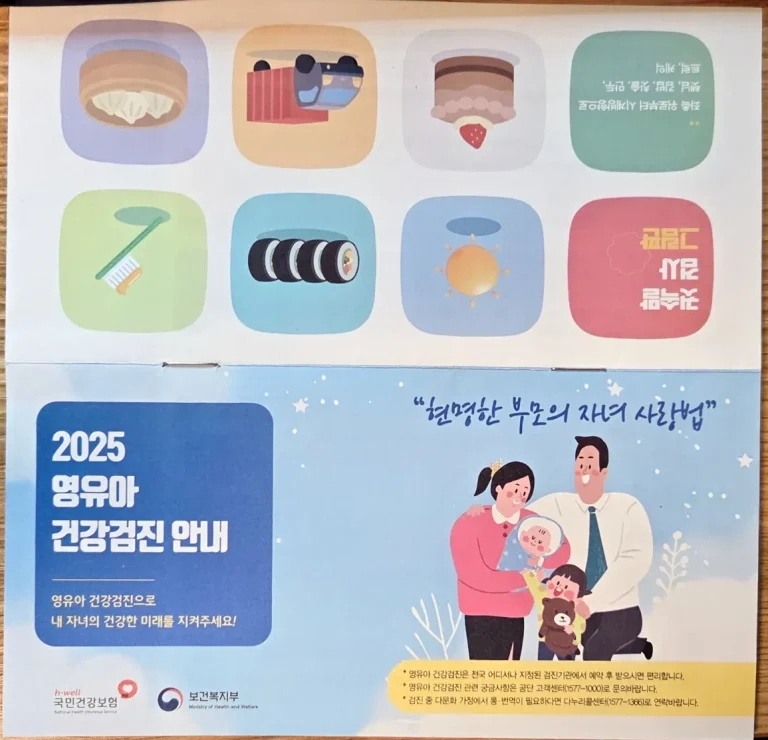
The morning our daughter was born, a nurse pressed a printed leaflet into my hands in the emergency room. I remember staring at it — something about a discount for premature babies — before the chaos swallowed everything whole. Two months of NICU visits followed. My wife needed support. Documents needed preparing. That leaflet disappeared somewhere in our minds, buried under the weight of everything else.
Ten months later, a neonatal coordinator reviewing our file asked a simple question: had we applied for the premature baby outpatient medical expense reduction? We hadn’t. And here’s the part that stings — reducing premature baby medical costs in Korea through this benefit is not retroactive. Everything we’d already paid was gone. If you’re navigating a premature birth and NICU stay in Korea, this is the benefit you cannot afford to forget.
📌 Quick Summary:
Korea’s premature baby outpatient medical expense reduction lowers your co-pay to just 5% of total treatment costs for eligible babies — but benefits only start from the date you apply, never earlier. Apply as soon as your baby has a resident registration number. You can submit all documents via text message to your local NHIS branch — no fax machine, no trip to city hall required.

What This Benefit Actually Is
The official name is 조산아 및 저체중 출생아 외래진료비 본인부담금 경감 (jo-san-a mit jeo-che-jung chul-saeng-a oe-rae jin-ryo-bi bon-in bu-dam-geum gyeong-gam) — the premature and low birth weight outpatient medical expense reduction. In plain terms: if your baby was born before 37 weeks of gestation, or weighed under 2,500g at birth, every outpatient visit and pharmacy co-pay drops to just 5% of the total treatment cost. That’s a steep reduction from the standard rate, and it applies for years.
How long exactly? As of January 2026, the duration depends on how early your baby arrived. Babies born at 33–37 weeks receive the benefit for 5 years and 2 months from birth; 29–33 weeks gets 5 years and 3 months; and babies born before 29 weeks — the earliest arrivals — receive 5 years and 4 months of coverage. Low birth weight babies under 2,500g retain the previous 5-year period. These changes came into effect under Ministry of Health and Welfare Notice No. 2025-232, reflecting medical evidence that the earliest-born babies need the longest runway to catch up developmentally.
According to Statistics Korea, 9.4% of babies born in Korea in 2022 arrived prematurely, and 6.8% were classified as low birth weight. That’s a significant share of all newborns in Korea — which means this benefit exists for good reason, and more families than you’d expect need it.

The Part Nobody Tells You Clearly Enough
This is the section I wish someone had underlined for me in that emergency room leaflet.
Don’t Learn This the Hard Way
We lost ten months of the 5% reduction because nobody told us the benefit isn’t retroactive. If your baby was born premature or under 2,500g, apply as soon as they have a registration number — and read on for the document submission trick that took us less than an hour from home.
The benefit does not start from your baby’s birth date. It starts from the date you register your application with the National Health Insurance Service (NHIS). Every outpatient visit and pharmacy trip between your baby’s birth and your application date is paid at full rate — and you cannot claim it back. The NHIS is explicit: 출생일로 소급 적용 불가 — no retroactive application to the birth date.
The same use-it-or-lose-it logic applies earlier on: Korea Post’s free pregnancy insurance covers the fetus at any stage, but the mother’s rider must be applied for within 22 weeks, and that window does not reopen.
We lost ten months. Our daughter had frequent follow-up appointments after her NICU discharge, and every single one was billed without the 5% reduction we were entitled to. When the neonatal coordinator told us, I felt that particular frustration of a mistake that can’t be undone. What is missed is missed. But you can move fast once you know.
💡 Pro Tip:
Set a calendar reminder in the first week after birth — not when you feel ready, not after the dust settles. The moment your baby has a resident registration number, you’re eligible to apply. Don’t wait for someone at the hospital to remind you.
One more misconception worth clearing up: many parents assume that if they didn’t apply immediately, it’s too late altogether. It’s not. You can still apply at ten months, at two years, at any point while your baby is still within the eligible age window. The benefit simply starts from whenever you apply. Late is better than never — we learned that the hard way.
How to Apply for the Premature Baby Healthcare Reduction
Once your baby has been registered and has a resident registration number, the process is straightforward. Here’s what you need.
Required Documents for Premature Baby Benefits Korea
- Application form — available from the NHIS website (search for 조산아 감면신청서 in the forms section at nhis.or.kr)
- Birth certificate — note: if your hospital has filled in the “birth confirmation” section of the application form completely (including the attending doctor’s licence number and signature), you can skip the separate birth certificate
- Resident registration certificate (주민등록등본, jumin deungnok beon-ho) — can be omitted if your health insurance status is already verified in the NHIS system
For multicultural families where one parent is a non-Korean national, the baby’s foreign registration number (외국인등록증, oegugin deungnok-jeung) can substitute for the resident registration number in most cases. If you’re unsure about your baby’s insurance eligibility status, call 1577-1000 before gathering documents — the advisors there will tell you exactly what applies to your situation.
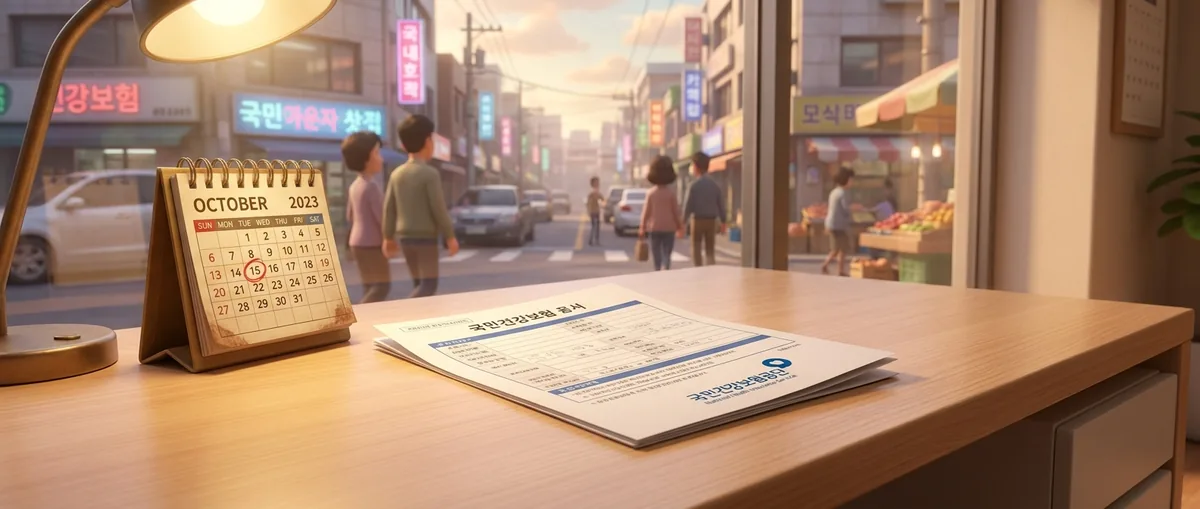
Application methods officially listed include visiting a local NHIS branch in person, sending documents by post (the postmark date counts as your application date), or fax. Your hospital can also submit on your behalf through the NHIS provider portal. But there’s a fifth method the official documentation doesn’t shout about — and it’s the one that actually saved us a trip.
The Text Message Trick: How to Submit NHIS Documents by SMS
When I finally called 1577-1000 to ask about the process, I expected to hear that I’d need to visit a branch or track down a fax machine. We don’t own a fax, and the idea of driving to city hall just to send three documents felt exhausting. Then the advisor mentioned it: you can send your application documents as image attachments in a text message to your local NHIS branch’s MO number.
MO number — a dedicated mobile receiving number for each NHIS branch office. You attach your completed application form, birth certificate, and resident registration certificate as image files (photos taken on your phone are fine), and send them to that number via standard SMS with attachments.
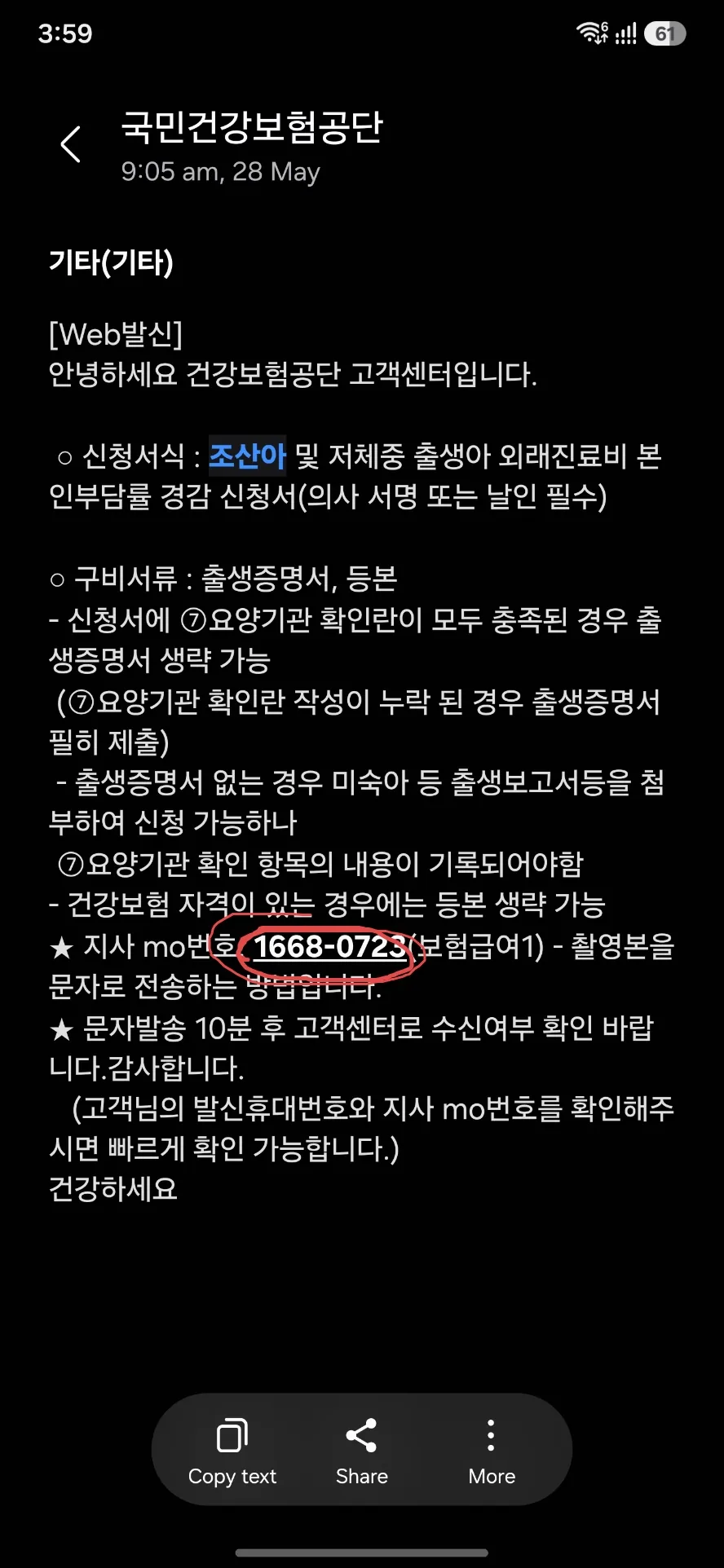
I sent ours on a Friday afternoon. Within hours, a confirmation message arrived saying the documents had been received successfully. The following Monday morning, a KakaoTalk notification came through: application approved.
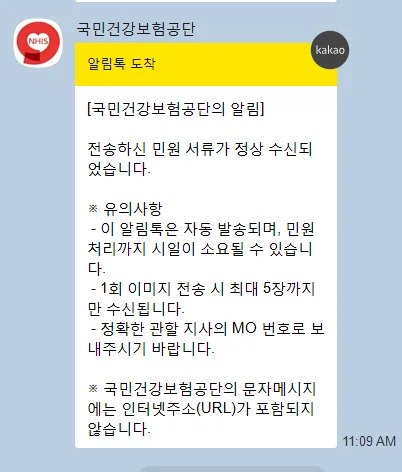
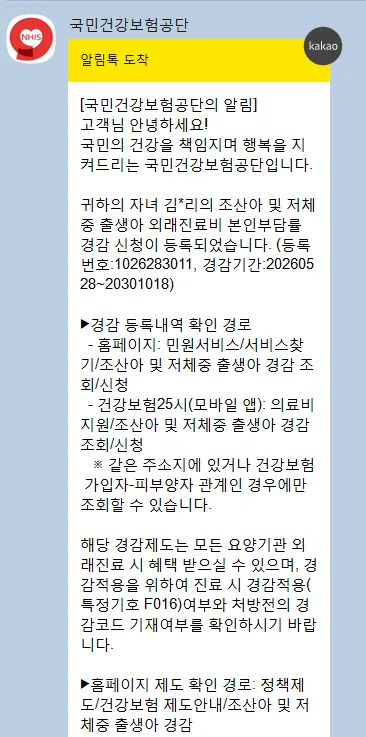
Friday to Monday. No trip out. No fax machine. No queuing at a government office with a newborn and a partner still recovering from a difficult birth.
💡 Pro Tip:
Call 1577-1000 and ask the advisor to text you your local branch’s MO number and exact submission instructions. They will. The advisor I spoke to sent everything I needed in one message — no mystery, no guessing.
One thing to watch for once the benefit is active: make sure every outpatient prescription has the special billing code F016 printed on it. This code is what tells the pharmacy system to apply the 5% rate. If it’s missing from a prescription, you’ll be charged the standard rate at the pharmacy and the reduction won’t apply — even though you’re registered. Check that code on every prescription slip, especially in the early weeks when doctors at different facilities may not yet have your baby’s status flagged in their system.
What to Do Right Now
If your baby was born prematurely or under 2,500g and you haven’t applied yet, the benefit is still available to you as long as your baby hasn’t aged out of the eligible window. The money you’ve already paid is gone — that’s the hard truth, and I won’t pretend otherwise. But what’s ahead can still be protected.
Understanding all the government benefits and NHIS programs for families in Korea takes time, and the premature baby reduction is one that tends to get lost in the blur of early parenthood. It shouldn’t. It’s not that difficult once you know the steps — and the text message submission method means the paperwork genuinely takes less than an hour from your kitchen table.

Call 1577-1000. Ask them to text you the instructions. Send the documents. Then set that reminder so you never have to write a post like this one.
📍 National Health Insurance Service (NHIS)
Address: 32, Sicheong-ro, Wonju-si, Gangwon-do (Head Office — local branches handle applications)
Frequently Asked Questions
Does the premature baby medical cost reduction in Korea apply from the birth date?
No — reducing premature baby medical costs in Korea through this benefit starts from the date you register your application with the NHIS, not from your baby’s birth date. Costs already paid before your application cannot be refunded. Apply as soon as your baby has a resident registration number to avoid losing any benefit.
Who is eligible for the premature baby outpatient expense reduction?
Babies born before 37 weeks of gestation or with a birth weight under 2,500g are eligible, provided they are enrolled in Korea’s National Health Insurance. As of January 2026, coverage duration ranges from 5 years to 5 years and 4 months depending on gestational age at birth.
What documents do I need to apply for premature baby benefits in Korea?
You need the NHIS application form (조산아 감면신청서), a birth certificate, and a resident registration certificate. If the hospital has fully completed the birth confirmation section of the application form — including the doctor’s licence number and signature — you can skip the separate birth certificate. The resident registration certificate can be omitted if your insurance status is already verified in the NHIS system.
Can I submit the NHIS documents without visiting a branch or using a fax?
Yes. You can send your application documents as image attachments in a text message (SMS) to your local NHIS branch’s MO number. Call 1577-1000 and ask the advisor to text you your branch’s MO number and submission steps — they will send everything in one message. Document photos taken on a smartphone are accepted.
What is the billing code F016, and why does it matter?
F016 is the special billing code that tells the pharmacy system to apply the 5% co-pay rate for registered premature and low birth weight babies. If it is missing from a prescription slip, the standard rate will be charged even if your baby is registered. Check every outpatient prescription for this code, especially when visiting facilities that may not yet have your baby’s status flagged in their system.