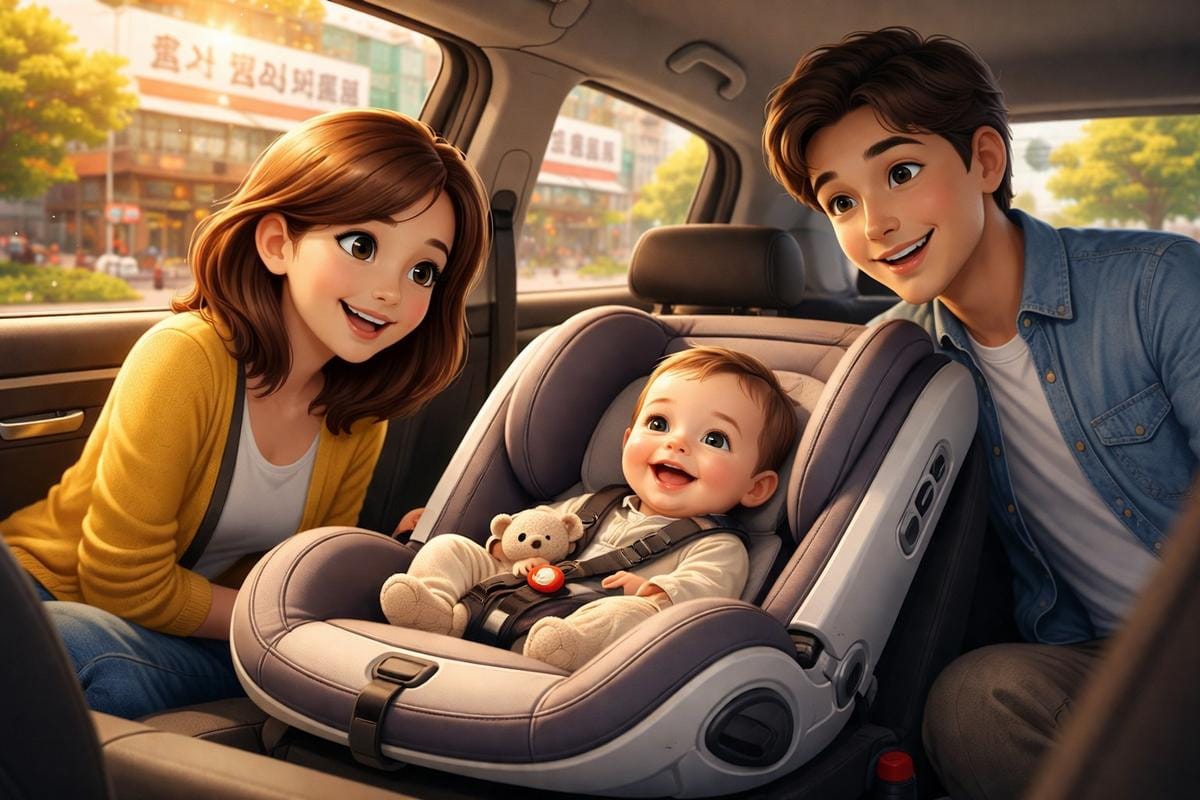
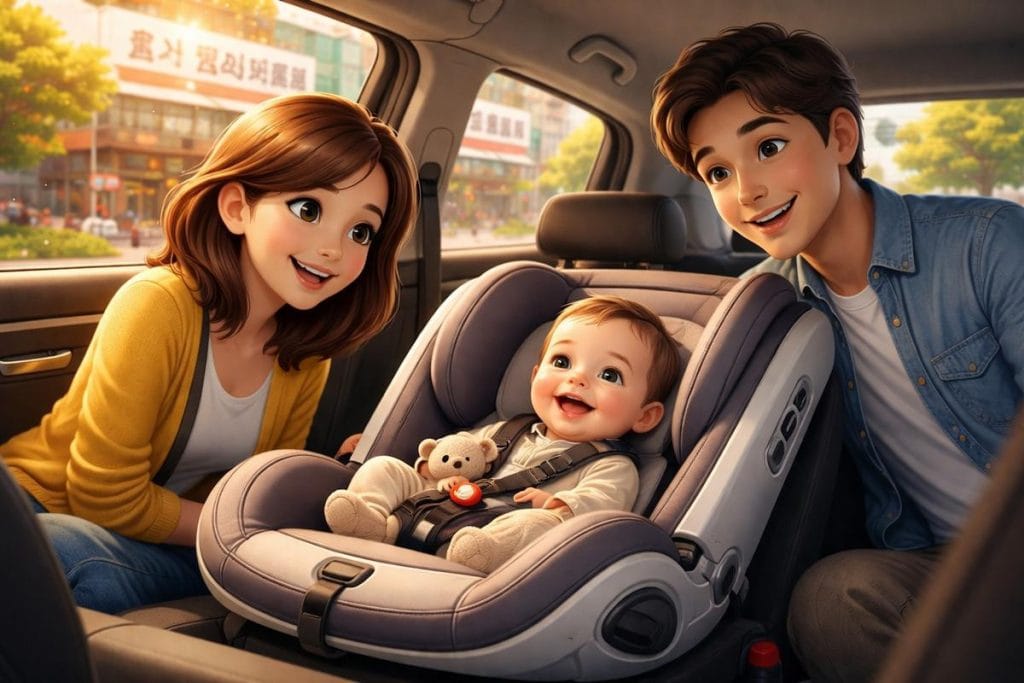
There’s a moment — and every new parent knows exactly the one I’m talking about — where you’re standing in the hospital car park, baby finally in your arms after days of NICU visits and paperwork and emotional exhaustion, and you look at that car seat and think: Did I install this right? Is this even the right seat? Why does my baby look so tiny in here?
That was us. My wife and I had done the research, bought the gear, felt reasonably prepared. And then our daughter arrived early — a premature baby, which meant even more hospital time, more anxiety, and a car seat that suddenly looked comically oversized for the little human we were trying to buckle in. This post is everything I wish someone had told me before that drive home.
Why We Spent the Most on Car Seats (And Have Zero Regrets)
When we were building our baby gear list, my wife and I made a decision early: car seats and strollers get the real budget. Everything else — the cute nursery decorations, the fancy bottle warmers, the seventeen types of swaddle blankets — those could be compromised on. These two could not.
And look, I get it. When you’re staring down the cost of having a baby in Korea, every line item feels like it’s trying to empty your bank account. But here’s the thing that kept coming back to me from every piece of research I read: a car seat is not baby equipment. It’s crash safety equipment. The physics don’t care how tired you are or how short the drive is.
The stat that genuinely stopped me cold: rear-facing is 500% safer than forward-facing. Not 20% safer. Not twice as safe. Five times. That number has a way of focusing your priorities.
The Premature Baby Problem Nobody Warned Us About
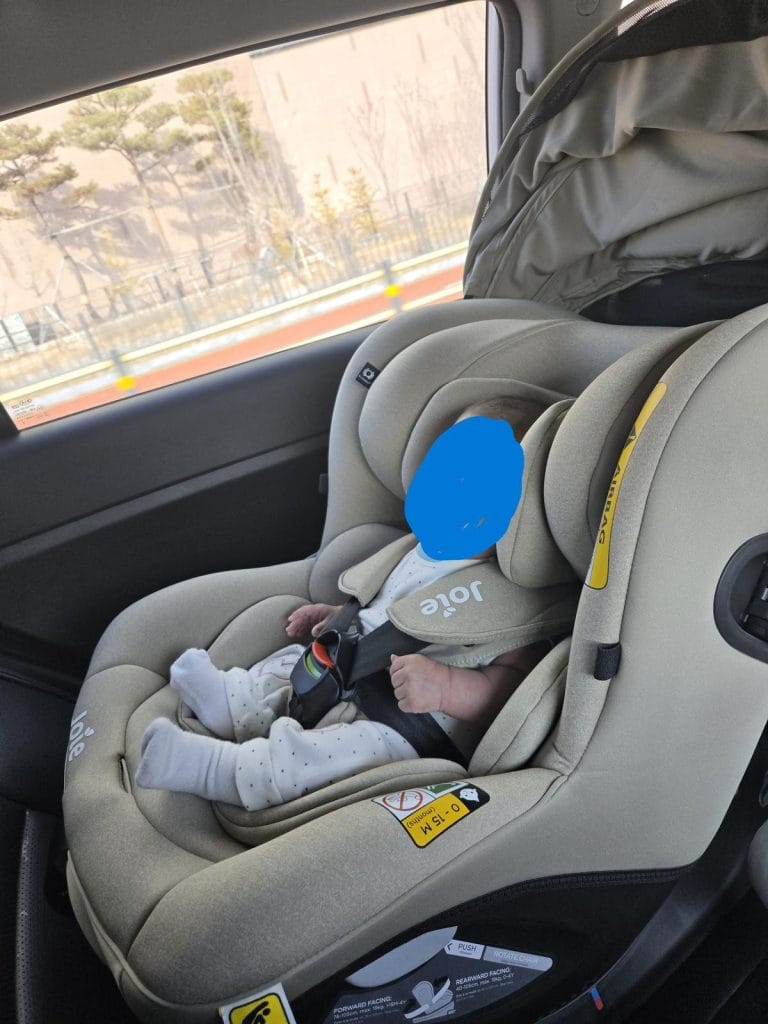
Here’s something the parenting blogs don’t really prepare you for when your baby arrives early: standard newborn car seat guides assume a standard newborn. Our daughter was small. Very small. And when the nurses helped us get ready for discharge, I stuffed towels along the sides of the basket seat to stop him from moving around — because the straps, even at their tightest setting, still left gaps.
One thing I learned fast: the outfit matters more than you think. We dressed her in a split-leg onesie — the kind where the legs open separately — so the harness straps could actually pass between her legs properly and secure her. A big swaddle blanket wrapped around the outside sounds cozy, but it means the belt can’t grip the body properly. In a crash, that blanket compresses instantly, and suddenly you have a harness with inches of slack. Not acceptable.
I noticed the nurses at discharge weren’t being particularly strict about this. They helped us get her in, but nobody was doing a formal harness check. That responsibility is entirely on you as the parent. Do your homework before you get to that moment, because you won’t be in a headspace to learn it on the spot.
- Quick tip: Dress your newborn in a split-leg outfit (romper or “우주복” style) for car rides.
- Avoid thick winter coats inside the harness — they compress in a crash.
- Blankets go over the harness, never under.
Understanding the Three Car Seat Stages (In Plain English)
Let me break down what you’re actually looking at when you walk into a baby store and see twenty different seats all claiming to be “the best.”
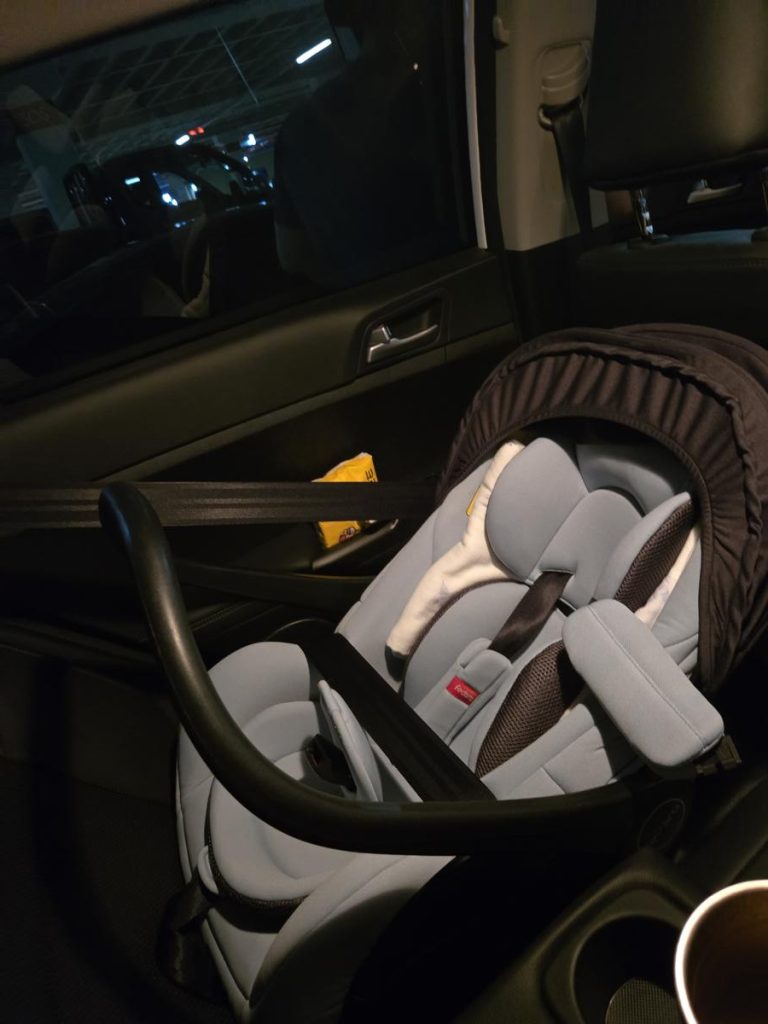
Stage 1: The Basket Seat (바구니형) — Birth to ~18 Months
This is the one designed specifically for newborns. The near-horizontal angle it sits at is not just for comfort — it’s to protect an infant’s airway. A newborn’s head is proportionally enormous and their neck muscles are basically non-existent. If a seat is too upright, the head tips forward and can compress the airway. The basket seat solves this.
Key things to know:
- Rear-facing only. Always. Non-negotiable.
- The handle on top is not just for carrying — when installed in the car, it acts as a shock absorption device.
- Fold it toward the back of the seat after installation, not up or forward.
- I didn’t know this at first and it genuinely matters.
- Works for babies 40–87 cm and up to 13 kg (roughly 0–18 months).
- Can often connect to a compatible stroller as a travel system.
We actually got our basket seat from a friend. I want to be upfront about that — and also flag the risk: second-hand car seats are a calculated gamble. The plastic and foam degrade over time (6–8 year lifespan from manufacture date), and invisible micro-fractures from even a minor fender-bender can compromise the seat entirely. We knew our friend’s seat history perfectly, which is the only reason we used it. If you can’t verify the history 100%, buy new.
Once the car seat is sorted, don’t overlook the car itself — here’s how to handle basic car maintenance in Korea, including a dead-simple tire tread check using a 100-won coin.
Before you get to the car seat decision, you may be navigating something more urgent — our guide to surviving a premature birth and NICU stay in Korea as a foreign family covers what happens before you ever reach the parking garage.
Stage 2: Convertible / Rotating Seat — ~6 Months to Age 4–5
This is where we put our real investment. We bought a 360-degree rotating convertible seat, and honestly, it’s been one of the best practical decisions we made. The rotation feature sounds like a luxury but it’s genuinely functional: instead of contorting your body to lower a baby into a fixed seat, you rotate the seat toward the door, buckle the baby in at a comfortable angle, then rotate back. At 3am. In winter. With a crying infant. You will thank yourself.
What to look for:
- Rear-facing capability until at least 105 cm (many parents switch to forward-facing way too early — keep them rear-facing as long as the seat allows)
- 360° rotation for easier loading/unloading
- “Inner seat” inserts for newborn-to-toddler fit adjustment
- ISOFIX compatible (standard in Korean cars made after 2010)
Certification reality check:
| Certification | What It Means |
|---|---|
| KC (Korea) | Minimum legal requirement. Based on older R44 standards. |
| European R129 (i-Size) | Current gold standard. Includes side-impact testing. Height-based (safer than weight-based). |
| ADAC (Germany) | Independent testing at higher speeds. Lower score = better (1.8 > 2.5) |
| Consumer Reports / BabyGearLab (US) | Higher score = better. 6.0+ considered safe. |
Don’t just check for the KC sticker. It’s the floor, not the ceiling.
Stage 3: Junior / Booster Seat — Age 4 to ~12
This is where most people think they’re done and let their kid ride without a seat. Korean law says age 6. Safety experts say 145 cm or 36 kg — which is typically age 10–12. The adult seatbelt is engineered for someone over 140 cm. Below that height, it crosses the neck instead of the shoulder. The term researchers use for what can happen in a crash is “internal decapitation.” That phrase alone is enough for me. High-back boosters are strongly preferred over backless ones for younger children — they provide side-impact protection that backless versions simply can’t offer.
The Car Seat vs. Travel System Debate
At the hospital, I watched another family leave with this gorgeous stroller-car-seat travel system — the kind where the basket seat just clicks directly onto the stroller frame. No lifting, no transferring a sleeping baby, no wake-ups. I won’t lie: I was a little envious.
But when I looked at the prices, I understood why we’d gone the route we did. Those integrated travel systems are expensive. And here’s the honest trade-off:
Travel System (Integrated Basket + Stroller):
- ✅ Baby never needs to be moved when transitioning car → stroller
- ✅ Sleeping baby stays sleeping
- ✅ Particularly valuable if your baby has medical needs and frequent hospital visits
- ❌ Expensive
- ❌ The basket seat has a short lifespan (outgrown by ~13 kg)
- ❌ Heavier to carry as baby grows
Separate Car Seat + Stroller:
- ✅ More flexibility in choosing the best seat and best stroller independently
- ✅ Generally more cost-effective
- ✅ Our 360° rotating convertible seat works long-term
- ❌ More disruption when transferring sleeping babies
My honest take: if your baby is premature or has health conditions requiring frequent hospital visits in the first months, the travel system is worth considering seriously. The convenience of not disturbing a fragile or unwell newborn is real. For healthy full-term babies, a quality separate convertible seat with good rotation is probably the smarter long-term investment.
Installation: The Things That Actually Trip People Up
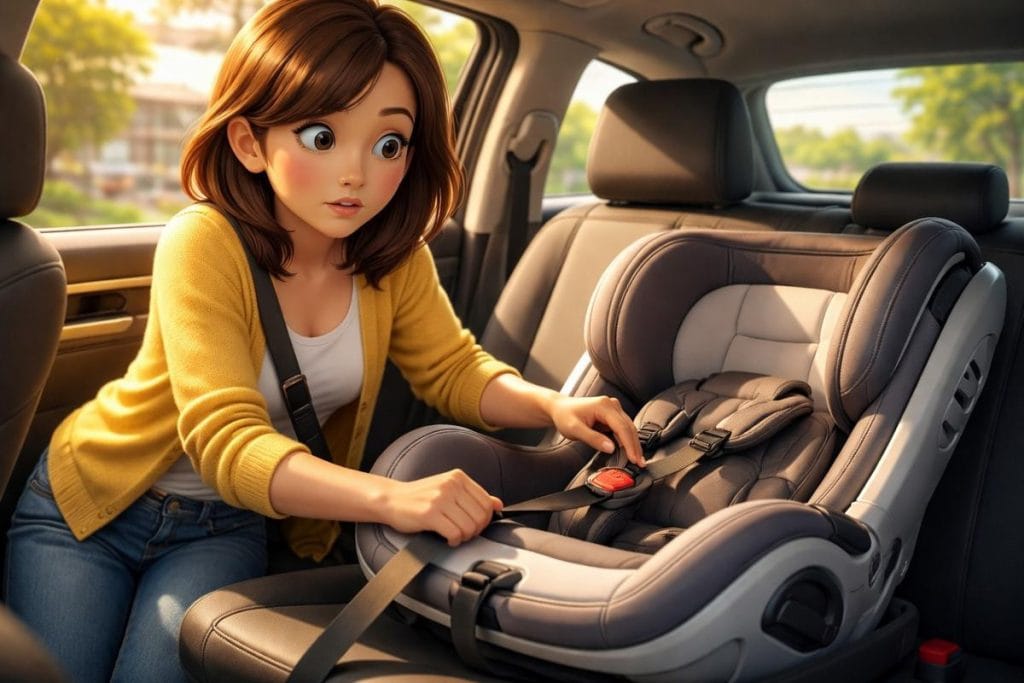
My wife and I spent an embarrassing amount of time with the manual before we felt confident. Here’s what I wish had been on a single clear list:
- ISOFIX vs. Seatbelt: ISOFIX uses rigid metal anchors built into your car’s frame — mandatory in Korean cars made after 2010. It’s significantly more reliable than seatbelt installation because it removes human error from the equation. Use seatbelt installation only if your car predates ISOFIX or if the combined seat + child weight exceeds 33 kg (the ISOFIX anchor limit).
- Placement in the Car:
- Statistically safest: Middle seat, second row
- Good alternative: Directly behind the driver
- Never: Front passenger seat with an active airbag. An airbag deploying into a rear-facing seat can be fatal.
- The Harness Check: Straps pass between baby’s legs and over the shoulders — not over a thick coat, not over a swaddle blanket Do the pinch test: after buckling, try to pinch the shoulder webbing. If you can pinch slack, it’s too loose. Chest clip (if present, US-style) sits at armpit level — not at the stomach, not at the neck
- The Basket Seat Handle: Fold it toward the back of the seat after installation. It functions as a crumple zone in a crash and needs to be positioned correctly to do its job.
The “Just This Once” Trap
I want to address something directly, because I know it’s tempting: holding the baby in your lap for a short trip. Maybe the baby is crying and you just want to comfort them. Maybe it’s five minutes down the road. Maybe you’re exhausted and the whole car seat routine feels like too much at 2am.
Here’s the physics of it: at 60 km/h, a sudden stop creates forces many times the baby’s body weight. Holding your baby in your arms in that scenario doesn’t protect them — it makes you a danger to them. You become a surface they impact with your full combined momentum, or they fly forward entirely. It’s not being dramatic to say this. It’s just physics. The rule in our house: no exceptions. The baby cries in the car seat? The baby cries in the car seat. We don’t negotiate this one.
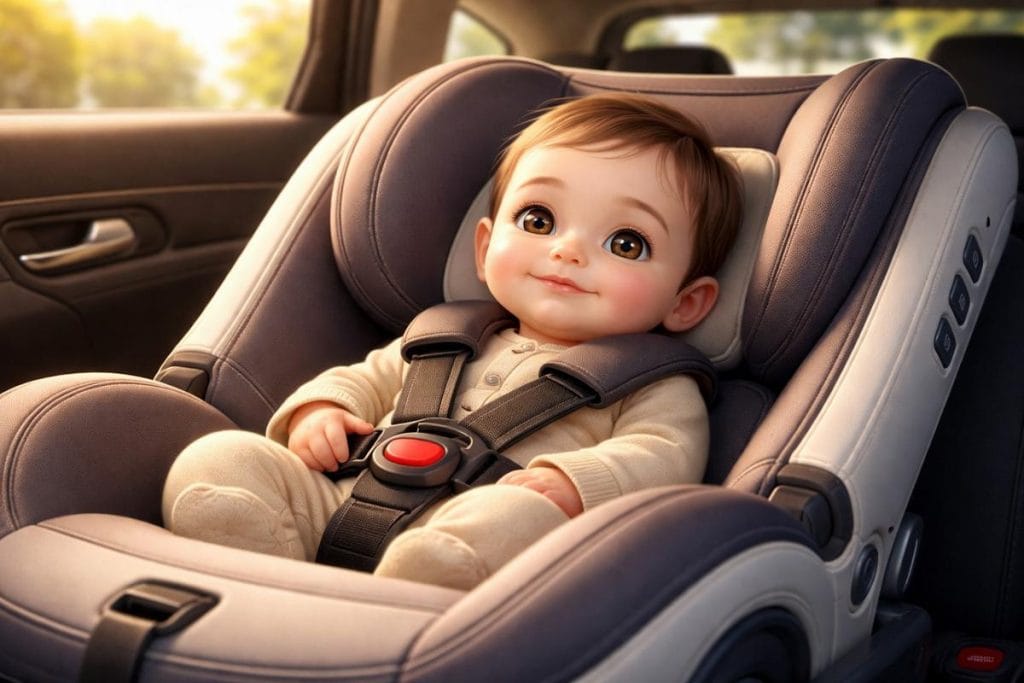
Quick Reference: The Essentials at a Glance
Korean Law vs. Safety Reality:
| Category | Standard |
|---|---|
| Korean Law | Mandatory under age 6 (₩60,000 fine) |
| Safety Expert Recommendation | Until 140–145 cm / 36 kg (age 10–12) |
| Global Standard | Most countries: until 145 cm or age 12 |
The Three Seats You’ll Need:
| Stage | Seat Type | Size Range | Age Range |
|---|---|---|---|
| 1 | Basket (Infant) | 40–87 cm, up to 13 kg | 0–18 months |
| 2 | Convertible (360°) | 40–105 cm, up to 18 kg | 6 months–age 4–5 |
| 3 | Junior/Booster | 90–150 cm, 15–36 kg | Age 4–12 |
Frequently Asked Questions
Q: Can I use a second-hand car seat? Only if you can verify 100% of its history — ideally from a family member you trust completely. Any seat involved in even a minor collision may have invisible structural damage. Manufacture date matters too: seats expire after 6–8 years due to material degradation.
Q: When can I switch from rear-facing to forward-facing? Not before 15 months (R129 standard). The American Academy of Pediatrics says 24 months. Keep them rear-facing until they physically outgrow the seat’s limit. Rear-facing is 5 times safer than forward-facing.
Q: Do I need to buy a travel system (stroller + basket seat combo)? Not necessarily. If your baby is healthy and full-term, a quality separate convertible seat is often the better long-term investment. If your baby has health issues or premature birth requiring frequent hospital visits in early months, the travel system’s convenience becomes more valuable.
Q: My baby hates the car seat. What do I do? Cry it out — in the seat. I know it’s hard. But there is no safe alternative to the car seat while the vehicle is moving. Check that the harness isn’t too tight, the seat angle is comfortable for their age, and the temperature isn’t too warm. Beyond that: they’ll adjust.
Q: What certification should I actually look for? KC certification is the legal minimum in Korea. For genuine safety confidence, look for European R129 (i-Size) certification and check independent scores from ADAC (Germany) or Consumer Reports/BabyGearLab (US).
Final Thought: The Investment That Feels Worth It Every Time
There’s a photo we took on that first drive home from the hospital — our tiny premature son, towels wedged carefully around him, rear-facing in the back seat, looking impossibly small. My wife couldn’t take her eyes off on our daughter the whole drive. 1 hour that felt like four hours.
We haven’t missed a single car seat buckle since. Not once. It’s inconvenient sometimes. It adds minutes to every trip. The baby has cried in the seat more than I’d like to admit. But the math is simple: the one time something goes wrong is the only time that matters. Buy the good seat. Install it right. Use it every single time. That’s it. That’s the whole post.
Getting the gear right is only part of the equation — once your baby is settled and growing, the next practical challenge is sourcing fresh beef baby food at a Korean butcher shop.
Found this helpful? Share it with a parent-to-be with your parent friends — especially if you’re navigating car seat shopping as a foreigner in Korea. I’ve been there, and the label-reading alone is a sport.
Arriving in Korea soon?
Don’t navigate your first day alone
I meet you at Incheon or Gimpo airport and guide you through everything — SIM card, T-money, transport, and getting to your accommodation. Personal support from $180.
Book arrival support →