A friend of my wife’s came over to watch our daughter for the afternoon, and suddenly we had something rare — time to ourselves. We didn’t overthink it. My wife had been craving 닭갈비 (dakgalbi — spicy stir-fried chicken), so I went hunting on Naver Café for a proper spot and landed on a place I’d never noticed before despite it sitting right there in Bongdam: Hwaseong traditional dakgalbi at 전통춘천닭갈비, a restaurant that’s been feeding locals for at least 40 years. If you’ve been discovering local gems in Bongdam, this one deserves a spot on your list.
📌 Quick Summary:
전통춘천닭갈비 in Bongdam, Hwaseong is a long-running local favourite known for iron-plate dakgalbi, two spice levels (mild or spicy), and a self-refill 반찬 (banchan — side dishes) bar. We ordered cheese dakgalbi for two, makguksu, and a drink, and paid just over 40,000 KRW. Dedicated parking, floor-sitting and table seating both available. A solid, unfussy date spot for expat couples.
The Date Plan: A Sunday Escape in Bongdam
Weekends with a newborn don’t often come with free windows. So when the opportunity arrived, we treated it seriously. No Seoul, no crowds, no hour-long commute each way. We stayed local — and honestly? That made it better. Hwaseong gets overlooked when people talk about good Korean food outside the capital, but Hwaseong City has a surprisingly rich food scene for a city of its size. According to KOSIS, Hwaseong-si had over 81,000 foreign residents as of 2022, which means the local restaurant scene has been quietly serving an international crowd for years — even if most spots aren’t catering to tourists.
We arrived around 2 pm on a Sunday — comfortably past the lunch rush. Three or four groups were already inside, the pace was relaxed, and there was no wait. That timing felt like a small victory.
The Restaurant: 40 Years on the Same Corner
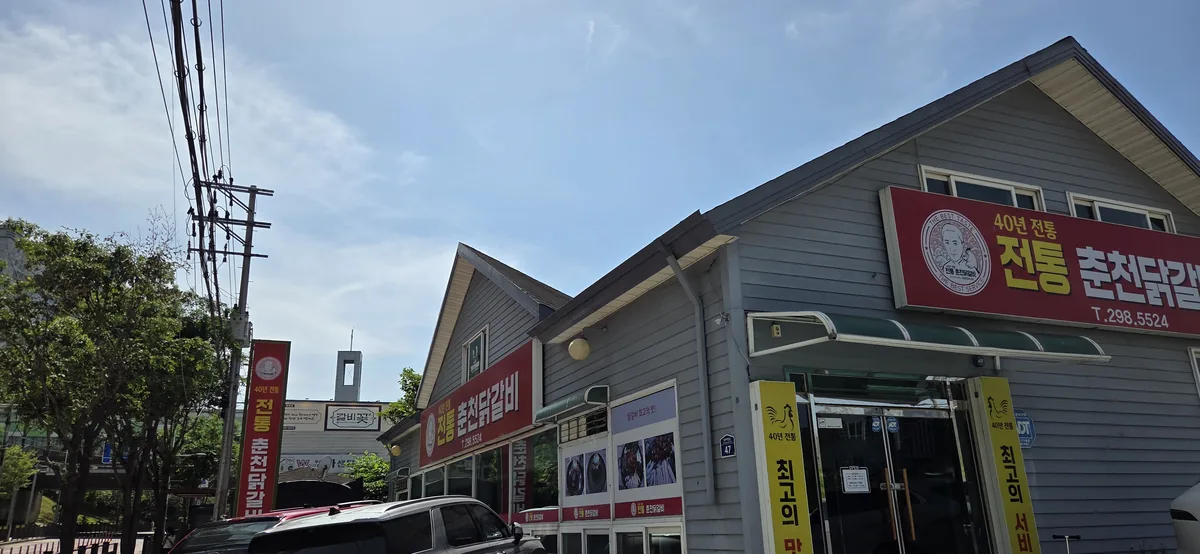
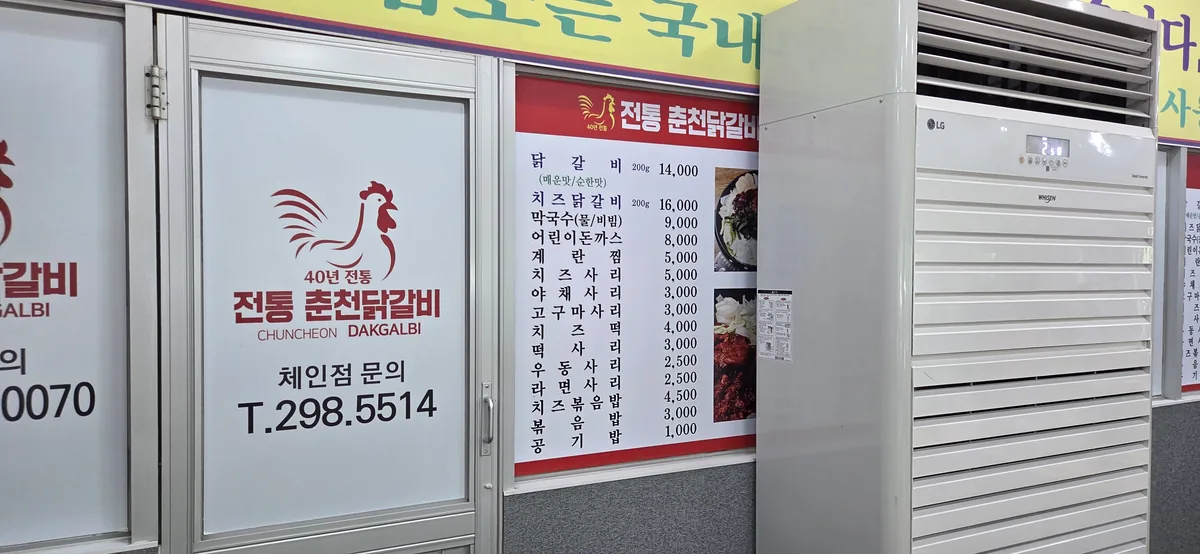
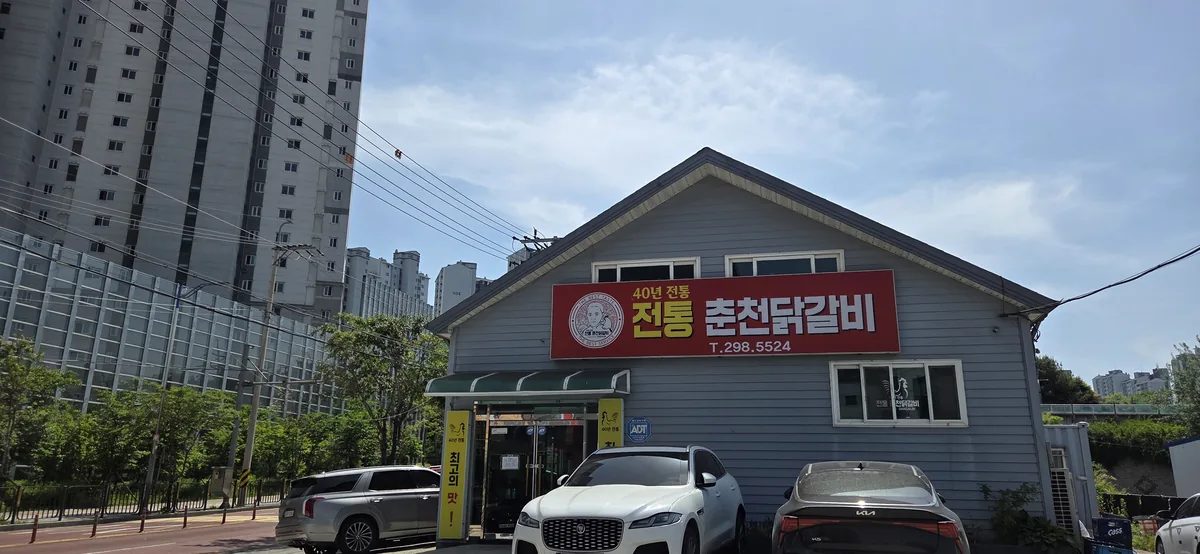
You can see the sign from the road. Big, weathered, and confident — it reads 40년 전통 춘천닭갈비. My wife spotted it before I even turned into the car park. The sign looks old enough that the “40 years” claim was probably accurate when they painted it, which would put the place closer to 45 or 50 years old now. Either way, longevity like that in the Korean restaurant industry doesn’t come from luck.
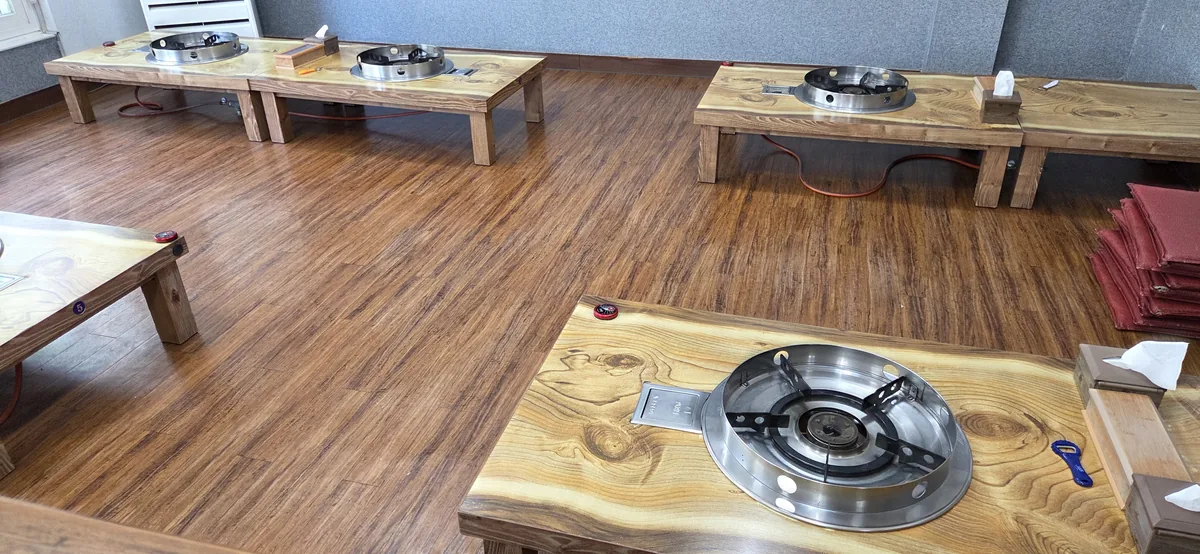
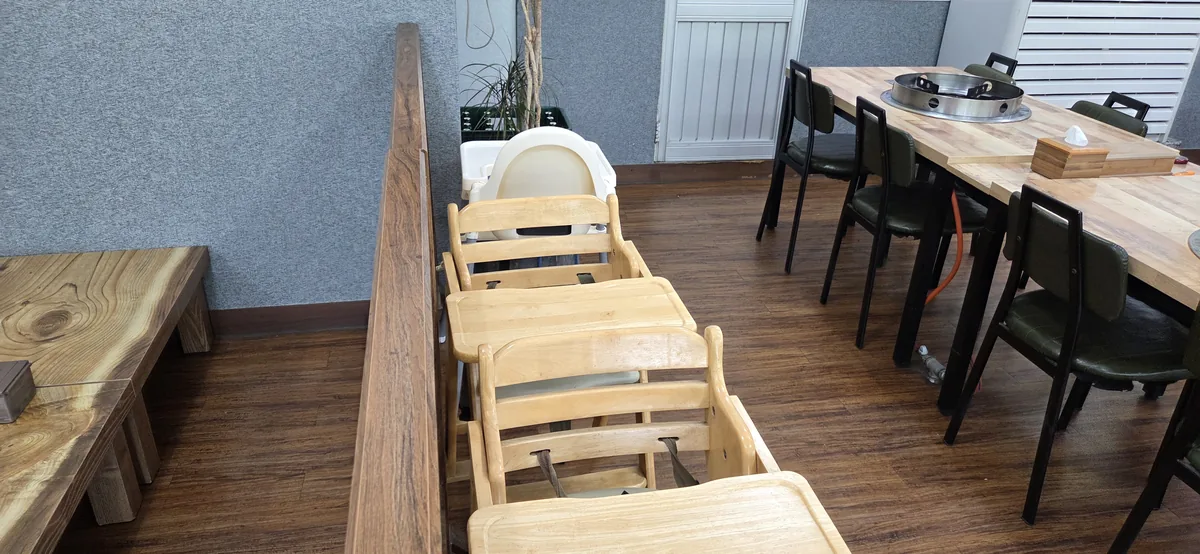
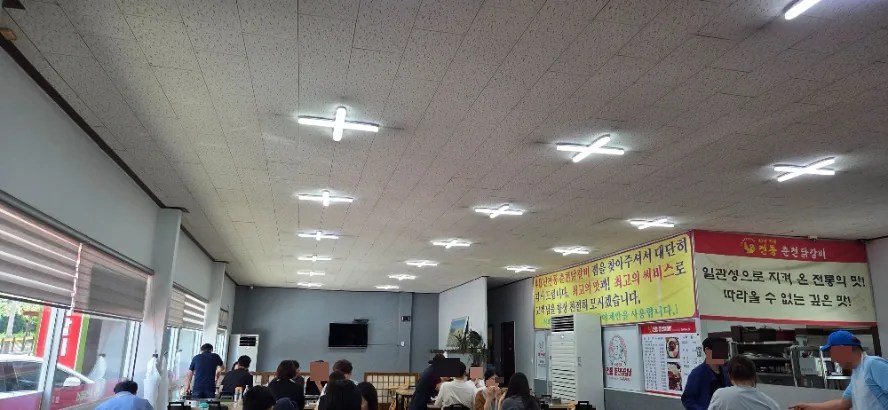
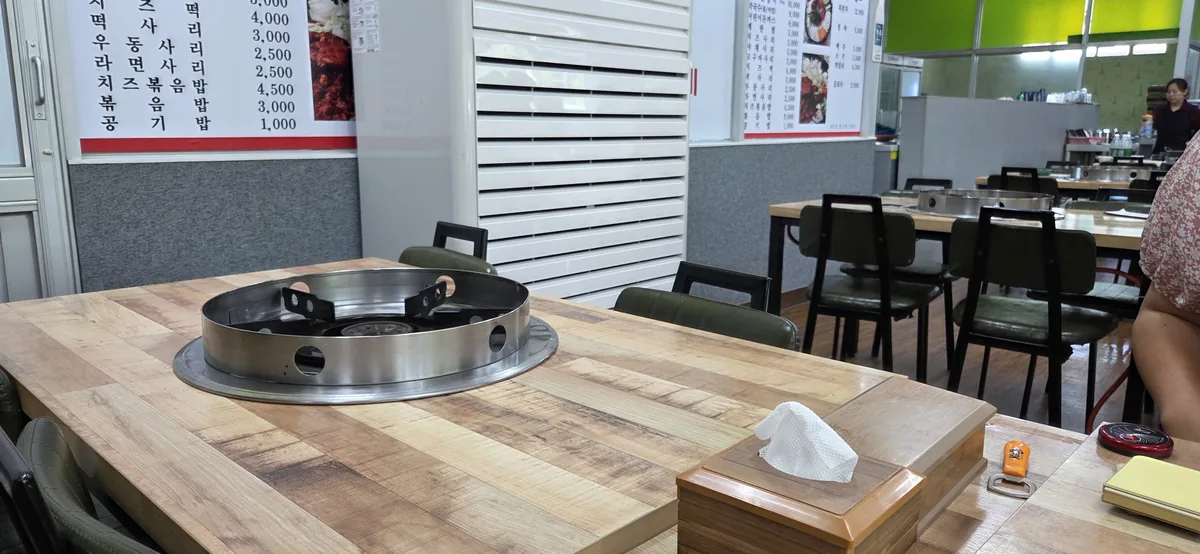
Inside, it’s spacious in a way that doesn’t feel cavernous. Standard tables and chairs dominate the front section. Walk further in and you hit the 좌식 (jwasik — floor-sitting) tables — the traditional ondol-style setup, low to the ground, good for bigger groups or anyone who wants that distinctly Korean dining feel. High chairs are available if you’re bringing kids along — something we noticed because we’re very much in that phase of life.
The dedicated parking lot is generous. Even on a Sunday we had no trouble pulling in. For expats who drive in Hwaseong, that’s not always a given at smaller local spots — here, it’s genuinely easy. If you’ve been exploring Bongdam’s shopping scene, this restaurant is close enough to combine into one afternoon.
💡 Pro Tip:
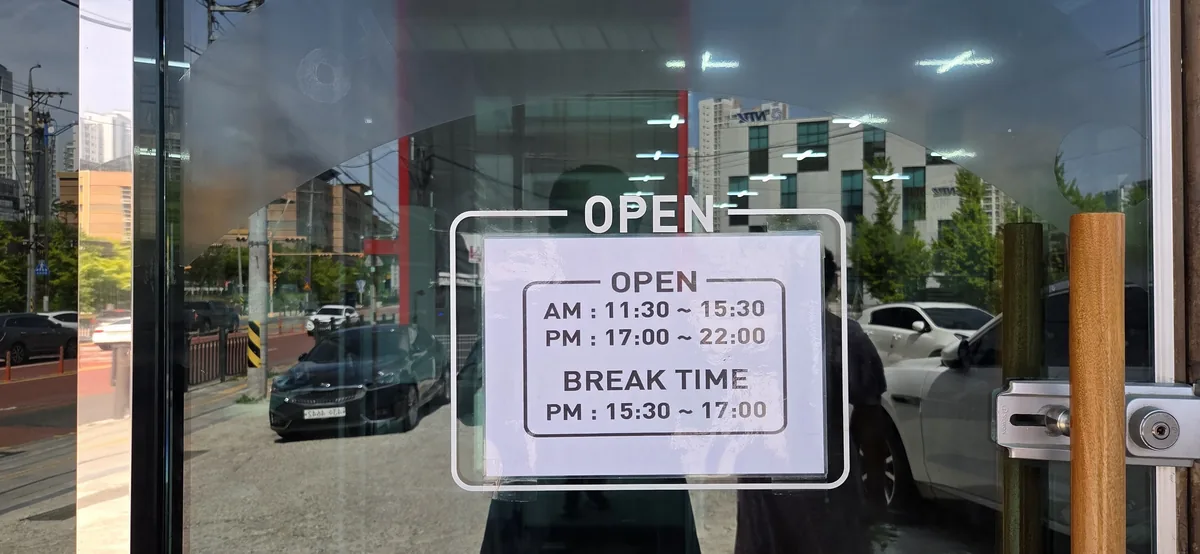
Avoid arriving between 15:30 and 17:00 — that’s the daily break time. The restaurant opens again at 17:00 for dinner service. Arriving just after the lunch rush (around 14:00–15:00) means a quieter room and easy parking.
📍 전통춘천닭갈비
Address: 47 Donghwayeokmal-gil, Bongdam-eup, Hwaseong-si, Gyeonggi-do, South Korea
What We Ordered: Mild Cheese Dakgalbi and Makguksu
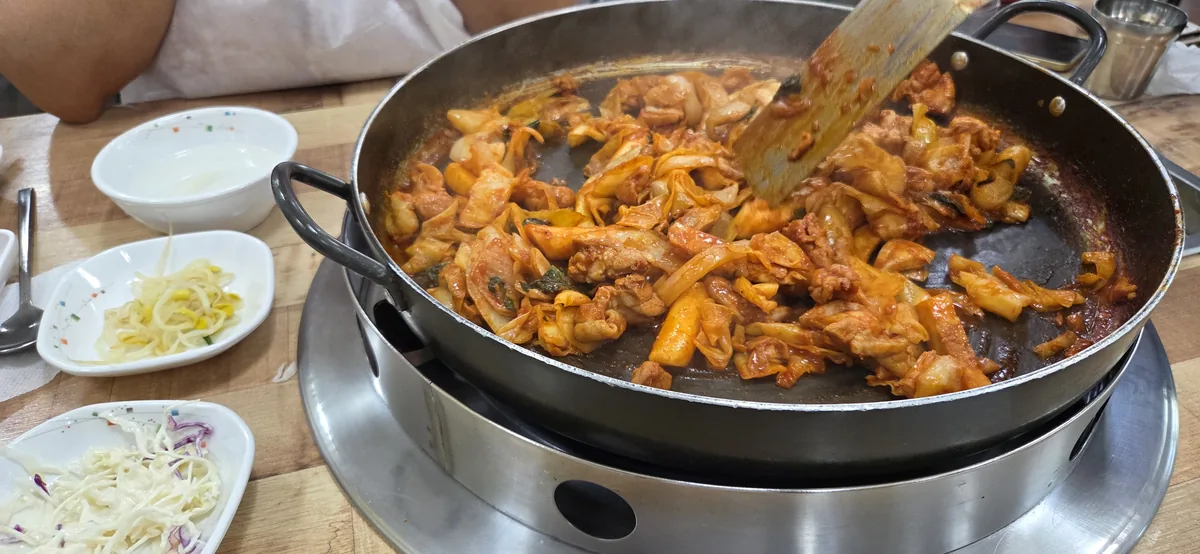
The menu keeps things focused. Two spice levels: 순한맛 (sunhan mat — mild) or 매운맛 (maeun mat — spicy). My wife struggles with heavy heat, so we went mild. The server brought out partially pre-cooked dakgalbi on the iron plate, which is how it usually works — they start the heat at the table, let it come together in front of you, then lay a metal tray over the cheese to trap the steam until it melts into something properly indulgent. It’s a good bit of theatre as much as it is a cooking method.
My wife’s verdict on the mild? A little flat. Not bad — just not as exciting as she’d hoped. Turns out 순한맛 here is genuinely very mild, which is perfect if spice is a concern, but might leave seasoned Korean food lovers wanting more. We’ll go 매운맛 on the next visit and see how she handles it. The Korea Tourism Organization positions dakgalbi as one of the country’s definitive regional dishes — originally from Chuncheon — and the spice level is very much part of its identity, so the full version is worth attempting at least once.
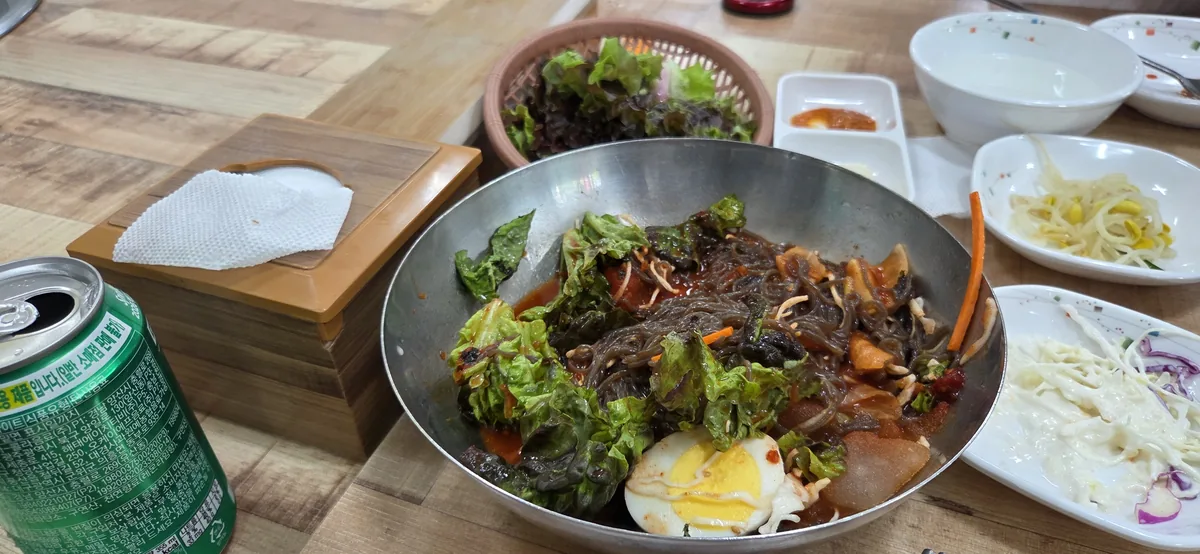
We also ordered 비빔 막국수 (bibim makguksu — spicy buckwheat noodles). We asked for the bibim (mixed/spicy) version; what arrived was 물 막국수 (mul makguksu — cold broth noodles). We ate it anyway. Both versions are delicious — the cold broth style actually worked well as a palate cleanser between bites of dakgalbi.
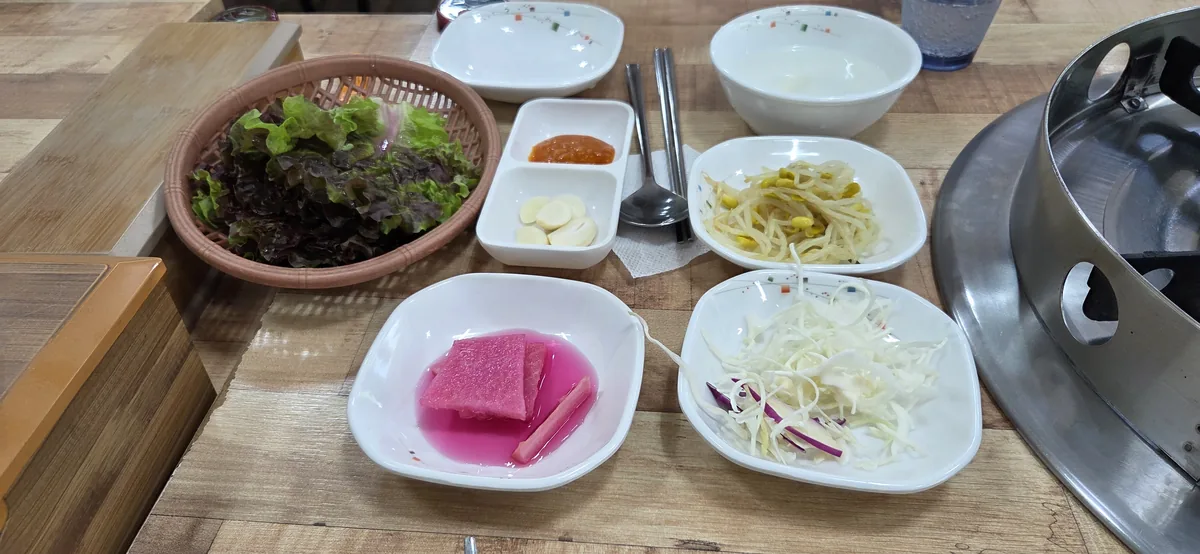
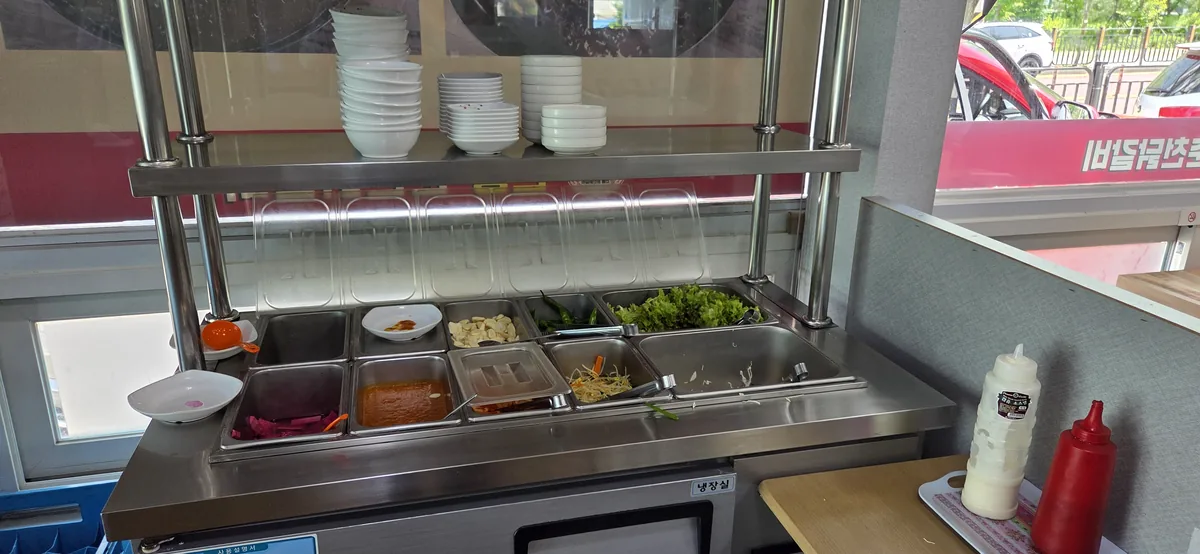
The 반찬 (banchan) lineup was solid: 상추 (lettuce), 콩나물 (bean sprouts), pickled radish, cabbage salad, and 동치미 (dongchimi — radish water kimchi). The dongchimi broth was bracingly cold — it reminded me of taking my mother-in-law to a similar restaurant when she visited from South Africa. She couldn’t stop drinking the broth. It pairs with dakgalbi in a way that just makes sense. My wife said the bean sprouts were a little underseasoned. She politely mentioned she prefers mine. I won’t argue with that.
All banchan refillable at the self-service bar — no need to flag anyone down. Small thing, but it adds to the relaxed feel of the place.
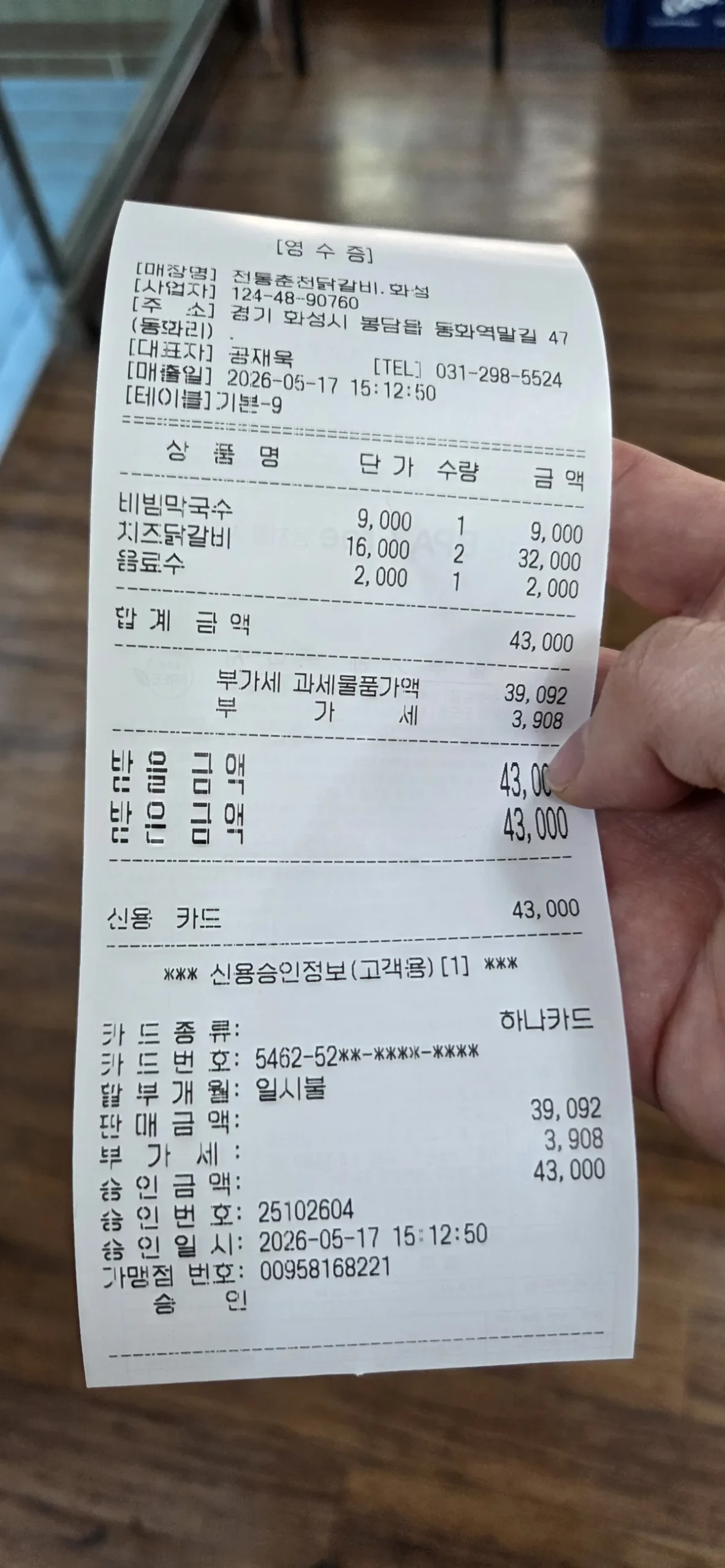
Unwritten rule of dakgalbi: you’re supposed to finish with 볶음밥 (bokkeum bap — fried rice) made from the leftover sauce on the plate. We were too full. Between the cheese dakgalbi for two, the noodles, and the banchan, there was simply no room left. We paid just over 40,000 KRW for the two of us. That’s roughly in line with what a standard Korean dinner out costs these days, and for a meal of that quality and quantity, it felt fair.
Expat Couples Korean Dining: What to Expect Here
One common misconception about local Korean restaurants outside Seoul is that they’re harder to navigate without fluent Korean. This one is no different from most in that the menu is Korean-only and no English staff should be expected — but the ordering process is simple enough that pointing and holding up fingers for portions works perfectly well. Two fingers for 2인분 (2 portions), one finger for the makguksu, and a gesture toward the drinks fridge if there is one.
What makes this spot work particularly well for expat couples is the combination of factors that are harder to find together: genuine age and reputation, comfortable parking, flexible seating, and a spice level option that removes the guesswork for partners who aren’t yet fully calibrated to Korean heat. It’s not a tourist restaurant. No English signage, no photo-heavy laminated menus. That’s the point. According to Gyeonggi Tourism, the province is actively developing its culinary tourism offerings — but places like this exist entirely outside that infrastructure, which is what makes them worth seeking out.
A proper local 맛집 (matjip — great food spot) in Hwaseong, recommended through Naver Café by actual locals, with 40-plus years of reputation backing it up. That’s a harder thing to stumble upon than it looks.
❓ Frequently Asked Questions
What spice levels are available at 전통춘천닭갈비?
There are two options: 순한맛 (mild) and 매운맛 (spicy). The mild is genuinely very mild — good for those sensitive to heat, but possibly a little flat for those used to Korean spice levels. If you have any tolerance at all, the spicy version is probably worth the attempt.
Is there parking at this Hwaseong traditional dakgalbi restaurant?
Yes — there is a dedicated parking lot attached to the restaurant with plenty of spaces. Even on a Sunday afternoon we had no trouble parking. Korean restaurant parking availability like this isn’t guaranteed at every local spot, so it’s one of the practical advantages of this location.
How much does a meal for two cost?
Our bill for cheese dakgalbi (2 portions), makguksu, and one drink came to just over 40,000 KRW. Dakgalbi is priced at approximately 14,000 KRW per person, the cheese topping adds 3,000 KRW, and makguksu is around 8,000 KRW. Prices as of May 2026 — always verify on arrival.
What are the opening hours?
The restaurant is open daily from 11:30 to 22:00, with a break time from 15:30 to 17:00. Avoid showing up mid-afternoon if you want to eat — the doors are closed during that window.
Do they have seating options other than floor-sitting?
Yes. Standard tables with chairs are available toward the front of the restaurant, with high chairs for young children. The floor-sitting 좌식 (jwasik) tables are further inside and suit larger groups or families who want a more traditional experience.


Need Help With Your Expat Life in Korea?
Navigating documents, translations, and embassy appointments with a newborn is a lot. JustAskJin can help you prep documents, handle translations, and take the admin stress off your plate.
Get Help Today