The Pyeongtaek cherry blossom festival caught us by surprise — my daughter slept through the whole thing.
My daughter was asleep in the stroller when the her first day of cafe with her grandparents it was cold. She didn’t notice that spring is around the corner. She’s 9 months old.
She came into the world in summer. Her first 2months were all sealed windows and the particular silence of NICU. And now, suddenly — this. Petals everywhere. The world doing its annual thing, completely indifferent to how momentous it felt to me.
Spring in Korea runs calendar-officially from March to May, but if you’re standing outside in the third week of March, you don’t quite believe it yet. The cold lingers. You’re still reaching for the heavier jacket. It was only in the last few days before our visit that the air shifted — just slightly, just enough — and the maps apps started showing cherry blossom pins across Gyeonggi-do like someone had spilled a bag of confetti over the screen.
Meteorologists are saying 2026’s bloom is running as much as eight days ahead of the historical average. Forsythias are already erupting across Seoul in late March. By the time April arrives, the cherry blossoms won’t be building up to anything — they’ll already be there, peaking, burning bright and fast. If you’re planning to see them, don’t treat this like a leisurely maybe. The window is genuinely shorter this year.
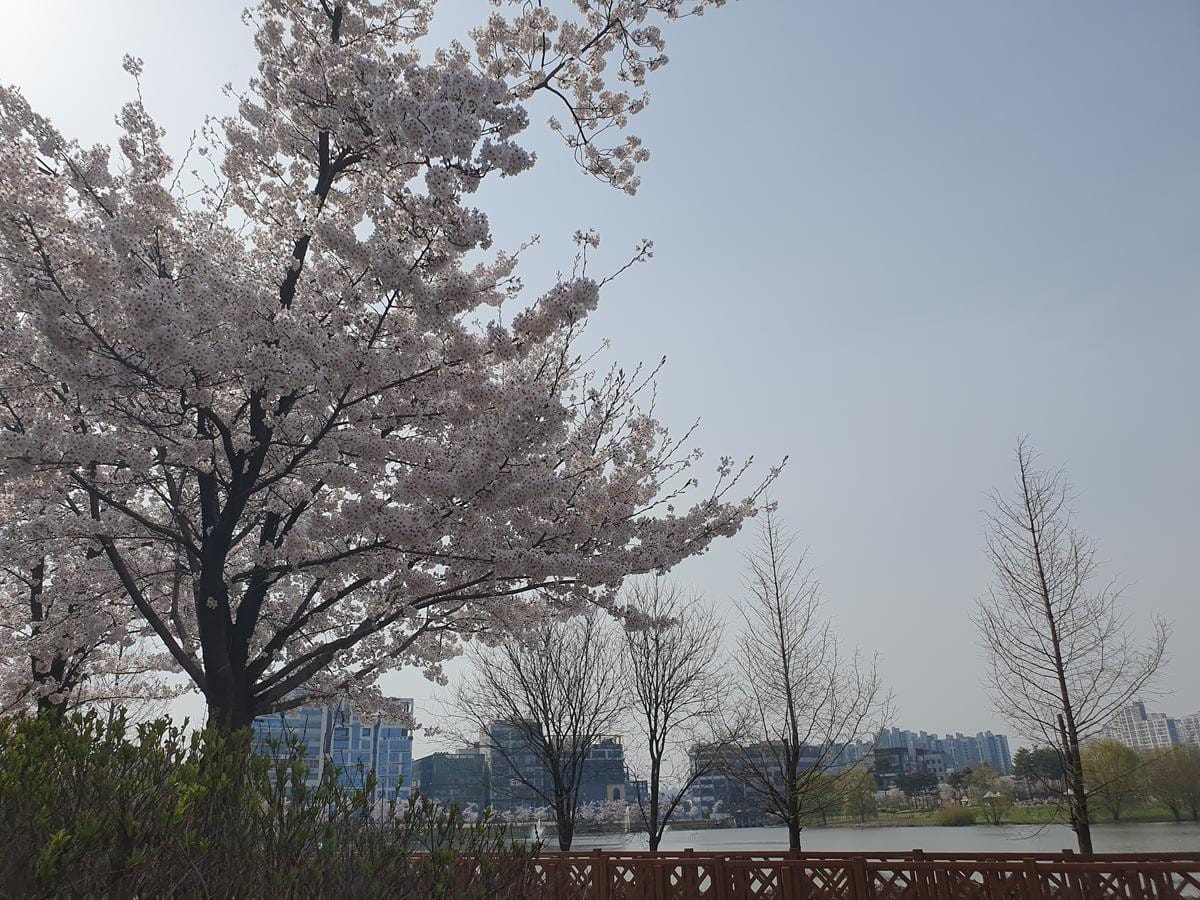
For the greater Seoul and Gyeonggi region, the consensus is that the second week of April — roughly the 8th to 12th — is when the famous spots hit their absolute peak. Yeouido’s King Cherry trees, Seokchon Lake, Seoul Forest. Those are the postcards everyone knows. But there’s a reason I drove south toward Pyeongtaek instead.
Part of it is personal geography. We live in Hwaseong. Driving that direction makes sense. But the other part is that Pyeongtaek University has been running its cherry blossom festival for thirty-one years, and almost nobody outside the region talks about it. It’s one of those genuinely local events that hasn’t been overrun yet. And the trees there are something else.
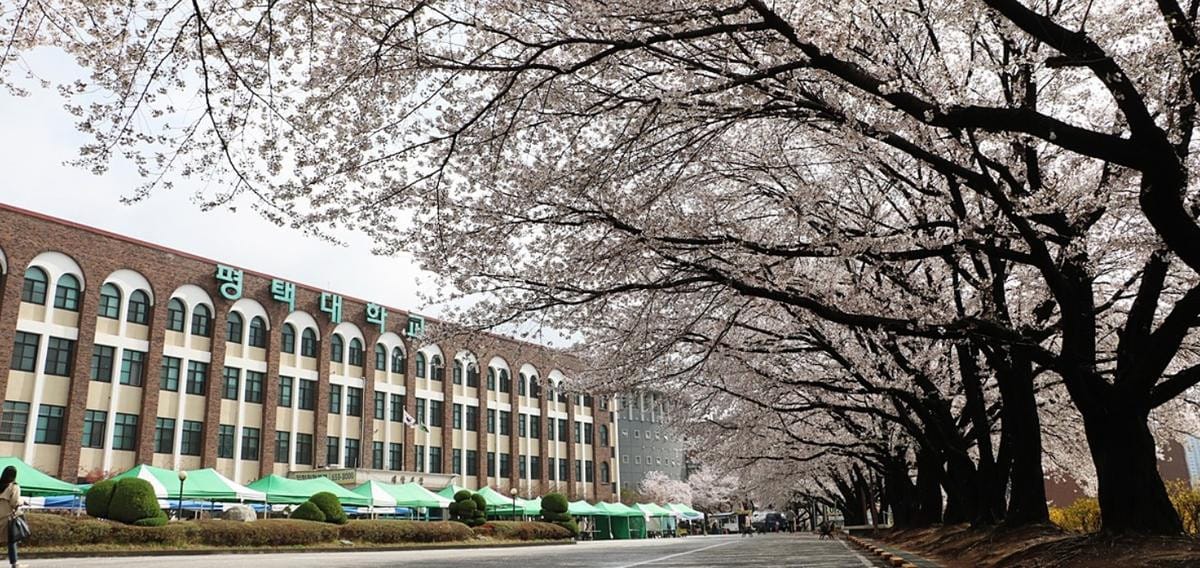
The university sits on the southern end of Gyeonggi Province. The main building has a clock tower, proper stone architecture, and in spring it’s framed so completely by full-bloom cherry trees that it looks almost theatrical — like a set designer got to it first.
Location guide: Pyeongtaek University
Address: 111 Seodong-daero, Pyeongtaek-si, Gyeonggi-do, South Korea
Use your preferred map for directions.
I’ve lived in Japan. I spent real time there, working in construction, wandering parks on weekends. I have good memories of Koganei Park and Showa Kinen Park in Tachikawa, and one especially good memory of an outdoor event I organized there with friends before my wife and I got married.
Japanese cherry blossoms are genuinely beautiful. But Korea’s density surprises you every time. You drive for five minutes here and there’s another full avenue of trees, another street lined so thick that the petals fall across three lanes of traffic like slow pink snow. Korea is not understated about its spring.
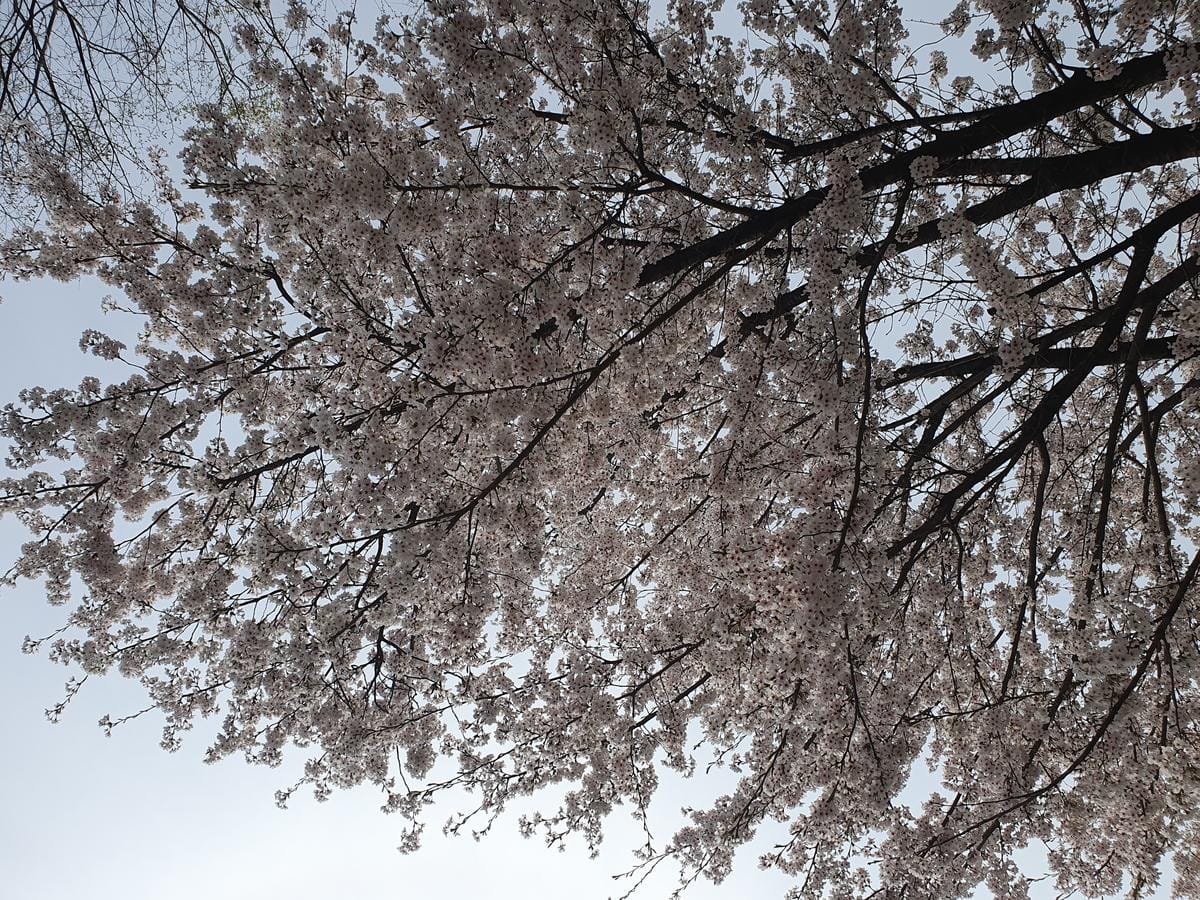
The Pyeongtaek University festival runs across ten days in early April. This year(2026): April 3rd through the 12th. Weekends operate from 10am to 10pm. Weekdays, 6pm to 10pm — which is, honestly, the smarter visit if you can manage it.
Here’s what the festival actually looks like on the ground. The campus opens its doors to the community, which means locals, families, students wandering out of lecture halls with no intention of returning. Food trucks line the main area — yakisoba, pad thai, beef steak, kebabs, Korean street staples like eomuk and sundae and dak-kkochi. Card payments are accepted at most stalls. Parking is free in a temporary lot they set up specifically for festival visitors, though on weekends you’ll circle a few times before finding a spot. There are buildings open with proper indoor bathrooms, which matters more than it sounds when you’re with a baby. There’s a goldfish scooping game. Shooting booths. A genuine festival feeling, not manufactured — earned through three decades of showing up.
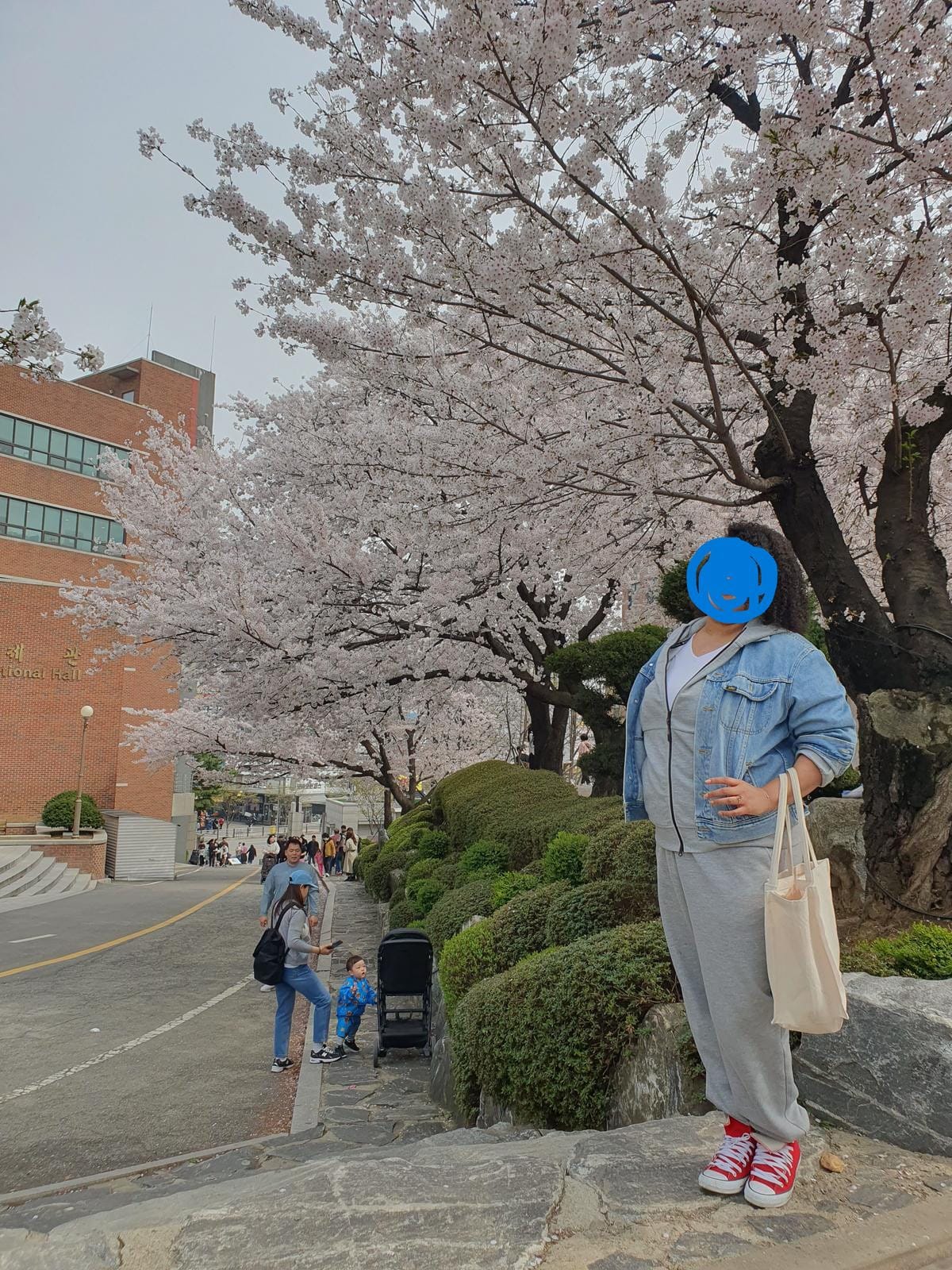
I bought fried squid and shrimp from a truck near the entrance. Slightly overpriced, slightly too much of it — we couldn’t finish what we ordered. Next time I’d bring a lunchbox and sit on the grass under the trees. There’s space for exactly that kind of afternoon if you come prepared. The atmosphere rewards slowness.
But here’s the thing I didn’t fully expect: the night.
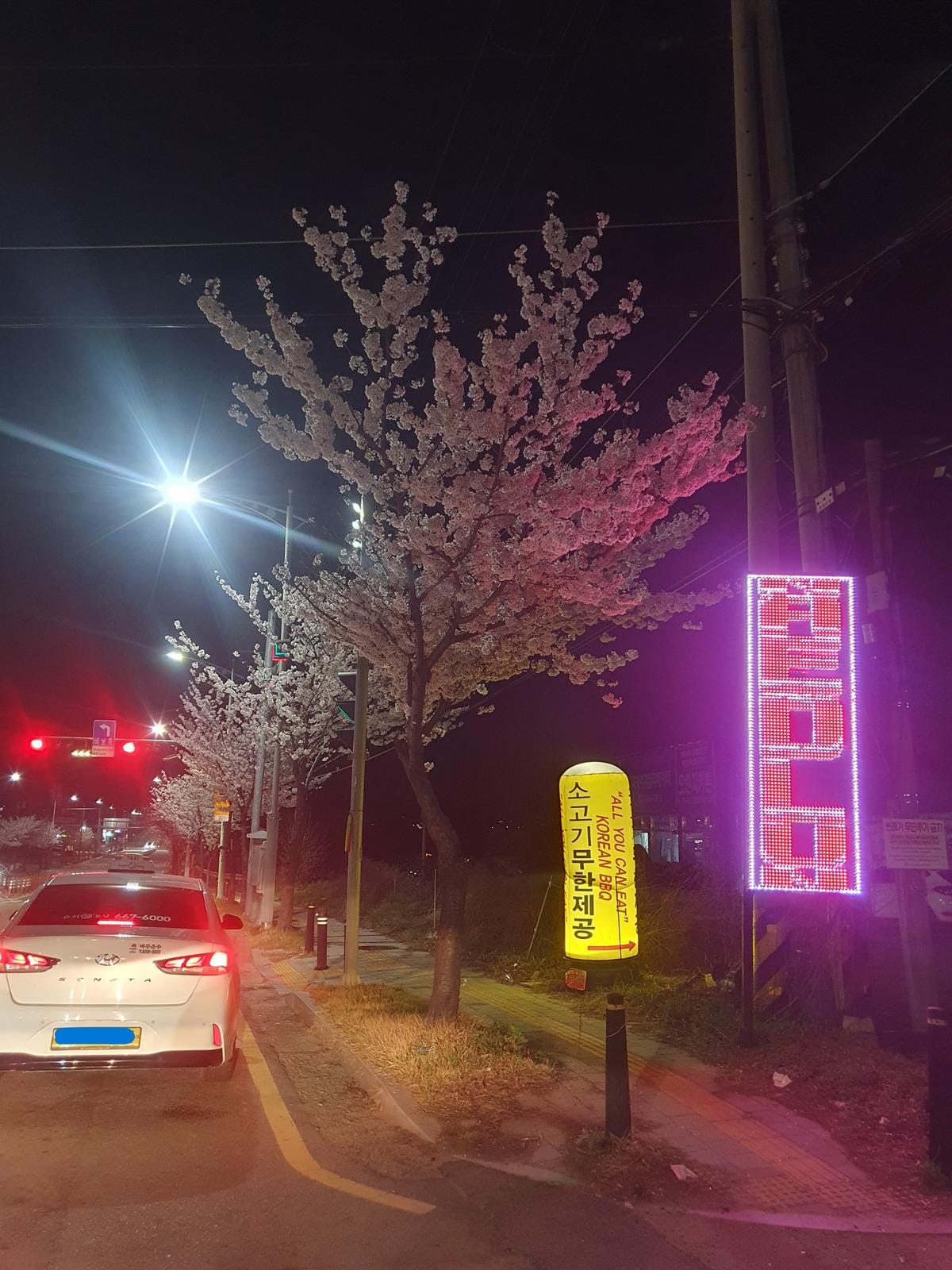
We stayed into the evening. The driveway through campus is lit with streetlamps, and when the light catches the white blossoms at a certain angle, they don’t just glow — they seem to float. The branches disappear in the dark and you’re left with these luminous clusters of petals hanging in the air. The temperature drops enough that you need a light jacket, and the petals fall slower somehow, or maybe you just notice them more. It’s a different thing entirely from the daytime festival. More quiet. More felt.
The weekday evening hours — 6 to 10pm — exist precisely for this. If you’re working during the day and think you’ve missed your chance, you haven’t.
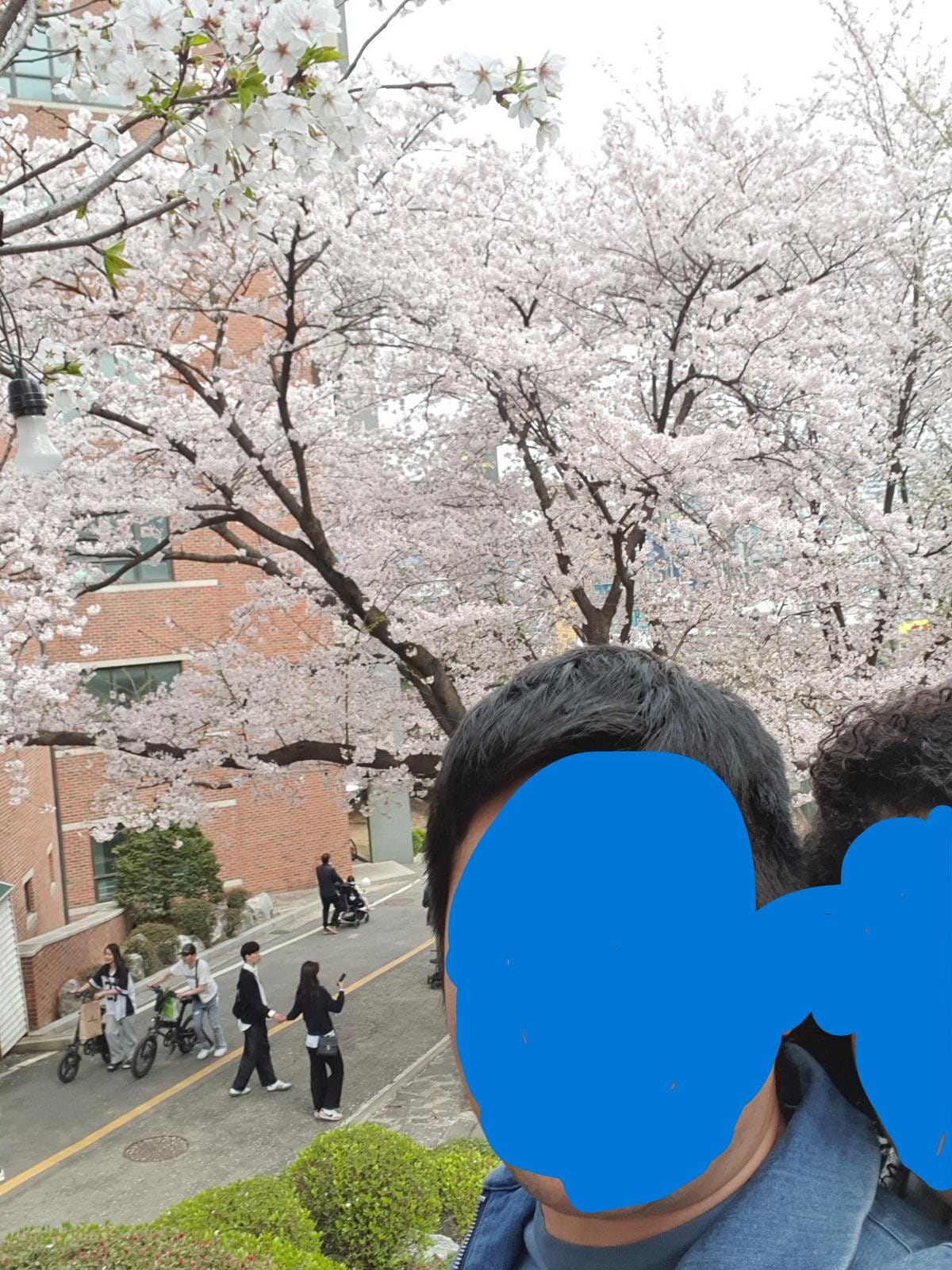
A quick note on timing, because 2026 is genuinely unusual:
The bloom is running early. Forsythias and azaleas lead in late March. Standard cherry blossoms peak in the first half of April, with the sweet spot for Pyeongtaek and the wider Gyeonggi area landing in that April 8–12 window. Late April shifts to double cherry blossoms — denser, fuller petals — at places like Boramae Park and Children’s Grand Park. If you want to stretch the season, that sequence gives you nearly two months of something worth seeing. But the classic moment is short. Plan like it matters.
Check local government websites and the festival’s own channels for live updates. A warm front can push the peak forward by another three to five days, and this year’s weather has already proven it doesn’t follow convention.
I keep thinking about the last time I came to this festival. It was years ago. I was here with my wife when we were still just us — no stroller, no blanket, no tiny person generating an outsized gravitational pull on every passing stranger who stopped to look. We took photos under the trees the way couples do, not knowing exactly what we were recording yet.
I look at those photos now and they feel like a different life. Not worse. Not better. Just shorter, simpler, more portable.
She wouldn’t see much of it this year. But next spring she’ll be walking. And the one after that, she’ll probably ask to run ahead.
If you’re in Gyeonggi-do this April and you haven’t considered Pyeongtaek University, consider it. Especially on a weekday evening. Especially if you want to feel something that the bigger, more famous spots sometimes bury under the crowd.
And if you’re coming from farther out — Seoul, or a town up north — the drive south through Gyeonggi in early April is worth the journey on its own. The cherry blossoms are literally on every road. You’ll understand when you see it.
If this helped you plan your spring, share it with someone who’s figuring out where to go — especially expats or military families stationed near Pyeongtaek. And if you’re curious about other genuinely local spots in Gyeonggi that don’t make the standard lists, that’s worth another conversation.
Once the cherry blossoms drop, the calendar shifts straight into Korea’s intense Family Month in May, with three separate long weekends and a stack of cultural obligations no tourist guide warns you about.
For a longer spring day out with the baby, Mulhyanggi Arboretum in Osan pairs perfectly — free entry, flat stroller paths, and a stream to sit beside with a picnic mat.
For a post-festival treat in the Dongtan area, Ca-ke-ya is worth a detour to try the trending Agjak cake after a day of spring celebration.